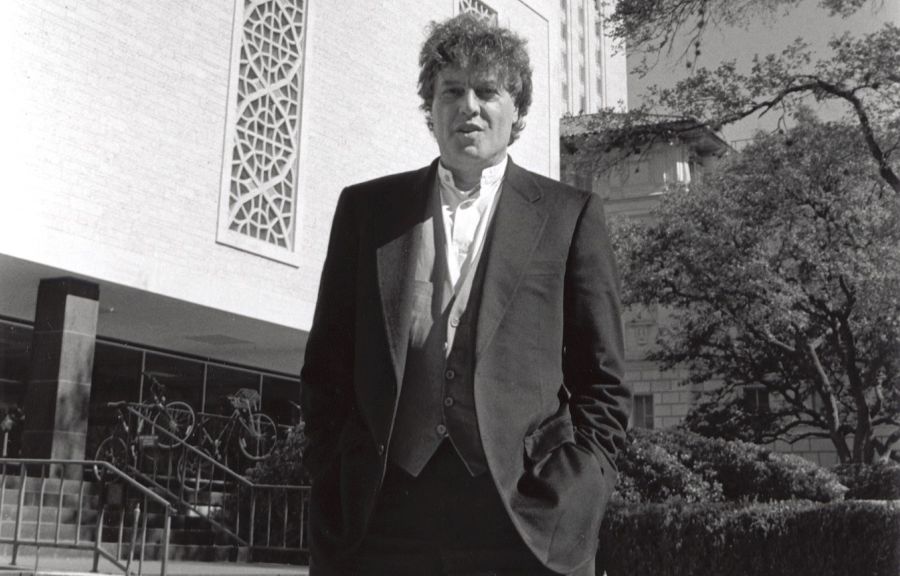
Remembering Tom Stoppard: A Life in Dialog and the Pursuit of Clarity
The passing of sir Tom Stoppard leaves a profound void in the world of theatre. beyond the dazzling wit and intellectual fireworks, lay a deeply thoughtful, surprisingly shy man whose life profoundly shaped his art. This isn’t simply a remembrance; it’s a reflection on a legacy that continues to inspire and challenge those of us blessed enough to have known his work – and, in my case, the man himself.
Stoppard possessed a rare gift for both the laugh and the profound. A story often recounted is how, when a nervous student at the ACT asked him what he valued most in an actor, he instantly responded: “clarity of utterance.” Everything else, he believed, would follow. This encapsulates his approach to theatre – a foundation of precision upon which layers of complexity could be built.
A Life Forged in Transition
Many perceived Stoppard as effortlessly urbane, always in command. However, this was a carefully constructed facade. His diffidence stemmed from his experience as a refugee, a feeling of being in England on what he described as a “press pass.” He was acutely aware that english wasn’t his first language.
This sense of displacement permeated his work.His characters often grapple wiht identity, bearing multiple names and histories – a direct reflection of his own lived reality. Even before fully exploring his Jewish heritage, Stoppard embodied a duality that fueled his dialectical dramas. He didn’t attend university, yet penned the definitive play about oxford in the Invention of Love, driven by a lifelong thirst for knowledge. As his character Hannah eloquently states in Arcadia, “It’s wanting to know that makes us matter.”
A Personal Connection
Over the years, Tom Stoppard became interwoven with my family’s story. My son,Nick,composed the score for The Hard Problem. My mother, Marjorie’s, memoir served as inspiration for Leopoldstadt. Perhaps most poignantly, both Tom and I shared the experience of having physician fathers specializing in cardiology.
I recall sitting with Tom during rehearsals for Indian Ink in New York, shortly after learning of my father’s death. The play’s painter, Das, was explaining the nine rasa – the emotional flavors of Indian aesthetics. ”White for laughter and fun, red for anger, pale yellow for tranquility,” he said.
Flora then asked, “Oh…is there one for gray?”
without hesitation, Stoppard reached for my hand as Das replied, “Grey is for sorrow.” It was a moment of quiet empathy, a testament to his profound understanding of the human condition.
A Legacy of Inspiration
The sorrow I feel at his loss is immense. Tom Stoppard didn’t just write plays; he cracked open my world, and the worlds of countless others. When Indian Ink was revived in 2014,he gifted me a set of Indian prints,each with a handwritten caption. One depicted a woman wielding a scimitar, her eyes filled with determination. The caption read: “Carey-how I see you! With love from Tom.”
It never required a scimitar with Tom. his generosity was boundless, a constant outpouring of intellectual and emotional sustenance. I anticipate the joy of directing his work for years to come. And when I begin rehearsals for leopoldstadt in Chicago this spring, I know his spirit will be vividly present.
he once said, “When I’m writing a play, that’s not a job.Writing a play is life.” This sentiment encapsulates his dedication, his passion, and the enduring power of his art. Tom Stoppard’s legacy isn’t just in the plays he wrote, but in the lives he touched and the questions he dared to ask.
Carey Perloff is an American theatre director, playwright, author, and educator. She served as the artistic director of American Conservatory Theater in San Francisco from 1992 to June 2018.
Worth a look