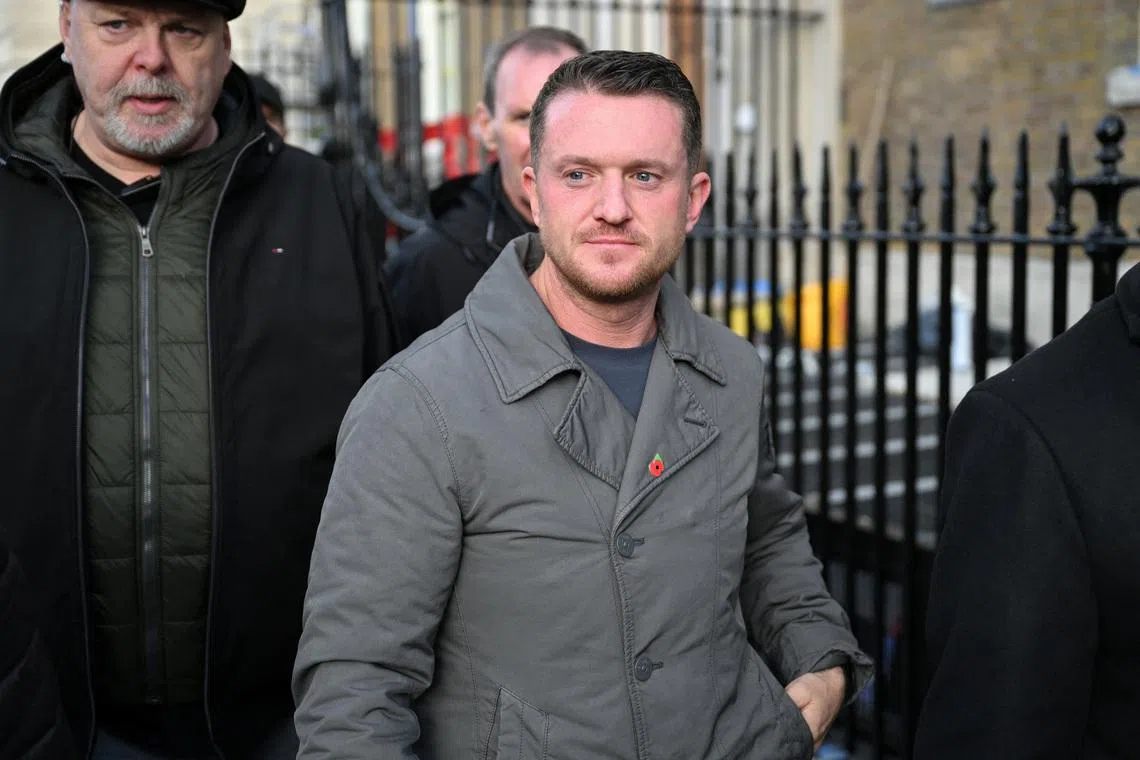
Tommy Robinson Visits U.S. State Department, Sparks Debate Over ‘Free Speech’ Diplomacy
Washington D.C. – Stephen Yaxley-Lennon, widely known as Tommy Robinson, a prominent British far-right activist, visited the U.S. State Department on Wednesday, February 25, 2026, and met with a senior department official. The visit, confirmed through social media posts by both Robinson and the official, has ignited discussion regarding the U.S. Government’s engagement with controversial figures and its stance on “free speech” issues internationally. Robinson, 42, described the visit as an opportunity to forge “alliances &. friendships” in America, signaling a potential broadening of his network and influence.
The meeting took place as the State Department continues to navigate a complex landscape of international relations, balancing traditional diplomatic protocols with evolving political dynamics. Robinson’s presence within the department, even in an unofficial capacity, raises questions about the signals being sent to allies and adversaries alike. His history of inflammatory rhetoric and association with extremist groups has drawn criticism from anti-hate organizations and political opponents, making this visit particularly sensitive. The core of the matter centers on the delicate balance between upholding principles of free expression and condemning hate speech, a debate that has intensified in recent years across both sides of the Atlantic.
Joe Rittenhouse, a senior advisor for the State Department’s Consular Affairs bureau, publicly acknowledged the meeting on X (formerly Twitter), referring to Robinson as a “free speech warrior.”
Honored to have free speech warrior @TRobinsonNewEra at Department of State today. The World and the West is a better place when we fight for freedom of speech and no one has been on the front lines more than Tommy. Good to notice you my friend!
— Joe Rittenhouse (@JoeRittenhouse) February 25, 2026
This endorsement has prompted scrutiny, with critics questioning the appropriateness of a U.S. State Department official publicly aligning with a figure known for anti-Islamic views and past legal troubles. The State Department has characterized the visit as an “unofficial tour,” but the public nature of Rittenhouse’s support has fueled speculation about the extent of the engagement.
A History of Activism and Controversy
Stephen Yaxley-Lennon, who also goes by Andrew McMaster, Paul Harris, and Wayne King, first gained prominence as the founder of the English Defence League (EDL) in 2009. According to Wikipedia, the EDL staged numerous demonstrations, often against the perceived threat of Islamic extremism, but were frequently marred by violence and accusations of Islamophobia. Robinson’s rhetoric has consistently been described as divisive and inflammatory, with past statements including labeling Muslims as “filthy scumbags.” He has since moved on from the EDL, founding other political organizations including For Britain and, most recently, Advance UK in 2025. The Wikipedia entry details his shifting political affiliations over the years, including a brief period with the British National Party (BNP) in 2004-2005.
Robinson’s legal history is also extensive. He was jailed in 2013 for using a false passport to travel to the United States. He has also faced convictions for assault, mortgage fraud, and contempt of court. These legal issues have further complicated his public image and raised questions about his suitability as a representative for any political cause. Despite these controversies, Robinson maintains a significant following, particularly among those who feel disenfranchised by mainstream politics and concerned about immigration and cultural change. In September 2023, he organized a large rally in London, reportedly attended by around 150,000 people, demonstrating his continued ability to mobilize support.
The U.S. And the Debate Over ‘Free Speech’
Robinson’s visit to the State Department comes amid a broader debate about “free speech” and its limitations, particularly in the context of online platforms and international relations. The Trump administration, and to a lesser extent the current administration, has been critical of European policies aimed at curbing hate speech and disinformation, arguing that they stifle legitimate political expression. This stance aligns with a broader conservative narrative that emphasizes the importance of protecting even controversial viewpoints from censorship. The State Department’s 2024 human rights report, which underwent revisions during the Trump administration, criticized the United Kingdom for “serious restrictions on freedom of expression,” citing concerns about the enforcement of laws that could limit political speech and the prevalence of antisemitism.
U.S. Officials have also engaged with far-right parties in Europe, arguing that they are unfairly targeted by online regulations designed to combat hate speech. They have denounced policies like the European Union’s Digital Services Act and Britain’s Online Safety Act, claiming that they unduly restrict free speech. This engagement reflects a belief that the U.S. Has a role to play in defending conservative voices abroad, even if those voices are considered controversial or extremist by others. The visit by Tommy Robinson can be seen as a continuation of this policy, signaling a willingness to engage with figures who champion “free speech” principles, regardless of their broader political views.
The State Department’s Response and Remaining Questions
The State Department has offered limited details about the nature of Robinson’s visit. A spokesperson stated that he was hosted “in an unofficial capacity on a tour today” and did not provide information on who else he met with or what was discussed. This lack of transparency has fueled speculation and criticism, with many observers questioning the motivations behind the visit and the extent of the engagement. The photographs posted by Joe Rittenhouse on X demonstrate Robinson examining artifacts in the John Quincy Adams State Drawing Room, a diplomatic reception room within the State Department. This seemingly innocuous detail has been interpreted by some as a symbolic gesture of acceptance, further amplifying the controversy.
The British embassy in Washington did not immediately respond to a request for comment on the matter. This silence has added to the sense of unease surrounding the visit, leaving many unanswered questions about the implications for U.S.-UK relations and the broader fight against extremism. It remains unclear whether Robinson’s visit represents a significant shift in U.S. Policy or simply an isolated incident. However, it has undoubtedly sparked a debate about the role of diplomacy in engaging with controversial figures and the importance of upholding both free speech principles and the fight against hate speech.
Key Takeaways
- Tommy Robinson, a British far-right activist, visited the U.S. State Department on February 25, 2026, and met with a senior official, Joe Rittenhouse.
- Rittenhouse publicly endorsed Robinson as a “free speech warrior,” sparking criticism and raising questions about the State Department’s engagement with controversial figures.
- The visit comes amid a broader debate about “free speech” and its limitations, with the U.S. Government expressing concerns about European policies aimed at curbing hate speech.
- Robinson has a history of inflammatory rhetoric and legal troubles, including founding the English Defence League and convictions for assault and fraud.
- The State Department has offered limited details about the nature of the visit, fueling speculation and criticism.
The implications of this visit are likely to be debated for some time, particularly as both the U.S. And the UK grapple with the challenges of balancing free expression with the need to combat extremism and hate speech. Further scrutiny of the State Department’s interactions with Robinson and other controversial figures is expected in the coming weeks. The next step will be to observe whether this engagement leads to further interactions or represents an isolated incident. We will continue to monitor developments and provide updates as they become available.
What are your thoughts on the State Department’s decision to host Tommy Robinson? Share your opinions and insights in the comments below. Don’t forget to share this article with your network to contribute to the conversation.
Worth a look
- Impact of Multiple Credit Cards on Credit Scores
- IHK Heilbronn-Franken Business Survey Q2: Industry Optimism vs. Retail Crisis
- US State Department Report Accuses Cuba of Decades-Long Subversion Campaign (archyworldys.com)
- Bryan Adams Releases Anti-Trump Protest Song 51st State for Canada Day (time.news)