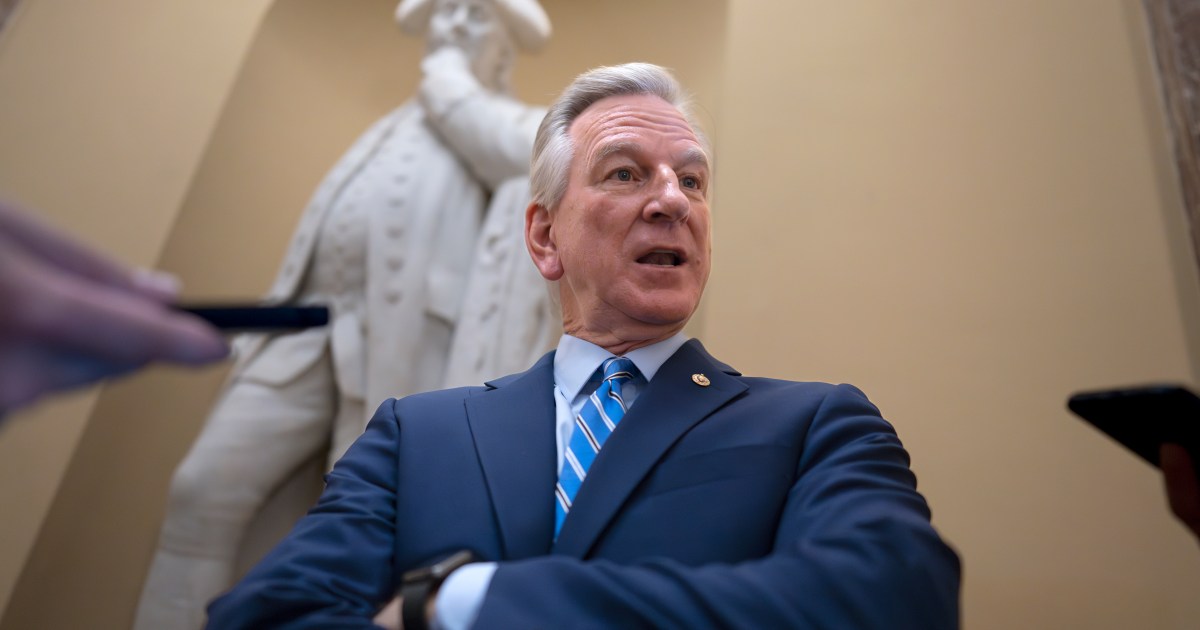
Senator Tuberville Faces Backlash Over Social Media Posts Linking New York Mayor to 9/11
U.S. Senator Tommy Tuberville of Alabama is facing widespread condemnation following a series of posts on X (formerly Twitter) that critics are calling racist, and inflammatory. The controversy stems from Tuberville’s retweet of an image juxtaposing New York City Mayor Zohran Mamdani with a photograph of the September 11th attacks, accompanied by the caption “Less than 25 years apart.” The senator subsequently doubled down on his statements, explicitly stating his belief that “Islamists are the enemy,” sparking further outrage from Democratic lawmakers and civil rights groups. This incident raises questions about the rhetoric surrounding national security and the potential for harmful generalizations about entire religious communities.
The initial post, shared by the account @EndWokeness, quickly gained traction, prompting hundreds of responses within hours. Tuberville’s decision to amplify this message, particularly given the sensitive nature of the 9/11 attacks, drew immediate criticism. The juxtaposition of the two images was widely interpreted as an attempt to link Mayor Mamdani, who is Muslim, to terrorism, fueling concerns about Islamophobia and prejudice. The incident underscores the ongoing challenges of navigating political discourse in the age of social media, where inflammatory content can rapidly spread and incite division.
The Retweet and Initial Response
The original post, as reported by the Montgomery Advertiser, featured side-by-side images: one depicting the devastation of the World Trade Center during the 9/11 attacks, and the other appearing to show Mayor Mamdani at a Ramadan gathering. The caption, “Less than 25 years apart,” implied a connection between the two events. This framing was immediately condemned as deeply offensive and irresponsible. The timing of the post, coinciding with the holy month of Ramadan, further amplified the criticism.
Tuberville’s retweet was met with swift and forceful condemnation. Critics argued that the post perpetuated harmful stereotypes and contributed to a climate of fear and discrimination against Muslims. The Hill reported that Democratic lawmakers were particularly vocal in their criticism, labeling the post as “vicious” and “racist.”
Tuberville Defends His Statements
Rather than retracting his retweet, Senator Tuberville actively defended his position, taking to X to elaborate on his views. He argued that calling out “Radical Islam” does not equate to Islamophobia and asserted that the ideology is incompatible with the U.S. Constitution. He followed up with further posts, stating plainly that he considers Islamists a threat and refusing to be silenced on the issue. This escalation of rhetoric only intensified the controversy, drawing further scrutiny from both political opponents and the media.
Tuberville’s framing of the issue as a conflict with “Radical Islam” has been criticized for its broadness and potential to stigmatize an entire religious group. Experts in counterterrorism and religious studies have cautioned against conflating extremist ideologies with the broader Muslim faith, emphasizing the importance of nuanced and targeted approaches to addressing security threats.
Mayor Mamdani’s Response
New York City Mayor Zohran Mamdani responded directly to Tuberville’s post on X, offering a pointed critique of the senator’s rhetoric. He wrote, “Let there be as much outrage from politicians in Washington when kids go hungry as there is when I break bread with New Yorkers.” This response shifted the focus from the online debate to issues of social justice and community needs, highlighting the priorities of his administration. Mamdani’s statement resonated with many, who saw it as a powerful rebuke of the senator’s divisive language.
Mamdani, a Democrat, has been a vocal advocate for progressive policies in New York City, focusing on issues such as affordable housing, criminal justice reform, and social equity. His background as a Muslim American adds another layer to the controversy, raising concerns about the targeting of minority groups in political discourse. He was first elected to the New York State Assembly in 2020 and subsequently became Mayor in 2025.
Broader Implications and Political Fallout
The incident involving Senator Tuberville is part of a larger pattern of heightened political rhetoric surrounding issues of national security and immigration. The use of inflammatory language and the spread of misinformation on social media platforms have become increasingly common, contributing to a polarized political climate. This case highlights the potential consequences of such rhetoric, particularly when it targets specific religious or ethnic groups. The incident as well underscores the responsibility of elected officials to exercise caution and sensitivity in their public statements.
The controversy has prompted calls for greater accountability from social media companies in addressing hate speech and misinformation on their platforms. Advocacy groups are urging X and other platforms to strengthen their content moderation policies and enforce them more effectively. The incident also raises questions about the role of political leaders in fostering a more inclusive and respectful public discourse. The Montgomery Advertiser reported that several organizations are planning protests and advocacy campaigns in response to Tuberville’s statements.
The fallout from this incident is likely to continue in the coming days and weeks. Democratic lawmakers have vowed to hold Tuberville accountable for his remarks, and calls for his censure are growing. The incident is also expected to fuel further debate about the role of religion in politics and the challenges of combating Islamophobia in the United States. The Senate is scheduled to debate a resolution condemning Tuberville’s statements next week, according to sources familiar with the legislative agenda.
As of March 13, 2026, Senator Tuberville has not issued a formal apology for his posts, maintaining his stance that he was simply expressing concerns about the threat of Islamist extremism. The situation remains fluid, and further developments are expected as the controversy unfolds.
Key Takeaways:
- Senator Tommy Tuberville faced criticism for retweeting a post linking New York City Mayor Zohran Mamdani to the 9/11 attacks.
- Tuberville defended his statements, explicitly stating his belief that “Islamists are the enemy.”
- Mayor Mamdani responded by highlighting the importance of addressing social issues such as hunger and poverty.
- The incident has sparked a broader debate about Islamophobia, political rhetoric, and the responsibility of social media platforms.
The situation continues to develop, and further updates will be provided as they become available. We encourage readers to share their thoughts and perspectives on this important issue in the comments section below.
Keep reading