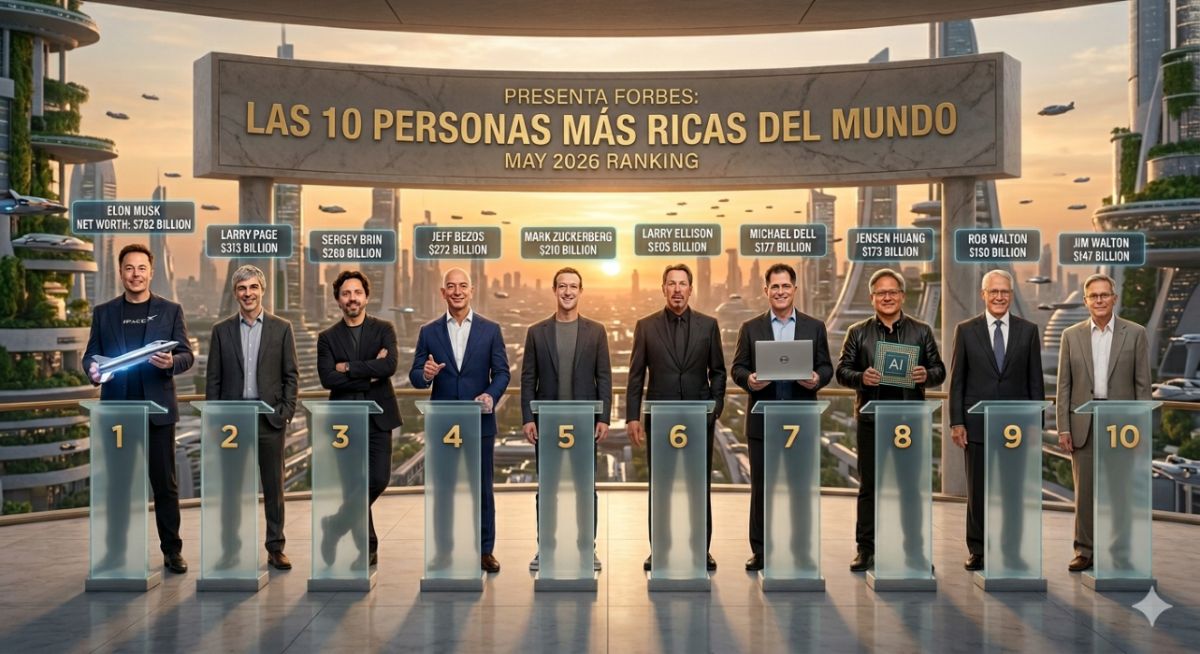
As the global economy continues to navigate a period of rapid technological transformation, the concentration of wealth among the world’s most prominent business leaders remains a focal point for financial analysts and the public alike. Recent data from the Forbes Real-Time Billionaires List provides an updated snapshot of the individuals currently holding the highest net worths globally. As of May 22, 2026, the rankings highlight a significant trend: a robust dominance of American entrepreneurs at the pinnacle of the wealth hierarchy.
For those tracking the movement of global capital, understanding the 10 richest people in the world in 2026 offers insight into the industries—particularly technology and aerospace—that are driving modern economic growth. The current list, updated as of 5:20 a.m. EDT on May 22, reflects the volatile yet upward trajectory of stock valuations for companies such as Tesla, SpaceX, Google, Amazon and Oracle.
The Top Tier: Technology and Innovation Leaders
The hierarchy of global wealth is currently led by Elon Musk, whose ventures in electric vehicles and space exploration have solidified his position at the top. According to the Forbes real-time data, Musk’s net worth is valued at approximately $808.1 billion. This valuation is subject to the daily fluctuations of the public markets, reflecting the massive scale of his influence in the automotive and aerospace sectors.
Following Musk are two key figures associated with the growth of Alphabet Inc., the parent company of Google. Larry Page holds the second position with a net worth of $314.9 billion, while Sergey Brin follows closely in the third spot with $290.4 billion. These figures, which account for daily market adjustments—including minor dips in share value for both individuals—underscore the enduring financial dominance of the search engine giant in the digital economy.
Amazon and Oracle: The Pillars of Commerce and Data
Rounding out the top five, Jeff Bezos and Larry Ellison continue to command significant wealth tied to the infrastructure of the modern internet and enterprise software. Jeff Bezos, the founder of Amazon, maintains a net worth of $275.3 billion. His wealth continues to see growth, recently posting a $3 billion increase according to the latest Forbes market tracking.

Larry Ellison, representing Oracle, occupies the fifth position with a total net worth of $236.7 billion. Like his counterparts in the technology sector, Ellison’s wealth is intrinsically linked to the performance of his company on the stock exchange, where he saw a $1.8 billion gain in the most recent trading cycle. The fact that the top five individuals are all based in the United States highlights a concentrated hub of wealth creation within American borders.
Market Volatility and Wealth Distribution
While the top of the list remains stable, the broader billionaire landscape is characterized by constant movement. The “Biggest Gainers” and “Biggest Losers” categories on the Forbes index serve as a reminder that these figures are not static. For instance, while some tech leaders saw gains, other sectors experienced significant contraction in the same period, such as the Walton family, who saw substantial daily decreases in their net worth due to market shifts.
Understanding these figures requires a recognition of the “Self-Made Score” and “Philanthropy Score” metrics provided by financial monitors. These scores offer a deeper context into how these fortunes were amassed and the extent to which these individuals engage in charitable giving. Most of the individuals in the top five currently hold a Self-Made score of 8 or 9, indicating that their wealth was largely generated through their own entrepreneurial efforts rather than inheritance.
Looking Ahead: What the Data Tells Us
For investors and economic observers, the current ranking of the world’s wealthiest individuals provides more than just a list of names; it serves as a barometer for sectoral health. The dominance of U.S.-based technology companies in the top positions suggests that the global economy remains heavily influenced by advancements in AI, cloud computing, and space logistics.

As we move through the second quarter of 2026, market participants should continue to monitor quarterly earnings reports and regulatory filings from companies like Tesla, Amazon, and Google, as these are the primary drivers of the fluctuations seen in the Forbes real-time rankings. The next major checkpoint for these valuations will be the close of the current fiscal quarter, which will provide further clarity on whether these trends in wealth concentration will persist or begin to normalize as global economic conditions shift.
We invite our readers to share their thoughts on the shifting landscape of global wealth. How do you believe the concentration of capital in the technology sector will impact economic policy in the coming years? Join the conversation below and stay tuned to World Today Journal for further updates on global markets.