
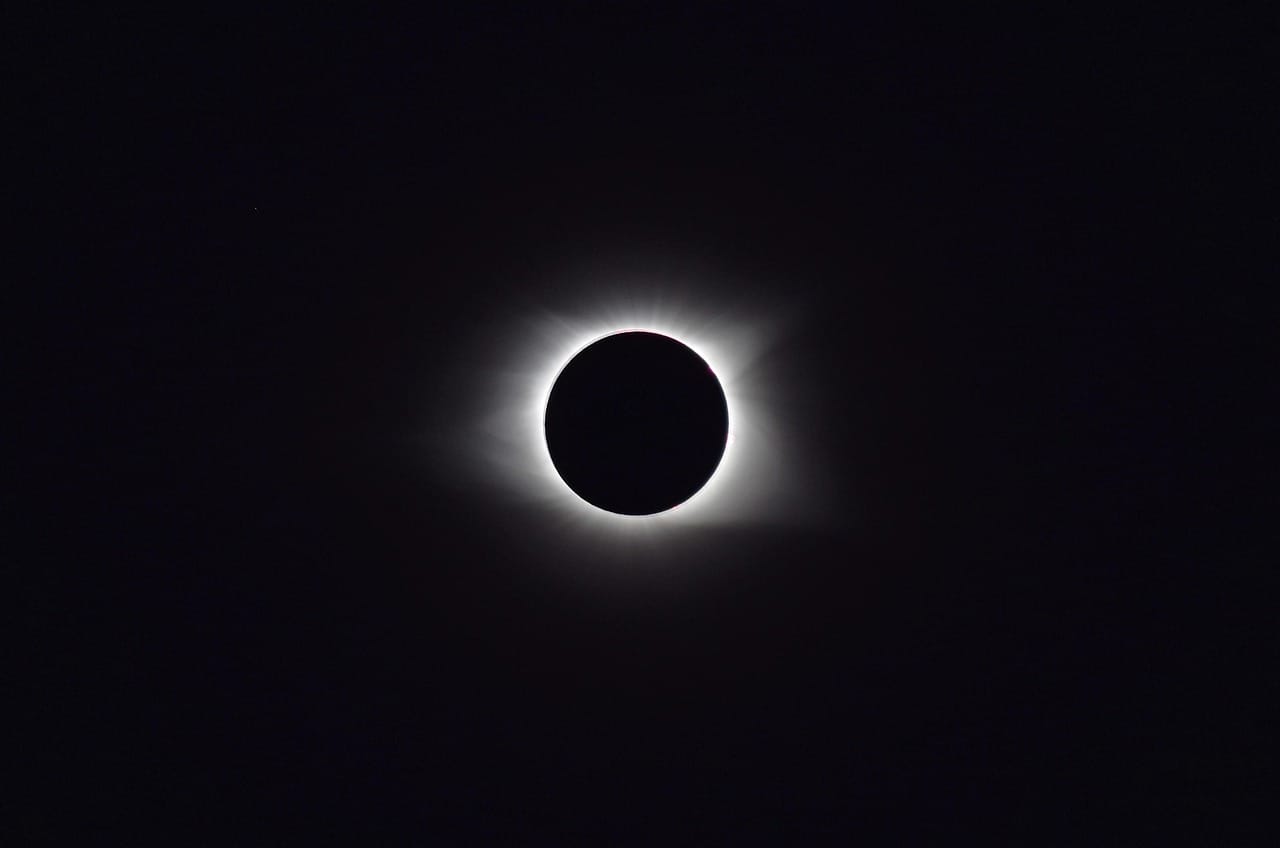
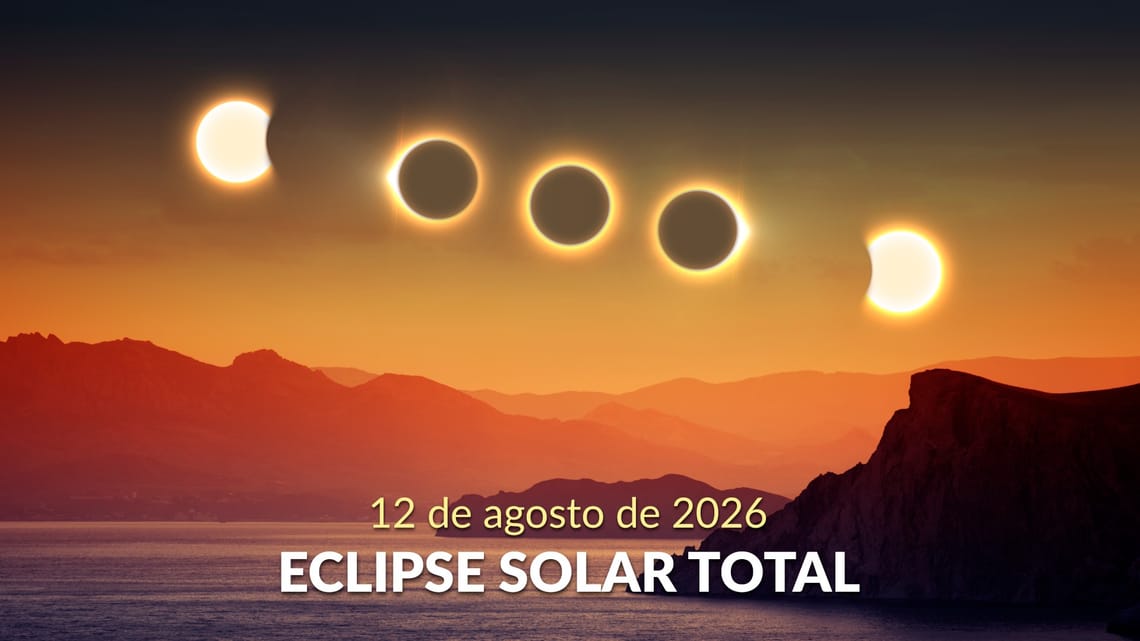
On Wednesday, August 12, 2026, a total solar eclipse will cross the Russian Arctic, Greenland, Iceland, a small area of northeastern Portugal, northern and eastern Spain, and the Balearic Islands, marking the first total solar eclipse visible from the Iberian Peninsula in over a century, according to data compiled by Star Walk.
The celestial event will feature a distinct characteristic as it unfolds at sunset. Across the Spanish mainland and the Balearic Islands, the partial phase will initiate between 19:31 and 19:38 CEST, with local maximum visibility occurring roughly between 20:26 and 20:33 CEST, depending on the precise geographic location, as reported by Star Walk.
Because the Sun will be very low on the horizon during the peak moments, observers face viewing challenges. Local topography, buildings, tree lines, distant cloud cover, or atmospheric haze could obscure the sight, requiring watchers to seek out vantage points with unobstructed western or west-northwesterly horizons, according to Star Walk.
Geographic Paths and Visibility Across Spain
The path of totality sweeps through a broad band crossing the northern and eastern portions of the Spanish peninsula before reaching the Balearic Islands. Major urban centers such as Madrid and Barcelona, along with most of the southern regions, sit outside the direct path of totality and will instead experience a partial solar eclipse, as detailed by Star Walk.
According to calculations provided by the Observatorio Astronómico Nacional and reported via El Tiempo, observation timelines vary by province. In A Coruña, the eclipse is total, beginning at 19:31 CEST and reaching its maximum at 20:28 CEST, with a totality duration of 76 seconds as the Sun sits 12 degrees above the horizon. Neighboring Lugo experiences a total eclipse beginning at 19:32 CEST, peaking at 20:29 CEST with 84 seconds of totality at an 11.2-degree solar altitude.
Further east along the northern corridor, Oviedo records a total eclipse starting at 19:31 CEST, reaching a maximum at 20:28 CEST, and delivering 108 seconds of totality with the Sun positioned 10.2 degrees high, according to El Tiempo. In Santander, the total phase starts at 19:31 CEST, hits its maximum at 20:27 CEST, and lasts for 63 seconds with an 8.8-degree solar altitude. Bilbao observes a total eclipse starting at 19:32 CEST, peaking at 20:28 CEST with 30 seconds of totality, though sunset occurs at 21:19 CEST, just ahead of the final partial contact, as noted by El Tiempo.
Local Viewing Restrictions and Preparations
In Santander, access to the Cabo Mayor lighthouse area will be closed to vehicular traffic during the eclipse event.
In Cantabria, five points have been enabled for viewing the eclipse.
Observation Times and Durations for Major Cities
Astronomical timing data compiled for major cities within the path of totality outline precise windows for viewing the phenomenon, all measured in local summer time (CEST, UTC+2):
- A Coruña: Partial start at 19:31; totality begins at 20:27:35; totality ends at 20:28:51; duration of 1 minute 16 seconds; maximum solar altitude of 12° (Star Walk).
- Oviedo: Partial start at 19:31; totality begins at 20:27:00; totality ends at 20:28:48; duration of 1 minute 48 seconds; maximum solar altitude of 10° (Star Walk).
- Bilbao: Partial start at 19:32; totality begins at 20:27:18; totality ends at 20:27:48; duration of 30 seconds; maximum solar altitude of 8° (Star Walk).
- León: Partial start at 19:33; totality begins at 20:28:15; totality ends at 20:30:00; duration of 1 minute 45 seconds; maximum solar altitude of 10° (Star Walk).
- Zaragoza: Partial start at 19:35; totality begins at 20:28:57; totality ends at 20:30:20; duration of 1 minute 23 seconds; maximum solar altitude of 6° (Star Walk).
- Palma de Mallorca: Partial start at 19:38; totality begins at 20:31:00; totality ends at 20:32:36; duration of 1 minute 36 seconds; maximum solar altitude of 2° (Star Walk).
Outside the narrow band of complete occultation, areas such as Madrid will witness a partial eclipse, with a maximum solar coverage reaching roughly 9 percent at 20:32 CEST, according to Star Walk.
Safety Guidelines and Next Steps
Observers are reminded to utilize special glasses during the eclipse.
Related reading
- Wisconsin and Minnesota Primaries Highlight Democratic Ideological Divide
- Minnesota Senate Primary 2026: Live Results, Candidates & Key Races
- Partial Solar Eclipse Aug 12: Where and How to Watch in the U.S. and Canada (archynewsy.com)
- How the New York Times Bestseller List Actually Works (daybreakwire.com)