
An Unorthodox Exit in Turkey
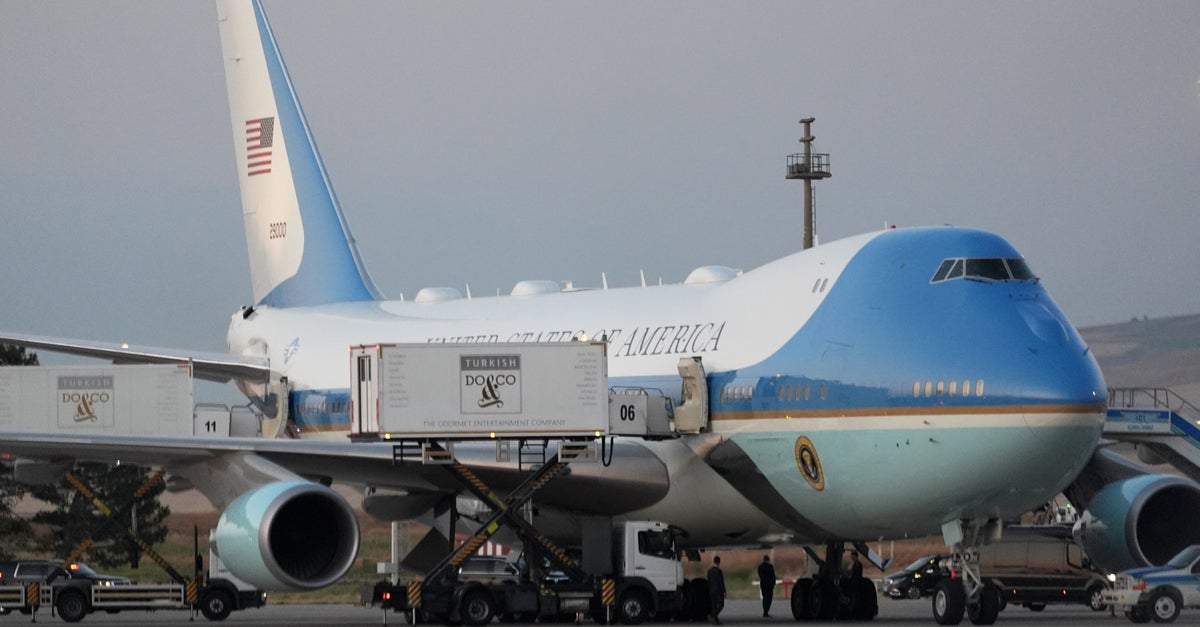
President Donald Trump bypassed standard aviation protocols last month by departing a NATO summit in Turkey aboard an airline catering truck. The move left Air Force One crew members, Secret Service agents, White House staff, and a press pool to fly home as potential decoys against a possible threat from Iran, according to reports detailed by the Washington Post and independently covered by HuffPost.
The covert departure allowed the president to board a smaller jet for a flight to England while his official transport and its passengers traveled without knowing he was absent. Aviation experts have questioned the necessity of the deception and raised security concerns regarding the aircraft used for the remainder of the journey.
The Clandestine Route to England
According to the reporting, Trump left the NATO gathering in Turkey by slipping away via a catering truck to avoid the primary aircraft. He boarded a smaller jet to fly to England, where he later clandestinely reboarded the main aircraft at Mildenhall Air Base. Upon arrival, he disembarked in front of cameras to board his preferred transport—a luxury 747 solicited from the Qatari royal family.
Security Gaps on the Qatari Jet
That Qatari-provided aircraft lacks the missile defense systems installed on purpose-built Air Force One 747s, such as infrared laser emitters designed to blind heat-seeking missile sensors and systems capable of deploying chaff and flares. Asked by reporters on the tarmac at Joint Base Andrews about why staff and journalists flew on a plane he considered too risky for himself, Trump defended the decision by arguing that his actual flight was at greater risk. He stated that the plane he flew on was more likely to be targeted because adversaries would assume he was aboard it.
Unwitting Decoys in the Skies
Thirteen members of the traveling press pool boarded Air Force One unaware that the president was not on the aircraft, a deception that persisted until the Post published its account. It remains unclear how many of the two to three dozen Air Force crew members and the undisclosed number of Secret Service agents and White House staff realized they were flying without the president.
Experts Question the Necessity
Aviation and military experts noted that several alternatives existed to secure the flight without using the passenger aircraft as a decoy. Richard Aboulafia of the AeroDynamic Advisory consulting group noted that the return flight crossed airspace largely controlled by NATO allies, making a surface-to-air missile threat from Iran highly improbable. Aboulafia suggested the maneuver might be linked to scrutiny surrounding the appropriateness of the Qatari jet for presidential travel.
Alternative security measures could have included escorting the primary aircraft with F-35 fighters equipped with electronic warfare technology, or accompanying the flight with large tankers or cargo planes to generate multiple radar echoes and heat signatures. Another straightforward option would have involved letting the president depart quietly on the smaller jet and announcing his location publicly once he reached European airspace.
Breach of Trust and Silence
An anonymous military aviation expert cited by HuffPost noted that the most credible threat during such movements typically involves individuals or small groups using portable launchers during takeoff or landing. George Condon, a National Journal reporter and former president of the White House Correspondents Association, criticized the operation as a massive breach of trust, stating that utilizing the traveling press corps as unwitting decoys endangered personnel without their consent.
White House officials did not respond to inquiries regarding the incident, and the Air Force referred all related questions back to the White House.
Worth a look