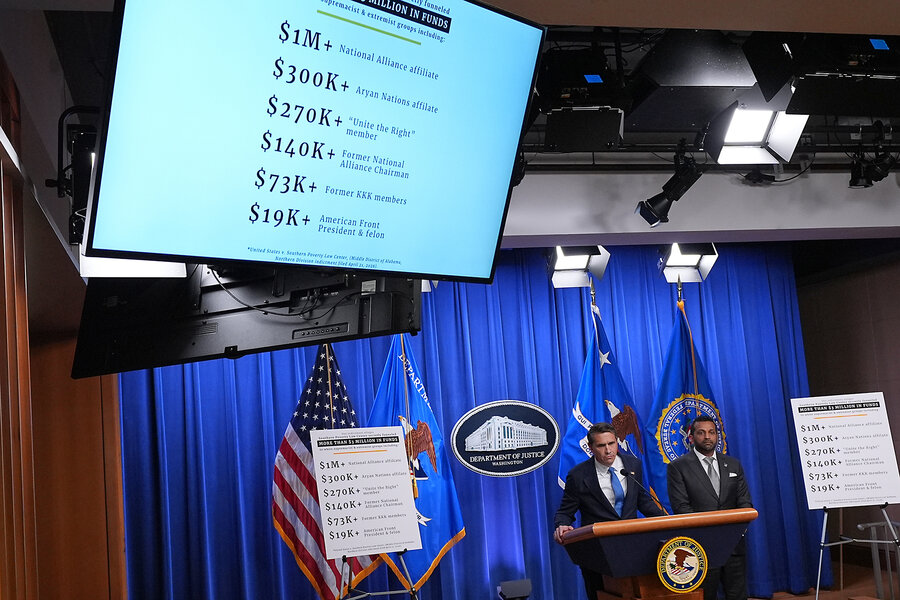
The recent indictment of the Southern Poverty Law Center by the U.S. Department of Justice has ignited a national debate about the ethical boundaries of undercover operations within extremist organizations. Federal prosecutors allege that the civil rights group engaged in a scheme to pay individuals affiliated with hate groups as confidential informants, then concealed those payments from donors and financial institutions. The case raises urgent questions about when investigative tactics cross into complicity and how organizations tasked with combating hate can maintain integrity while infiltrating dangerous movements.
According to court documents and statements from Acting Attorney General Todd Blanche, the Southern Poverty Law Center was charged with 11 counts related to wire fraud, bank fraud, and conspiracy to commit money laundering. The indictment specifically alleges that between 2014 and 2023, the organization funneled more than $3 million to individuals connected to groups including the Ku Klux Klan, the National Socialist Movement, and the American Front. These payments were allegedly made through intermediaries and shell companies to obscure their true purpose, violating both federal banking laws and the trust of donors who believed their contributions were supporting anti-hate initiatives.
The Southern Poverty Law Center has long been recognized for its research and monitoring of extremist activity across the United States. Founded in 1971, the organization gained prominence for its legal battles against the Ku Klux Klan and its publication of extremist group profiles used by law enforcement and educators. While, the current controversy centers on a now-defunct program that employed paid informants to gain access to far-right networks. While such tactics are not uncommon in law enforcement and intelligence work, their use by a nonprofit advocacy group introduces distinct ethical and legal complexities, particularly when funding sources are not disclosed.
Undercover operations inherently involve deception, but ethical guidelines typically require proportionality, oversight, and a clear purpose tied to public safety or national security. In government contexts, informant programs are subject to internal reviews, legal constraints, and accountability mechanisms designed to prevent abuse. When private organizations adopt similar methods without transparent oversight, the risk increases that operations could inadvertently enable or exacerbate the very threats they aim to counter. Critics argue that paying individuals within extremist circles may provide financial support that strengthens those groups, even if the intent is to gather intelligence.
Legal experts note that while the First Amendment protects advocacy and investigative journalism, it does not shield organizations from liability if they engage in fraudulent financial practices. The charges against the Southern Poverty Law Center do not allege that the group promoted hate or violence directly, but rather that it concealed how funds were used, potentially misleading donors and banks about the nature of its activities. This distinction is crucial: the legal exposure stems not from the act of infiltration itself, but from the alleged concealment of financial transactions tied to those operations.
The timing of the indictment has too drawn attention, as it coincides with heightened political scrutiny of organizations perceived as adversarial to conservative causes. Acting Attorney General Blanche suggested that the investigation had been inactive during the Biden administration before being revived under current leadership. Whether political motivation played a role in the timing or scope of the case remains a subject of debate, though the Justice Department maintains that the charges are based on evidence gathered over multiple years.
For donors, educators, and institutions that have relied on the Southern Poverty Law Center’s data, the allegations pose a challenge to trust. The organization’s intelligence reports have been used in school curricula, police training, and policy discussions about domestic terrorism. If the integrity of its information-gathering methods is in question, downstream users may need to reassess how they evaluate and apply such material. Transparency about methodology, especially when dealing with sensitive subjects like extremism, becomes not just an ethical imperative but a practical necessity for maintaining credibility.
This case underscores a broader dilemma faced by civil society groups working in high-risk environments: how to gather vital intelligence without compromising ethical standards or legal compliance. Unlike government agencies, nonprofits typically lack access to classified oversight boards, legal immunity, or standardized protocols for informant management. They must navigate complex terrain where the line between investigation and involvement can blur. Establishing independent ethical review boards, adopting clear conflict-of-interest policies, and implementing financial safeguards could help prevent similar controversies in the future.
Looking ahead, the legal proceedings against the Southern Poverty Law Center will continue to unfold through the federal court system. The next confirmed step is the arraignment, where the organization will formally respond to the charges. Court records indicate that proceedings are expected to proceed in the U.S. District Court for the Middle District of Alabama, though no specific date has been publicly confirmed as of this writing. Those seeking updates can consult the federal judiciary’s public access system or monitor official statements from the Department of Justice.
As this case develops, it serves as a reminder that the fight against hate must be pursued not only with courage but with unwavering adherence to the principles of honesty, accountability, and the rule of law. Organizations dedicated to social justice have a responsibility to ensure that their methods do not undermine their mission. The outcome of this case may influence how nonprofits approach undercover work for years to approach, shaping standards that balance effectiveness with integrity in the ongoing struggle against extremism.
Stay informed and share your thoughts on this important debate about ethics in investigative work. Join the conversation by commenting below or sharing this article with others interested in accountability and civil society.
Worth a look