
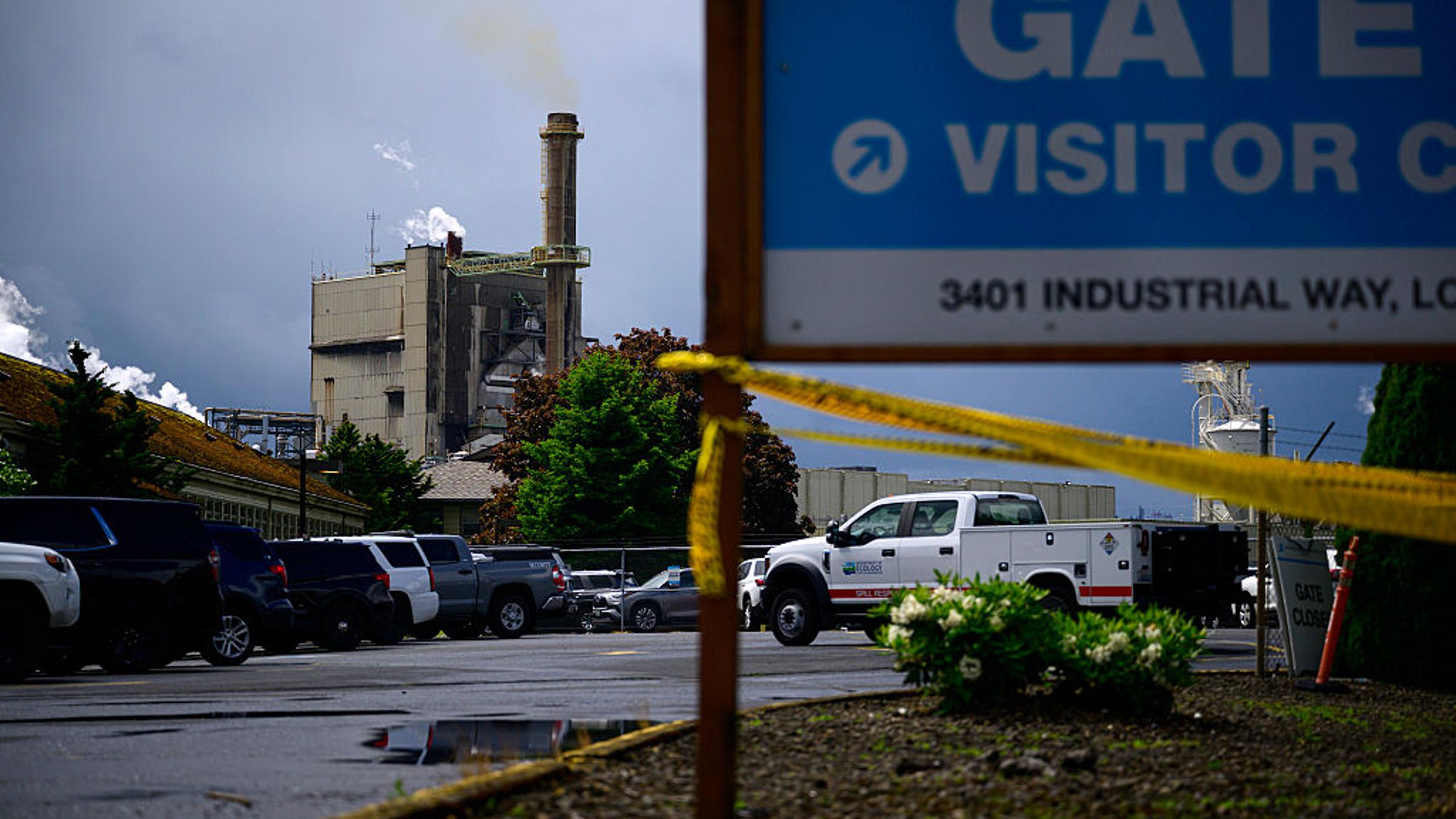
In a span of just seven days, two catastrophic industrial accidents have shaken communities in Washington and California, reigniting a fierce national debate over the future of federal chemical safety standards. These back-to-back disasters—one resulting in multiple fatalities and another forcing large-scale evacuations—have occurred while the current administration moves to scale back the very regulatory framework designed to mitigate such risks. As investigators pick through the wreckage and families demand accountability, the tension between industrial deregulation and public safety has reached a breaking point.
The most recent tragedy unfolded in Longview, Washington, where a massive storage tank implosion at a paper mill claimed 11 lives. The incident involved a 900,000-gallon tank holding “white liquor,” a caustic mixture used in pulp production. Simultaneously, residents in Garden Grove, California, were forced to flee their homes after a chemical storage tank at an aerospace plastics facility became dangerously unstable, threatening an explosion that would have released toxic methyl methacrylate into a densely populated area. These events are not isolated; they are part of a broader, concerning trend of industrial incidents across the United States that experts argue could be exacerbated by the planned repeal of the Safer Communities by Chemical Accident Prevention (SCCAP) rule.
The Regulatory Tug-of-War
At the center of this controversy is the Environmental Protection Agency (EPA), now under the leadership of Administrator Lee Zeldin. The agency has signaled its intent to roll back significant portions of the 2024 SCCAP regulations, which were designed to bolster safety protocols at approximately 12,000 high-risk chemical facilities nationwide. The proposed revisions would effectively eliminate requirements for third-party audits at facilities with histories of accidents and remove provisions for employee-led hazard reporting—a mechanism often cited by safety advocates as a critical “early warning system” for preventing catastrophic failures. The agency is seeking to remove requirements that facilities account for climate-related risks, such as extreme flooding or seismic activity, when developing their site-specific emergency response plans.
The rationale provided by the agency for these changes is that the 2024 rules placed an undue burden on industry and created overlapping, often contradictory, requirements. An EPA spokesperson stated that the administration aims to “preserve every core accident-prevention protection while removing duplicative, contradictory, or unproven requirements.” However, environmental justice groups and labor organizations argue that these protections were hard-won following years of industrial incidents. According to data tracked by the Coalition to Prevent Chemical Disasters, there have been over 1,400 hazardous chemical incidents in the U.S. Since 2021, averaging roughly five per week. For these organizations, the recent events in Washington and California are not just tragic anomalies but a predictable outcome of a system that prioritizes industry efficiency over community safety.
Independent Oversight Under Threat
Beyond the EPA’s regulatory shifts, the administration has repeatedly sought to defund the Chemical Safety and Hazard Investigation Board (CSB). The CSB serves as an independent, non-regulatory federal agency tasked with investigating the root causes of major industrial chemical accidents. Unlike the EPA or OSHA, the CSB does not issue fines or create regulations; instead, it provides technical analysis and safety recommendations to prevent future occurrences. Despite its role as a critical watchdog, the White House’s 2027 budget request, released in April, included a proposal to shutter the board, marking the sixth time such a measure has been attempted since 2017.
The CSB is currently managing eight active investigations, including the site of the recent implosion in Longview. Supporters of the board argue that without its independent, non-partisan analysis, the public and industry would be left without a clear understanding of why these failures occur. The administration, however, maintains that the CSB’s functions are duplicative of existing efforts within the EPA and the Occupational Safety and Health Administration (OSHA). While Congress has previously intervened to maintain the board’s funding, the ongoing pressure to eliminate the agency leaves its long-term future—and the transparency of industrial accident reporting—in a state of uncertainty.
Financial Ties and Ethical Scrutiny
A growing point of contention involves the professional backgrounds of current EPA leadership. Recent analysis by the watchdog group Citizens for Responsibility and Ethics in Washington (CREW) highlighted that 16 political appointees within the agency received over $2.8 million in compensation from chemical companies and industry trade groups prior to their federal appointments. This revelation has fueled concerns among advocacy groups that the push for deregulation is driven by industry interests rather than data-driven safety improvements. The organization noted that 19 of the companies associated with these payments have previously faced enforcement actions by the EPA for environmental violations. In response to these reports, an EPA spokesperson emphasized that all appointees have adhered to federal ethics laws and that previous lobbying or consulting work does not constitute a legal conflict of interest.
Key Takeaways on Chemical Safety
- Regulatory Rollbacks: The EPA is moving to scale back the 2024 Safer Communities by Chemical Accident Prevention (SCCAP) rule, which impacts roughly 12,000 facilities.
- Frequency of Incidents: Since 2021, the U.S. Has recorded over 1,400 hazardous chemical releases, fires, or explosions.
- Watchdog Status: The Chemical Safety and Hazard Investigation Board (CSB) remains under threat of closure, despite currently managing eight open safety investigations.
- Accountability Concerns: Watchdog groups have raised questions regarding the financial history of several EPA officials who previously worked for the chemical industry.
What Happens Next
As the investigations into the Washington and California incidents continue, the focus will shift to the findings of the CSB teams on the ground. These reports often take months to finalize and are expected to provide the first comprehensive, independent account of the mechanical and procedural failures that led to the disasters. Meanwhile, the public comment period for the proposed EPA regulatory rollbacks remains a focal point for environmental and labor groups, who are preparing to challenge the agency’s rationale in both the court of public opinion and, potentially, the federal judicial system.

The next major milestone in this debate will be the upcoming congressional oversight hearings, where representatives are expected to question both the EPA and the CSB regarding the recent spike in industrial accidents and the administration’s budget priorities. We will continue to track these developments as they emerge. If you have information regarding local chemical safety concerns or wish to share your perspective on these regulatory changes, please use the comments section below to join the discussion.