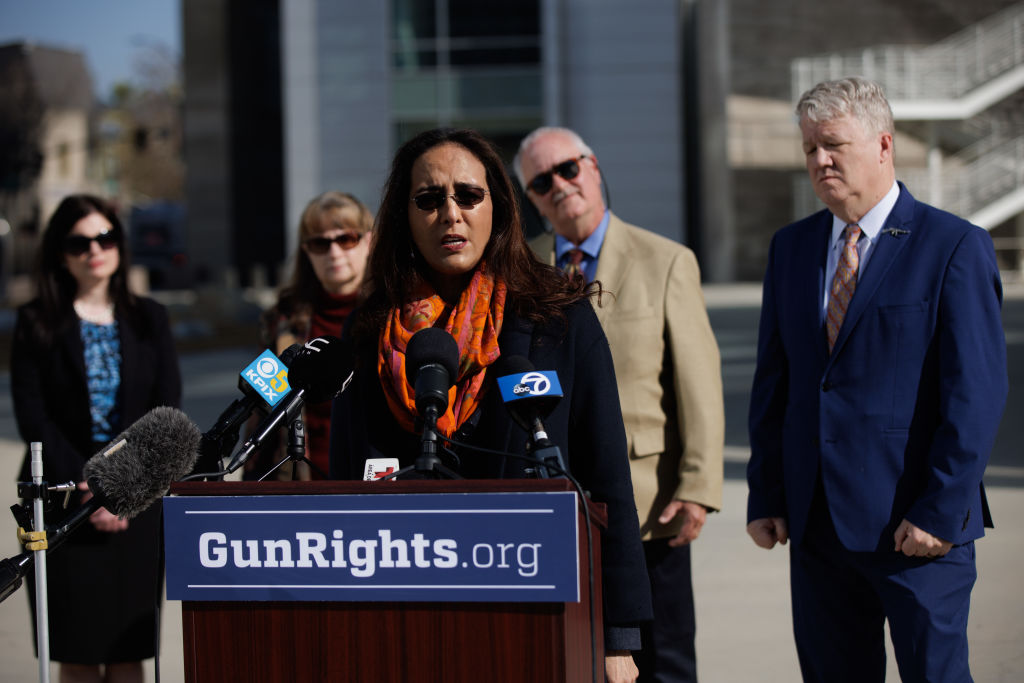
The U.S. Department of Justice (DOJ) has filed a lawsuit against the state of Colorado, challenging its law that restricts the possession of large-capacity magazines for rifles—a move that comes just one day after the administration sued the city of Denver over its assault weapons ban. The federal lawsuit, filed in the Denver-based U.S. District Court, argues that Colorado’s restrictions on magazines capable of holding more than 15 rounds violate the Second Amendment rights of its residents.
This legal action marks the latest chapter in a broader offensive by the Trump administration against state and local gun control measures, following a wave of executive actions and lawsuits targeting regulations deemed overreach by federal officials. The DOJ’s intervention in Colorado follows a similar filing against Denver, where the administration argued that the city’s assault weapons ban infringed on constitutional protections.
President Donald J. Trump, who returned to office in January 2025 following a landslide reelection victory, has made gun rights a cornerstone of his second term, framing federal challenges to state laws as necessary to uphold the “original intent” of the Second Amendment. His administration has prioritized rolling back restrictions on firearm accessories, including high-capacity magazines, which opponents argue are critical for self-defense and sporting purposes.
Legal Grounds: DOJ’s Second Amendment Argument
The lawsuit against Colorado centers on the state’s SB 26-071, which prohibits the sale, transfer, or possession of magazines designed to hold more than 15 rounds of ammunition. The DOJ argues that such restrictions disproportionately burden law-abiding citizens whereas failing to enhance public safety, citing studies that suggest high-capacity magazines are commonly used in hunting, competitive shooting and self-defense scenarios.
In its complaint, the DOJ asserts that Colorado’s law “arbitrarily singles out” a category of firearm accessories without demonstrating a compelling government interest. The filing cites New York State Rifle & Pistol Association v. Bruen (2022), the landmark Supreme Court decision that established a stricter standard for evaluating gun laws under the Second Amendment. Under Bruen, regulations must be “consistent with the Nation’s historical tradition of firearm regulation,” a threshold the DOJ claims Colorado’s ban fails to meet.
Legal experts note that the timing of the lawsuit—coming on the heels of the Denver case—suggests a coordinated strategy to pressure states into repealing or weakening similar measures. The Trump administration has previously signaled its intent to apply federal authority to preempt state laws it deems unconstitutional, particularly in areas where it believes the Supreme Court has shifted the balance toward individual rights.
Context: A Pattern of Federal Pushback
The DOJ’s lawsuit against Colorado is not an isolated action. Since taking office in 2025, the Trump administration has actively challenged multiple state and local gun control initiatives, including:

- A lawsuit filed May 6, 2026, against Denver over its assault weapons ban, arguing it violates the Second Amendment.
- Reversals of federal regulations under the Biden administration that limited the sale of “ghost guns” and stabilized rifles.
- Directives to the Bureau of Alcohol, Tobacco, Firearms and Explosives (ATF) to reinterpret rules on firearm modifications and magazine capacities.
These actions reflect a broader political realignment on gun policy, with Republicans in Congress pushing for federal preemption of state laws and Democrats resisting such efforts. The issue has become a litmus test for the Trump administration’s commitment to deregulation and its interpretation of constitutional rights.
Stakeholders and Reactions
The lawsuit has drawn immediate reactions from key stakeholders:
- Gun Rights Advocates: Groups like the National Rifle Association (NRA) and Gun Owners of America have praised the DOJ’s action, framing it as a necessary defense against “government overreach.” The NRA issued a statement calling Colorado’s law “unconstitutional and dangerous,” arguing that it targets lawful gun owners rather than criminals.
- Public Safety Organizations: Advocates for gun control, including Everytown for Gun Safety and the Colorado Ceasefire organization, have condemned the lawsuit as politically motivated. They argue that large-capacity magazines are frequently used in mass shootings and that restricting their sale reduces the lethality of firearms.
- Colorado Officials: Governor Jared Polis (D) has vowed to defend the state’s law in court, calling it a “critical public safety measure.” The Colorado Attorney General’s office has not yet filed a formal response but has indicated it will vigorously oppose the federal challenge.
Legal analysts suggest that the case could set a precedent for other states with similar restrictions, particularly in the wake of Bruen. Courts may now be more inclined to strike down laws that do not have clear historical analogs, even if they are enacted for public safety reasons.
What Happens Next?
The lawsuit against Colorado is now in the hands of U.S. District Judge Morgan H. Cooper, who will determine whether to grant the DOJ’s motion for a preliminary injunction. Key questions include:

- Will the judge accept the DOJ’s argument that Colorado’s law lacks historical precedent under Bruen?
- How will the state’s public safety justifications be weighed against the Second Amendment claims?
- Could this case lead to broader federal intervention in state gun laws, or will it be limited to Colorado?
The next critical checkpoint is the hearing scheduled for May 21, 2026, where both sides will present arguments. A ruling could come within weeks, depending on the judge’s schedule and the complexity of the legal issues.
Key Takeaways
- The DOJ’s lawsuit against Colorado is the second in a week targeting gun control measures, signaling an aggressive federal approach under the Trump administration.
- The case hinges on the Supreme Court’s Bruen decision, which requires gun laws to align with historical traditions of firearm regulation.
- Gun rights groups and public safety advocates are deeply divided, with the outcome potentially influencing similar cases nationwide.
- A ruling in Colorado could have ripple effects on state laws restricting high-capacity magazines in California, New York, and other jurisdictions.
For readers following this story, the U.S. Attorney’s Office for the District of Colorado will provide updates on the lawsuit’s progress. The Colorado Attorney General’s office has not yet issued a formal response but is expected to file a motion to dismiss or defend the state’s law in the coming days.
This developing story underscores the intensifying battle over gun rights in America, with federal and state authorities locked in a legal and political standoff. As the case unfolds, we will continue to monitor its implications for firearm regulations across the country.
What are your thoughts on the DOJ’s challenge to Colorado’s gun law? Share your views in the comments below or join the discussion on our social media channels.