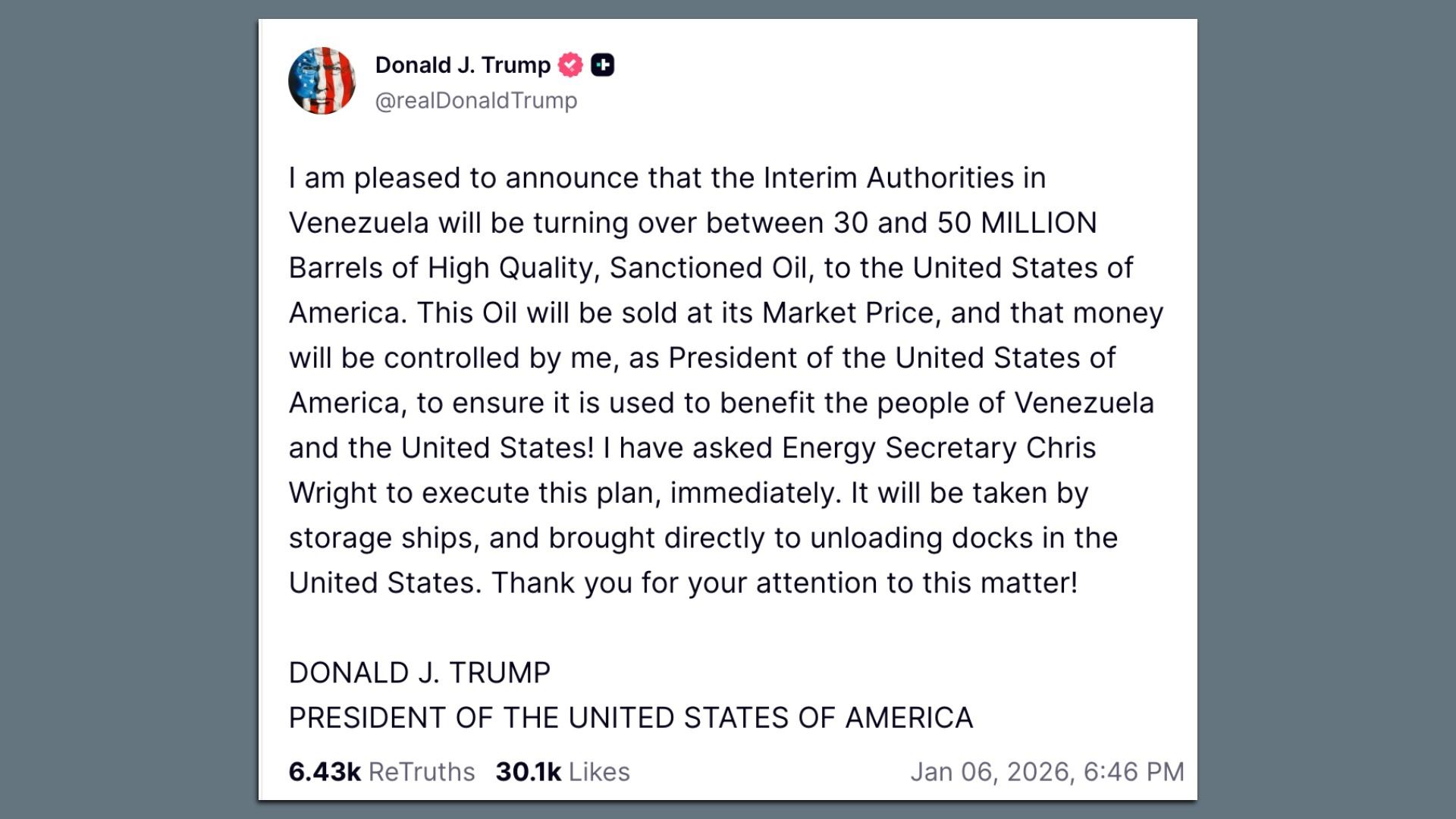
President Trump announced on Tuesday that Venezuelan authorities are preparing to transfer between 30 and 50 million barrels of oil to the United States. This development signals a potential shift in energy policy and could have significant implications for both nations. Understanding the complexities of this situation requires a deep dive into the political and economic factors at play, and that’s what we’ll cover here.
Venezuela Oil Supply to the US: A Developing Situation
According to a post on Truth Social, the sanctioned oil will be sold at current market rates, with the revenue earmarked for the benefit of both the Venezuelan people and the United States. The President indicated he will directly oversee the allocation of these funds, though specific details remain undisclosed. He further stated that Energy Secretary Chris Wright has been tasked with the immediate execution of this plan, involving the transport of oil via storage ships directly to U.S. unloading facilities.
This move comes as the governance prepares to engage with U.S. oil industry leaders. Trump is scheduled to meet with executives on Friday to discuss investments in revitalizing Venezuela’s oil production capabilities. Reports suggest the U.S. may offer subsidies to support these efforts, aiming to rebuild Venezuela’s energy infrastructure. The estimated timeframe for this revitalization project is projected to be under 18 months.
However, industry analysts caution that a full-scale restoration of Venezuela’s oilfields and infrastructure will be a significant undertaking. Rebuilding a sector that has suffered years of neglect and underinvestment presents considerable challenges. It’s a complex process that extends beyond simply accessing the oil reserves.
Did You Know? Venezuela holds the world’s largest proven oil reserves, estimated at over 303.8 billion barrels as of 2023, according to the