
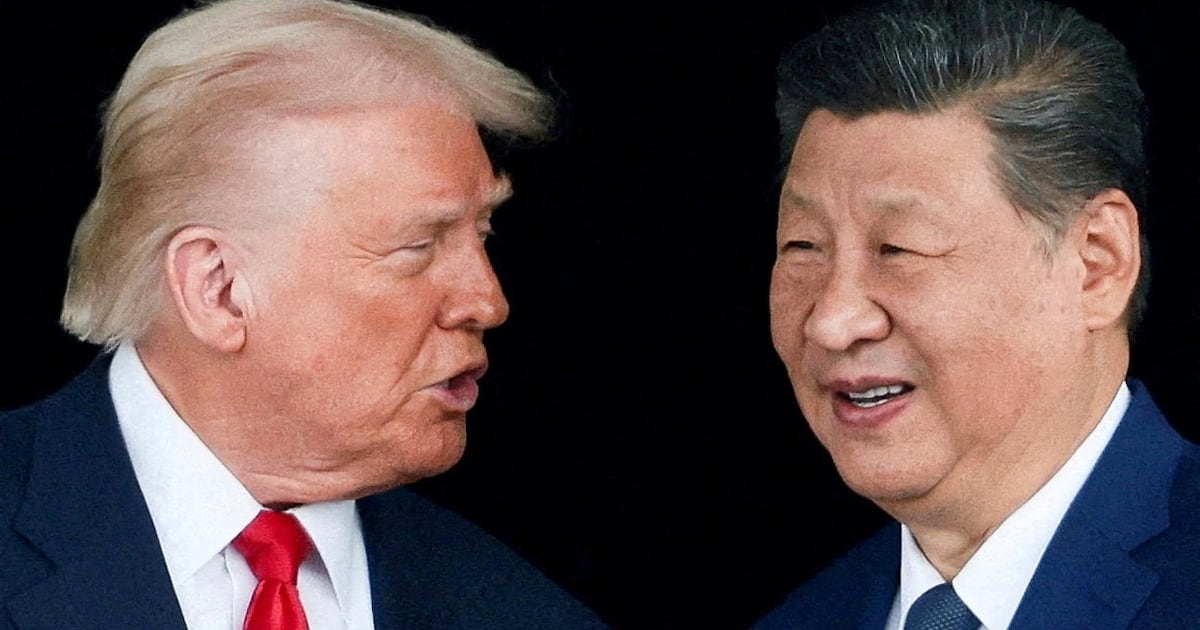
President Donald Trump has asserted that he is ensuring the “permanent opening” of the Strait of Hormuz, a claim that comes amid a volatile security environment in the Persian Gulf. On April 15, Trump stated that his actions to preserve the critical waterway open have been met with approval from China, signaling a complex intersection of maritime security and high-stakes diplomacy between the world’s two largest economies according to reports on Trump’s claims.
The announcement follows a period of intense friction in the region. Reports indicate that the United States initiated a maritime “counter-blockade” centered on the Strait of Hormuz starting the morning of April 13 (11 p.m. Korea time), following the collapse of peace negotiations between Washington and Tehran as reported by Money Today. This rapid shift from a reported blockade to a claim of “permanent opening” highlights the fluid and often contradictory nature of the current geopolitical maneuvering in the Middle East.
The timing of these developments is particularly critical as President Trump and Chinese President Xi Jinping are scheduled for a summit in May. Analysts suggest that the maritime situation in the Strait of Hormuz has emerged as a primary variable that could either facilitate or hinder the upcoming diplomatic engagement via Money Today.
The Strait of Hormuz as Diplomatic Leverage
The Strait of Hormuz is one of the world’s most strategically important chokepoints, serving as the primary artery for global oil shipments. For China, which relies heavily on Middle Eastern energy imports, any disruption in the strait is a direct threat to its national energy security and supply chain stability.
Jesse Marks, founder of the U.S.-based consulting firm Rehla Research, suggests that the U.S. Actions in the strait may be a calculated negotiation tactic. Marks posits that by creating a “political dilemma” for Beijing, President Trump may be attempting to secure concessions in other critical areas—such as rare earth minerals, trade terms, and cooperation regarding policies toward Iran—ahead of the May summit according to analysis cited by Money Today.
Still, this strategy carries significant risks. While the U.S. May view these moves as leverage, there is a concern that China could perceive such actions as coercive, potentially reducing the room for compromise during the bilateral talks. The tension puts China’s long-standing “strategic ambiguity” regarding the U.S.-Iran conflict to a rigorous test.
China’s Response and Energy Security Concerns
The Chinese government has officially denied allegations related to the current crisis. Despite the official stance, experts within China are voicing concerns over the potential for prolonged instability in the region. Jin Liangxiang, a senior researcher at the Shanghai Institutes for International Studies, noted that if the crisis in the Strait of Hormuz remains unresolved, the likelihood of President Trump visiting China may decrease as reported by Chosun Ilbo.
Jin further warned that U.S. Maritime interventions could have a cascading negative effect on China’s energy security, its broader supply chains, and its established trade relationships with Gulf nations. For Beijing, the stability of the strait is not merely a regional issue but a fundamental component of its economic survival.
Key Geopolitical Dynamics at a Glance
| Stakeholder | Primary Interest | Current Position/Risk |
|---|---|---|
| United States | Regional containment of Iran. diplomatic leverage over China. | Shifting between counter-blockade and “permanent opening” claims. |
| China | Energy security; uninterrupted oil flow from the Gulf. | Facing a political dilemma; denying allegations while fearing supply shocks. |
| Iran | Sovereignty over the strait; end of U.S. Sanctions. | Negotiations with the U.S. Recently collapsed, leading to increased tensions. |
What This Means for Global Markets
The volatility in the Strait of Hormuz inevitably spills over into global energy markets. Whenever the possibility of a blockade is raised, oil prices typically react with increased volatility. The contradiction between the reported April 13 blockade and the April 15 claim of “permanent opening” creates a climate of uncertainty for traders and policymakers alike.

The “permanent opening” claim by President Trump is seen by some as an attempt to project stability and leadership over the waterway, potentially to appease international partners and China. However, the reality on the water—where U.S. Naval assets are actively engaged in counter-blockade operations—suggests a far more precarious situation than the rhetoric implies.
For the global community, the resolution of this standoff depends on whether the U.S. Can successfully transition its “maximum pressure” campaign into a sustainable diplomatic agreement, or if the strait will remain a flashpoint for larger power struggles between Washington and Beijing.
The next critical checkpoint for this unfolding situation will be the U.S.-China summit scheduled for May, where the outcomes of the Hormuz crisis and the stability of energy corridors are expected to be central themes of discussion.
We invite our readers to share their perspectives on how these maritime tensions might affect global trade in the comments section below. For further updates on international diplomacy and security, please follow our World section.