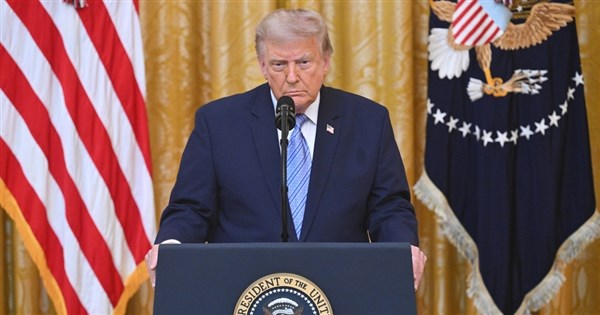
Donald Trump, in a recorded address released to the public, alleged that the Chinese government played a role in interfering with the 2020 presidential election, specifically claiming that sensitive data belonging to 220 million American voters was compromised. These assertions, which reiterate claims regarding election integrity that have been previously contested by federal and state officials, have drawn significant attention to the ongoing discourse surrounding foreign influence in American democratic processes.
The address, which was distributed through digital channels, prompted a varied response from national media organizations. Several major television networks opted not to broadcast the speech in real-time, citing editorial discretion and concerns regarding the accuracy of the claims presented. In response to the decision by these outlets to withhold coverage, the former president criticized the media, suggesting that such actions warrant a review of broadcast licensing.
Allegations of Foreign Interference and Data Security
In the video address, Donald Trump asserted that the 2020 election was subject to foreign intervention, with a specific focus on the role of the Chinese state. He alleged that voter information for 220 million Americans had been accessed or stolen as part of this effort. These claims align with a broader, long-standing narrative maintained by the former president regarding the legitimacy of the 2020 results, despite widespread findings to the contrary.

Media Response and Broadcast Decisions
The decision by various television networks to decline the live broadcast of the former president’s address reflects a broader trend in how media organizations manage political rhetoric that challenges verified election outcomes. According to reports from industry observers, networks evaluated the potential for misinformation during the broadcast as a primary factor in their programming decisions.
Following the refusal of these networks to air his remarks, the former president publicly criticized the media, stating that such outlets should face consequences, including the potential revocation of their broadcast licenses. This rhetoric highlights the persistent tension between the former president’s political communications strategy and the editorial standards maintained by major news organizations.
Geopolitical Implications
The timing and content of these allegations have raised concerns among policy analysts regarding the future trajectory of U.S.-China relations. Observers have noted that linking China directly to the 2020 election results introduces a new layer of complexity to an already strained bilateral relationship, which is currently defined by competition in trade, technology, and regional security.
Fact-Checking the Claims
To understand the scope of the claims presented, it is necessary to distinguish between documented cyber threats and unverified allegations. The following points summarize the current state of official findings:
- Data Security: While data breaches involving American citizens occur frequently, there is no official record from the FBI or CISA confirming that 220 million voter records were stolen by the Chinese government specifically to facilitate election interference in 2020.
- Regulatory Oversight: The FCC does not have the legal authority to revoke a broadcast license based solely on the content of a political speech or the decision by a network not to air a specific segment, as established by the Communications Act of 1934.
As the political environment surrounding the 2020 election continues to evolve, official updates and documentation regarding election security are archived by the Cybersecurity and Infrastructure Security Agency. Readers seeking verified information on foreign influence reports can consult the official releases provided by the Office of the Director of National Intelligence. Further developments regarding political discourse and media relations will continue to be monitored as they arise.
Related reading
- Des eurodéputés réclament un contrôle de l’aide au Polisario – APAnews – Agence de Presse Africaine
- Flash Flood Warning Issued for Phoenix Until 12:30 p.m.
- Trump Calls 2026 World Cup the Biggest Sporting Event Ever (world-today-news.com)
- Trump Administration Says 250K Non-Citizens Registered to Vote in 4 States (time.news)