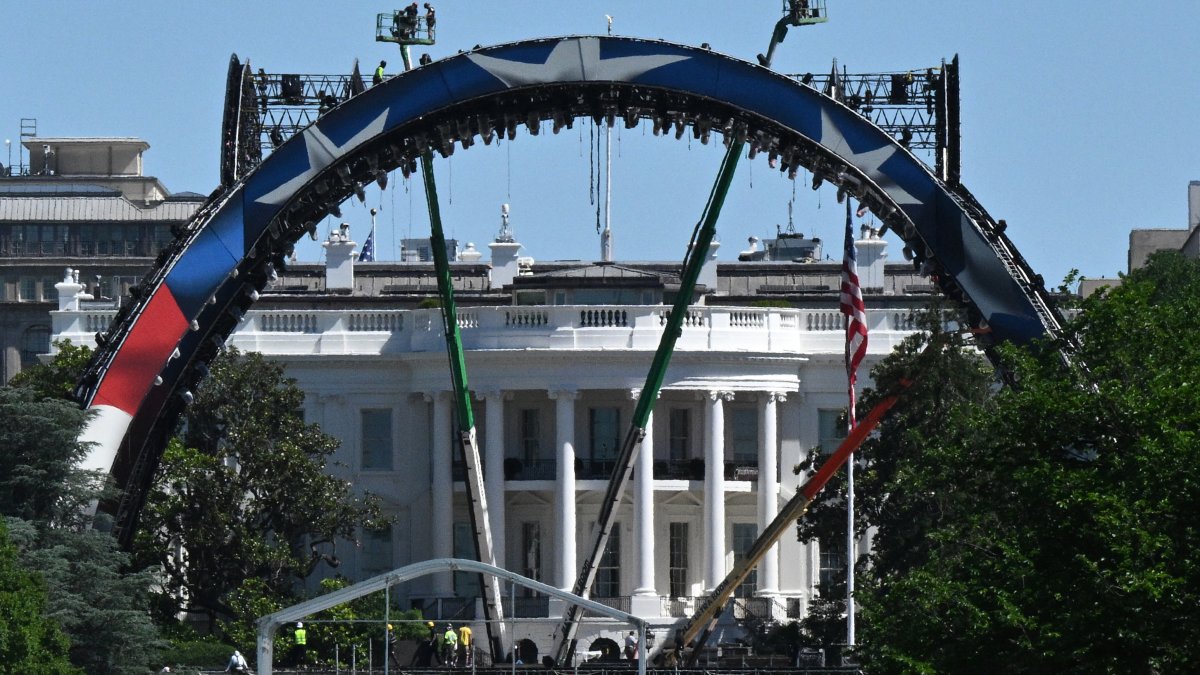
In a recent social media update, President Donald Trump sparked public interest by suggesting that the temporary structure currently erected on the South Lawn of the White House might remain a permanent fixture. The installation, an octagon-shaped arena designed for an upcoming Ultimate Fighting Championship (UFC) bout, was commissioned as part of the preparations for the United States’ 250th anniversary celebrations. The President’s comments, which compared the potential long-term presence of the arena to the history of the Eiffel Tower, have drawn attention to the intersection of modern sporting events and the historic grounds of the Executive Mansion.
The structure serves as the centerpiece for a high-profile event scheduled for June 14, which aims to highlight the intersection of American culture and professional sports. By likening the octagon to the Eiffel Tower—a structure originally intended for the 1889 Exposition Universelle in Paris—the President suggested that temporary installations sometimes evolve into iconic landmarks. While the White House grounds are subject to strict oversight by the National Park Service and other federal agencies, the suggestion that such a venue could become a permanent fixture has prompted discussion regarding the use of federal property for commercial sporting ventures.
Historical Context: Temporary Installations and Architectural Legacy
The Eiffel Tower, frequently cited in cultural discussions about temporary versus permanent architecture, was indeed designed by Gustave Eiffel as a temporary centerpiece for the 1889 World’s Fair. According to official records from the official site of the Eiffel Tower, the structure was granted a 20-year permit before it was slated for demolition. Its survival was largely attributed to its utility as a giant radio antenna, which eventually secured its status as a permanent global icon.
When drawing this parallel, the President noted in his video, “They said, you know we sort of like it, let’s leave it up a little bit longer. And then they said, let’s leave it up longer and longer and longer. Well, they never took it down.” This framing serves to justify the potential retention of the UFC octagon, positioning it not merely as a sporting stage but as a potential point of interest for future visitors. However, the legal and logistical framework governing the White House South Lawn differs significantly from the urban planning regulations of 19th-century Paris.
Regulatory Oversight and Federal Property Management
The White House grounds are managed under the jurisdiction of the National Park Service (NPS), which maintains rigorous standards for the preservation of the Executive Residence and its surrounding landscape. Any modifications to the South Lawn, particularly those of a semi-permanent or permanent nature, must comply with the National Park Service Management Policies, which prioritize the preservation of historic resources over new, non-essential development. The process for installing such a structure involves extensive planning, environmental review, and coordination with the White House Historical Association.
As of this writing, there have been no official announcements from the Office of the President or the NPS indicating a formal plan to retain the UFC structure beyond the June 14 event. The current arrangement for the bout is categorized under special event permitting, which mandates the removal of equipment and infrastructure once the event concludes. The administrative timeline for such operations is typically managed by the White House Usher’s Office, which coordinates the logistical footprint of all public-facing events on the premises.
The Intersection of Politics and Combat Sports
The decision to host a UFC fight at the White House marks a departure from traditional programming on the South Lawn, which has historically been reserved for state arrivals, holiday celebrations, and public tours. The UFC, a premier mixed martial arts organization, has seen its profile rise significantly in political circles over the past decade. The integration of such a high-intensity sport into the aesthetic of the White House reflects a shift toward incorporating contemporary pop culture into the symbolic landscape of the American presidency.
Proponents of the event argue that it serves as a modern celebration of American athleticism and the country’s diverse cultural output. Critics, however, have questioned the appropriateness of utilizing the seat of the executive branch for commercial entertainment, citing concerns about the commercialization of a national historic landmark. The debate surrounding the “permanence” of the octagon touches upon broader questions regarding how government institutions balance their roles as historical stewards and platforms for contemporary political and cultural messaging.
Next Steps and Future Developments
The primary checkpoint for this situation remains the event date of June 14. Following the conclusion of the bout, observers will be looking for confirmation from the White House regarding the dismantling of the structure. Any deviation from the standard operating procedure—which requires the removal of temporary event infrastructure—would likely require public notifications or updates from the Executive Office of the President.
For those interested in the official status of events held at the White House, the official White House website serves as the primary source for press releases and scheduled updates. As the date approaches, further details regarding access, security protocols, and the post-event cleanup schedule are expected to be released through official channels. We invite our readers to share their perspectives on the role of the White House in hosting modern cultural events in the comments section below.
Worth a look
- China Overhauls Housing Provident Fund System: New Rules Expand Coverage and Usage to Boost Real Estate Market
- Dios en el Timón – Official Video
- Trump Slams Iran’s Duplicity and Warns Blockade Will Remain Amid Stalled Talks (world-today-news.com)
- Why Some Popcorn Kernels Never Pop, Explained (daybreakwire.com)