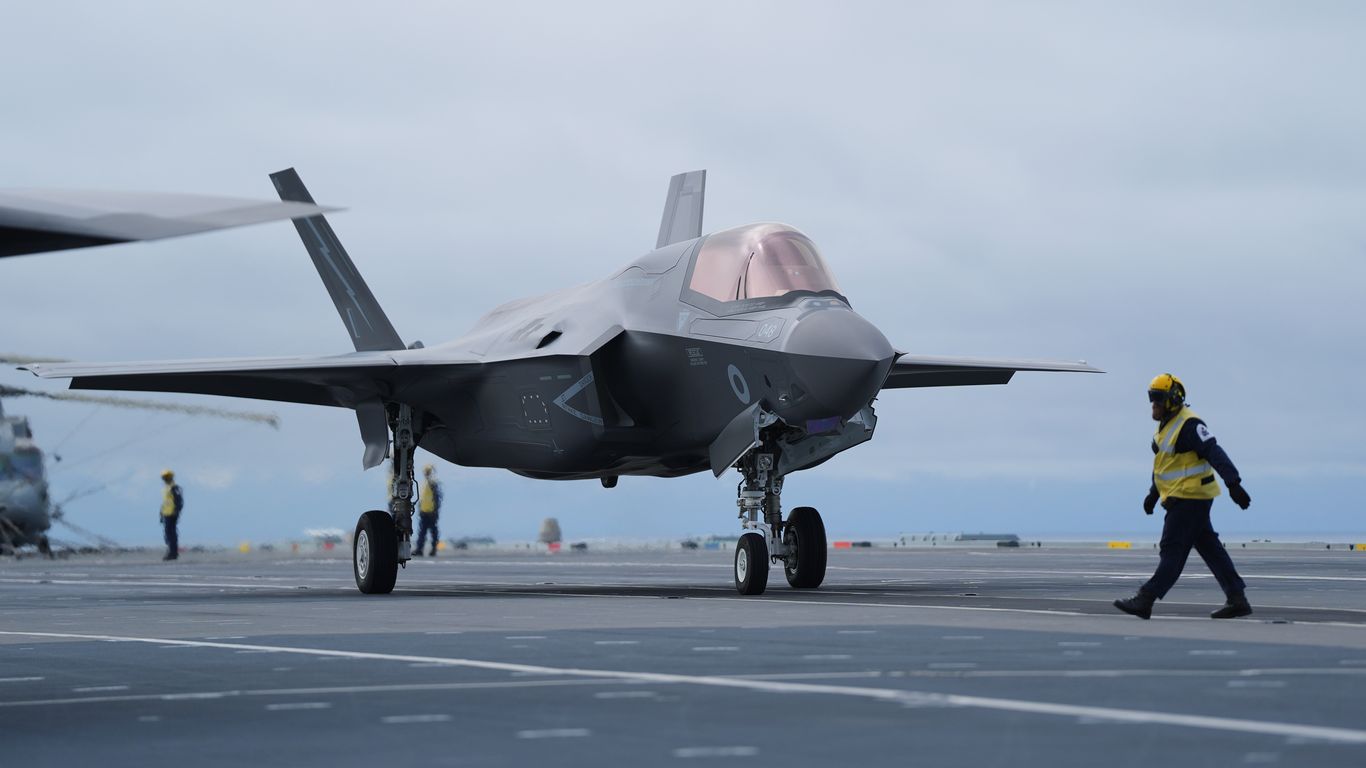
President Trump signaled on Tuesday during a meeting with Turkish President Erdoğan in Ankara that he is open to allowing Turkey to rejoin the F-35 fighter jet program and selling the advanced aircraft to the Turkish air force. This potential shift in U.S. policy comes after Turkey was expelled from the program in 2019 following its acquisition of the Russian-made S-400 air defense system.
The move would make Turkey the first country in the region to be part of the F-35 development and production program and the second in the region to operate the jets after Israel. According to President Trump, the decision is under consideration because Turkey has been “much more loyal than other countries that we think would be loyal,” as he stated when asked about the potential sale.
The proposal faces significant diplomatic and legislative hurdles. Israeli Prime Minister Benjamin Netanyahu reportedly asked President Trump to refrain from selling the jets to Turkey, citing concerns over escalating anti-Israel rhetoric from Erdoğan, according to a report by Axios. Additionally, a group of 18 U.S. lawmakers, led by Rep. Dina Titus (D-Nev.), sent a letter Tuesday to House majority leader Rep. Steve Scalise (R-La.) and House minority leader Rep. Hakeem Jeffries (D-N.Y.) urging them to block the sale.
Why is the U.S. reviewing the F-35 sale to Turkey?
The primary obstacle to Turkey’s participation in the program is the presence of the Russian S-400 missile system. U.S. officials have previously stated that the S-400 could compromise the advanced fighter jet. Turkey was expelled from the program in 2019 after it purchased Russia’s S-400 air defense system.

Vice President Vance announced last week that the Pentagon is currently conducting a review to determine how the U.S. could sell F-35s to Turkey despite its possession of the Russian-made missile defense system. Vance told reporters in the Oval Office that the administration must certify certain conditions have been met to comply with American law before a sale can proceed.
Erdoğan said the F-35s were promised to Turkey in the past and expressed confidence that the issue would move in a “positive direction” during his summit with Trump. Trump further defended the alliance, claiming Turkey has been a great ally and did not join the war with Iran, despite Iranian missiles hitting Turkish territory.
How would this affect regional military balance?
A sale of F-35s to Turkey would represent a shift in the regional balance of power. Israel fears it would tilt the regional balance of power and violate U.S. commitments to maintain Israel’s military edge.
The U.S. has also explored other regional sales. President Trump previously said he would sell F-35s to Saudi Arabia without it being part of the program. However, no deal has been approved and no jets have been delivered.
What legal challenges are opposing lawmakers citing?
The letter sent by Rep. Dina Titus and 17 other lawmakers argues that selling F-35s while Turkey still holds Russian-made S-400 air defense systems would violate U.S. law and sanctions.

The Pentagon’s current review, as mentioned by Vice President Vance, is specifically designed to determine how the U.S. could sell F-35s to Turkey despite its possession of the Russian-made missile defense system.
We welcome your thoughts on this developing story in the comments below. Please share this report with your network to keep the global business and defense community informed.