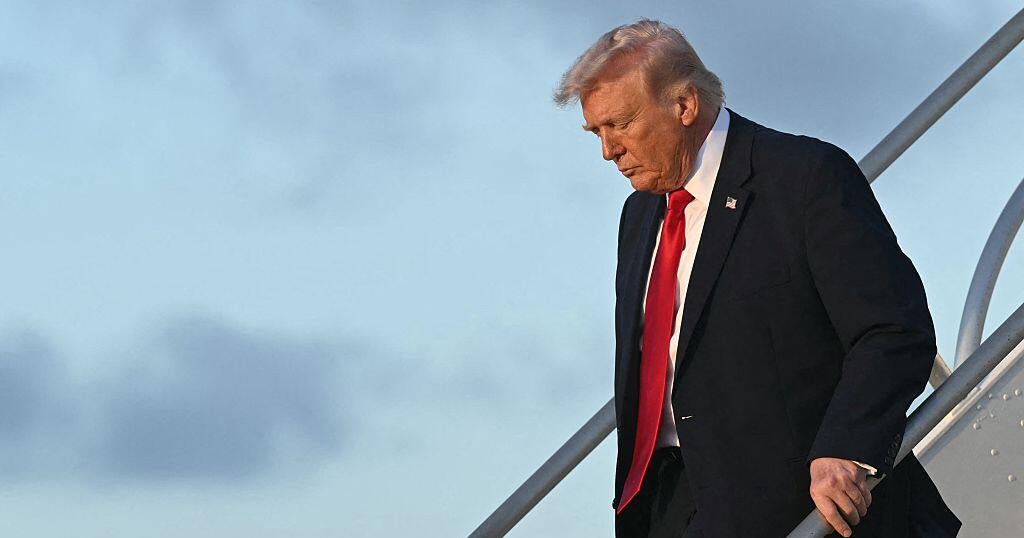
Trump Dismisses Iranian Threats as Conflict Enters its Tenth Day
London, United Kingdom – As the conflict between the U.S.-Israel alliance and Iran enters its tenth day, former U.S. President Donald Trump has dismissed threats from a key Iranian security official as inconsequential. The exchange comes amid escalating tensions and a growing death toll across the region, with reports of significant damage to infrastructure in Iran, Lebanon, and the Gulf states. The situation remains highly volatile, with international observers closely monitoring developments for any sign of de-escalation.
Ali Larijani, Secretary of Iran’s Supreme National Security Council, posted on X (formerly Twitter) on Saturday, warning that Trump must “pay the price” for the U.S.-Israel strikes on Iran. This statement followed the death of Supreme Leader Ayatollah Ali Khamenei on February 28th, the first day of the conflict, an event that has significantly heightened tensions. Larijani, a former Islamic Revolutionary Guard Corps officer, has emerged as a prominent voice within Iran’s leadership following Khamenei’s death. The escalating rhetoric underscores the deep-seated animosity and the potential for further escalation in the region.
In a phone interview with CBS News, Trump responded to Larijani’s threat with characteristic dismissiveness. “I have no idea what he’s talking about, who he is. I couldn’t care less,” Trump stated, adding that Larijani has “already been defeated.” This response reflects Trump’s continued hardline stance towards Iran and his confidence in the success of the military campaign. The former president also criticized other Iranian leaders, labeling them as weak and diminished, and reiterated his demand for an “unconditional surrender” from Iran.
Escalating Conflict and Regional Impact
The conflict, which began with coordinated U.S.-Israeli strikes on Iran, has rapidly expanded to include retaliatory attacks across the Middle East. According to U.S. Central Command, at least 43 Iranian ships have been damaged or destroyed in U.S. Strikes, and over 3,000 targets have been hit since the start of the war. These strikes have targeted energy facilities, military installations, and infrastructure across Iran and neighboring countries. The scale of the destruction has raised concerns about the long-term economic and environmental consequences of the conflict.
The violence has resulted in a significant loss of life. As of March 8, 2026, over 1,230 people have died in Iran, whereas more than 70 have been killed in Lebanon and six U.S. Troops have lost their lives. The conflict has also triggered a humanitarian crisis, with thousands of people displaced and in require of assistance. The United Nations and other international organizations are working to provide aid to those affected by the violence, but access remains a challenge in many areas.
The conflict’s reach extends beyond Iran, Israel, and Lebanon. Residents in Dubai, UAE, received ‘missile threat’ alerts on their mobile phones on Friday, highlighting the potential for the conflict to spread to other Gulf states. The U.S. Embassy in Kuwait has been temporarily shut down amid Iranian strikes, and explosions were reported near the U.S. Embassy in Oslo, Norway, even though the cause remains unclear. These incidents demonstrate the far-reaching consequences of the conflict and the heightened security concerns across the region.
Internal Divisions and Shifting Leadership in Iran
The death of Ayatollah Ali Khamenei has created a power vacuum within Iran, leading to internal divisions and a shifting leadership landscape. While Ali Larijani has emerged as a prominent voice, an interim three-person council, including Iranian President Masoud Pezeshkian, is now playing a central role in the country’s governance. This council faces the difficult task of navigating the ongoing conflict while also addressing internal tensions and maintaining stability.
President Pezeshkian initially issued a video apology to Iran’s neighbors for retaliatory strikes, stating that Iran would cease attacks on other Persian Gulf states unless provoked. Though, he later backtracked on this statement, clarifying that Iran had only targeted U.S. Military bases and facilities in the region. Pezeshkian reiterated this position in a subsequent post on X, emphasizing that Iran’s actions were aimed at countering U.S. Military presence in the Middle East.
Trump’s Confidence and Allies’ Role
Trump has expressed unwavering confidence in the U.S. Strategy, claiming that the U.S. Has “diminished the Iranian military and regime” and will continue to expand its targets within Iran. He boasted about the success of the military campaign, stating, “It’s been incredible, the job we’ve done. The missiles are blow to smithereens…The navy is gone, it’s at the bottom of the sea. Forty-two ships, 42, in six days.” These claims, while assertive, require independent verification.
Regarding the role of U.S. Allies, Trump indicated that he is primarily focused on the U.S. Military efforts and the support of nations that have been early supporters of his approach. When asked if he would like to see U.S. Allies do more, he responded, “I couldn’t care less. They can do whatever they want. The loyal ones are already in.” This statement suggests a willingness to proceed with the military campaign regardless of the level of support from international partners.
The United Kingdom had reportedly readied two aircraft carriers for potential deployment to the Middle East, but Trump dismissed this as unnecessary, rebuking British Prime Minister Keir Starmer for what he perceived as a slow response to granting the U.S. Access to British bases for launching strikes. Trump criticized Starmer’s actions in a post on Truth Social, highlighting the strained relationship between the two leaders.
Uncertainty and Diplomatic Pathways
The sustained and pointed exchange between Trump and Iranian leaders underscores the uncertainty surrounding potential diplomatic engagement in the coming weeks. Iran’s leadership is grappling with both Trump’s assertive military strategy and internal divisions, making it difficult to identify a clear path towards de-escalation. The complex political landscape and the deep-seated animosity between the two countries pose significant challenges to any potential negotiations.
The situation remains fluid, and unpredictable. The international community is urging restraint and calling for a peaceful resolution to the conflict. However, with both sides seemingly entrenched in their positions, the prospects for a swift end to the violence appear dim. The coming days will be critical in determining whether the conflict will continue to escalate or whether a diplomatic solution can be found.
The next key development to watch will be the scheduled meeting of the UN Security Council on March 12, 2026, where the escalating conflict in the Middle East is expected to be a primary topic of discussion. Further updates on the situation, including any potential diplomatic initiatives, will be closely monitored and reported as they become available.
What are your thoughts on the escalating tensions in the Middle East? Share your comments below and join the conversation.
Keep reading
- Florida Senate Candidate: “People Must Control Their Government” Regarding Fiscal Board
- US Governors’ Legal Action: State List and Details
- Kieran Tierney’s Impact in Celtic’s Victory Over Dundee (newsdirectory3.com)
- Cincinnati Woman Arrested for Making Bomb Threats to Mississippi Agencies (news-usa.today)