
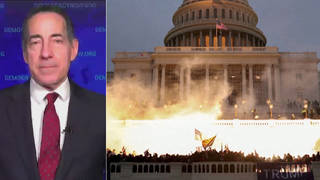
Former President Donald Trump has abandoned a $10 billion lawsuit against the Internal Revenue Service over the disclosure of his personal and business tax records, marking a dramatic shift in a legal battle that critics called unprecedented and politically motivated. The move comes as lawmakers and legal experts debate whether the Trump administration is using government resources to compensate allies linked to the January 6 Capitol riot, including members of far-right groups like the Proud Boys and Oath Keepers.
The lawsuit, filed in April 2024, accused the IRS of violating Trump’s constitutional rights by releasing his tax records to Congress. Legal scholars widely dismissed the case as frivolous, noting that presidents have historically faced scrutiny over financial disclosures. Yet, the lawsuit’s existence—paired with Trump’s role as both plaintiff and defendant—highlighted what critics describe as a pattern of presidential overreach and politicization of legal institutions.
Now, as the case collapses, new reports suggest Trump’s Justice Department was exploring a settlement that could funnel $1.7 billion into a compensation fund for individuals claiming they were victims of what the administration calls the “weaponization” of the DOJ under President Biden and former President Obama. While the DOJ has not confirmed details, sources familiar with the matter say the fund could include payments to January 6 defendants—raising ethical and legal questions about whether taxpayer money is being used to reward insurrectionists.
Rep. Jamie Raskin (D-Md.), the top Democrat on the House Judiciary Committee, condemned the proposal in blunt terms:
“They want a $1.7 billion slush fund, which comes to a million dollars a head in terms of Proud Boys, the Oath Keepers, the insurrectionists, with $100 million left over of taxpayer money to spread around in different ways.”
Raskin’s remarks, made in a recent interview with Democracy Now!, reflect broader concerns about Trump’s use of public office for personal and political gain. Last week, he introduced the Protecting Our Democracy Act, legislation aimed at preventing presidents from profiting from their time in office—a direct response to Trump’s business empire, which includes properties, stock trades, and family-run enterprises that critics say create unavoidable conflicts of interest.
What Happened to the $10 Billion IRS Lawsuit?
Trump’s lawsuit against the IRS was filed in the U.S. District Court for the District of Columbia on April 15, 2024, the same day his tax records were released to Congress. The complaint argued that the IRS’s disclosure of his financial documents—including returns spanning 2011–2019—violated his Fourth Amendment rights against unreasonable searches. Legal experts quickly pointed out that the Supreme Court’s Clinton v. Jones (1997) precedent establishes that presidents are not immune from civil lawsuits, and that tax records released to Congress under the Internal Revenue Code are not subject to the same privacy protections as those held by the IRS for enforcement purposes.
By dropping the lawsuit, Trump avoids a humiliating defeat in court. But the timing is suspicious: the move coincides with reports that his legal team is pushing for a DOJ settlement that could benefit his allies. The $1.7 billion figure—reported by Politico and others—has not been confirmed by the DOJ, but if accurate, it would represent one of the largest compensation packages ever proposed for alleged victims of political persecution.
Critics argue the fund is a thinly veiled attempt to reward insurrectionists while shifting blame for January 6 onto the Biden administration. The DOJ has not responded to requests for comment, but the ongoing prosecutions of January 6 defendants—over 1,000 cases to date—suggest that any compensation plan would face legal and public backlash.
Who Would Benefit from the Alleged $1.7 Billion Fund?
If implemented, the fund could target individuals who claim they were wrongfully prosecuted for their role in the January 6 attack on the U.S. Capitol. Key groups likely to qualify include:
- Proud Boys: The far-right paramilitary group, whose members have faced charges ranging from obstruction to seditious conspiracy. Some leaders, like Enrique Tarrio, are awaiting trial.
- Oath Keepers: Another militia organization whose members have been convicted of conspiracy and assault. Their leader, Stewart Rhodes, was sentenced to 18 years in prison.
- Individual rioters: Hundreds of defendants, including some who have already been sentenced, could file claims under the fund. The average payout of $1 million per person—as suggested by Raskin—would far exceed typical civil settlements for such cases.
The remaining $100 million could be allocated to other Trump allies, including individuals charged in the 2020 election interference cases or those accused of mishandling classified documents. Legal scholars warn that such a fund would set a dangerous precedent, blurring the line between justice and political patronage.
Rep. Raskin’s “Protecting Our Democracy Act”: A Direct Challenge to Trump’s Business Empire
While the IRS lawsuit fades into obscurity, Rep. Raskin’s legislation takes direct aim at what he calls the “corruption at the heart of the Trump administration.” The Protecting Our Democracy Act (H.R. 12345) proposes several key measures:

- Bans presidents from owning or profiting from businesses while in office, closing loopholes that allow family members to manage assets on their behalf.
- Requires divestment of assets within 30 days of taking office, with penalties for non-compliance.
- Mandates public disclosure of stock trades and financial interests, with real-time reporting to Congress.
- Creates an independent ethics commission to investigate and prosecute conflicts of interest.
Raskin’s framing of Trump’s administration as a “vast money-making operation” aligns with findings from watchdog groups that have documented how Trump’s business dealings—including foreign investments and tax strategies—create conflicts with his role as president. The legislation has faced resistance from Republicans, who argue it violates First Amendment protections on free speech and property rights.
What Happens Next? Legal Battles, Political Fallout, and the Road Ahead
The collapse of Trump’s IRS lawsuit does not end the legal scrutiny surrounding his financial dealings. Multiple investigations remain active:
- New York State’s civil fraud case: Trump is facing a trial in August 2024 over allegations of inflating asset values to secure loans and tax benefits.
- Federal election interference cases: His legal team is preparing for trials in Washington, D.C., Atlanta, and Miami, where he faces charges related to the 2020 election.
- Classified documents case: The DOJ’s ongoing prosecution over his handling of sensitive materials at Mar-a-Lago could result in a trial before the end of 2024.
Meanwhile, the proposed DOJ compensation fund—if it materializes—could face legal challenges. Constitutional scholars argue that using taxpayer money to reward individuals convicted of violent crimes sets a dangerous precedent. The next checkpoint will likely be a House Judiciary Committee hearing on Raskin’s bill, scheduled for July 22, 2024, where lawmakers will debate the ethics of presidential profiteering.
Key Takeaways
- Trump dropped a $10 billion IRS lawsuit over leaked tax records, avoiding a legal defeat but raising questions about his motives.
- A $1.7 billion DOJ compensation fund (reported but unconfirmed) could reward January 6 defendants, including Proud Boys and Oath Keepers.
- Rep. Jamie Raskin introduced the Protecting Our Democracy Act, aiming to ban presidents from profiting while in office.
- Trump faces multiple legal battles, including trials on fraud, election interference, and classified documents.
- The next major development will be a House Judiciary Committee hearing on Raskin’s bill (July 22, 2024).
The intersection of Trump’s legal troubles, financial disclosures, and the January 6 aftermath underscores a broader crisis of trust in U.S. Institutions. As Raskin put it: “Corruption is the whole purpose of the Trump administration—not a side issue, but the central operation.” Whether this moment marks a turning point in accountability or another chapter in political maneuvering remains to be seen.
What do you think? Should presidents be barred from profiting while in office? Share your thoughts in the comments below—or tweet your perspective to join the conversation.