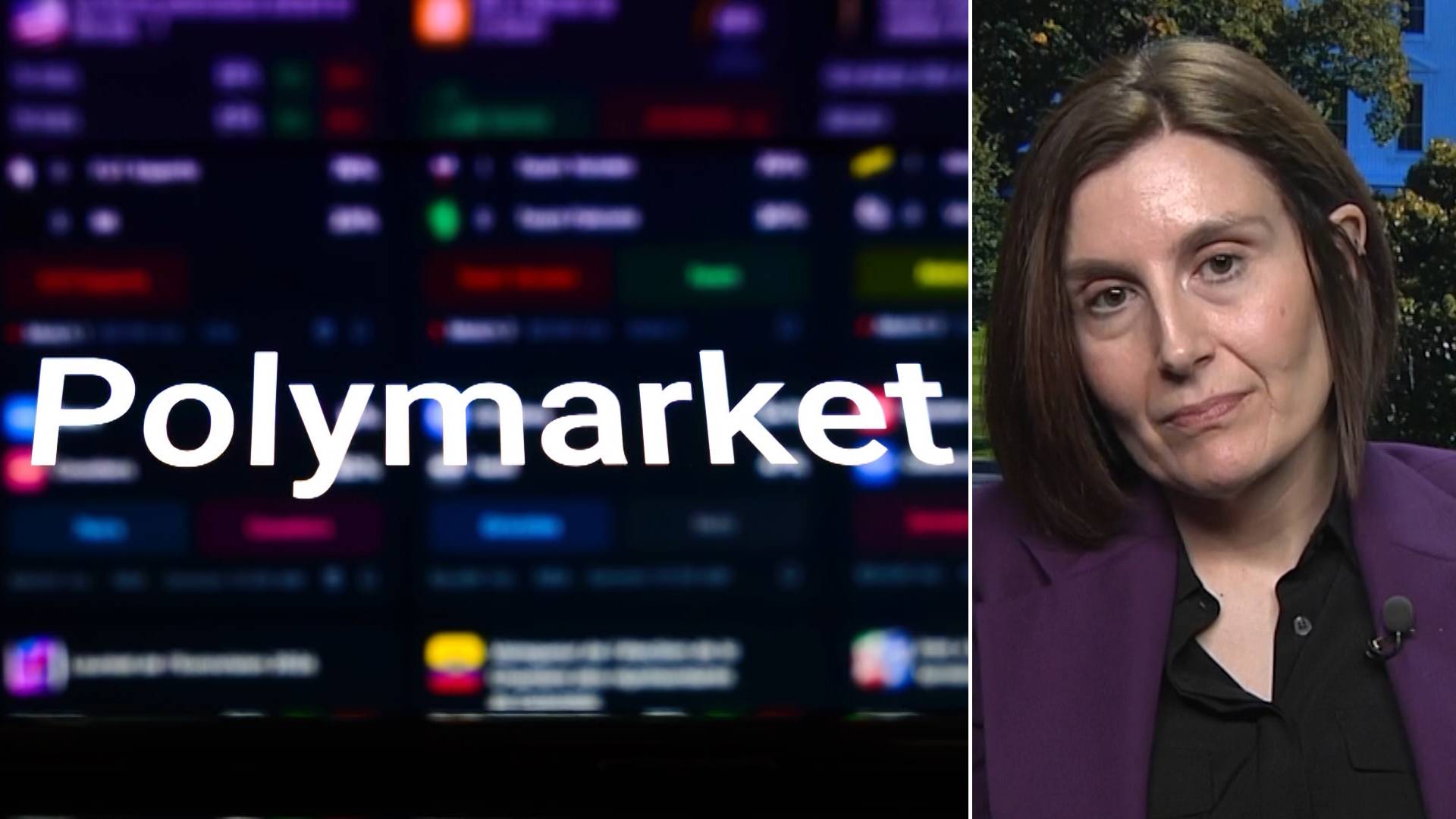
Online prediction markets have become a focal point of regulatory scrutiny as reports emerge of substantial financial gains tied to geopolitical events, particularly the escalating tensions between the United States and Iran. In April 2026, Democracy Now! highlighted concerns that a minor group of traders had realized profits exceeding $1 billion from well-timed bets related to the prospect of war with Iran, prompting questions about potential insider advantages and the adequacy of oversight mechanisms.
Amanda Fischer, who serves as both policy director and chief operating officer for Better Markets—a Washington, D.C.-based financial reform advocacy organization—emphasized the ambiguity surrounding regulatory vigilance in this space. Speaking on the same program, Fischer noted that while federal law prohibits certain types of speculative contracts, enforcement has significantly weakened under the current administration.
“There is a strict prohibition on offering gambling related to war, assassination, terrorism, gaming, activities that are illegal under state law or anything that’s contrary to the public interest,” Fischer stated. “But the [Commodity Futures Trading Commission] under President Trump has completely retrenched from any enforcement of what kind of contracts are made available on these platforms.”
The report too drew attention to the advisory role of Donald Trump Jr. With two prominent prediction market operators, Polymarket and Kalshi, raising additional concerns about possible conflicts of interest given his familial connection to the president.
Understanding Prediction Markets and Regulatory Boundaries
Prediction markets allow participants to buy and sell contracts based on the outcome of future events, such as elections, economic indicators, or geopolitical developments. These platforms operate by letting users wager on probabilities, with payouts determined by whether the predicted event occurs. While often framed as tools for forecasting or hedging risk, they have increasingly attracted scrutiny when tied to sensitive subjects like armed conflict or political instability.
Under the Commodity Exchange Act, the Commodity Futures Trading Commission (CFTC) holds authority over derivatives markets, including certain types of prediction market contracts. The agency has previously taken action against platforms offering contracts deemed to be illegal gambling or contrary to public policy, particularly those involving assassination, terrorism, or war-related scenarios.
Fischer’s reference to a “strict prohibition” aligns with longstanding CFTC guidance that contracts based on unlawful activities or events violating public policy are not permissible. However, her assertion that the commission has “completely retrenched from any enforcement” reflects a broader critique of reduced regulatory activity in recent years, particularly concerning novel financial products operating in gray areas of jurisdiction.
Verified Roles and Affiliations
According to Better Markets’ official team page, Amanda Fischer holds the dual role of policy director and chief operating officer. Her professional background includes prior service as Policy Director at the Washington Center for Equitable Growth, where she led research initiatives focused on economic inequality and policy reform. This information is consistent with her LinkedIn profile, which confirms her current position at Better Markets and her educational background at Georgetown University.
Better Markets describes itself as a nonpartisan organization dedicated to promoting financial stability and accountability through policy advocacy and market oversight. The group has frequently commented on derivatives regulation, market transparency, and the risks posed by speculative trading practices.
Leadership Ties and Conflict of Interest Concerns
The involvement of Donald Trump Jr. As an adviser to both Polymarket and Kalshi was cited in the original Democracy Now! report as a factor intensifying scrutiny over potential conflicts of interest. While neither platform has publicly detailed the nature of his advisory role, the connection has been noted in multiple media coverage as warranting closer examination due to his proximity to the executive branch.
Polymarket and Kalshi are among the most widely recognized prediction market platforms operating in the United States. Both have facilitated trading on a range of topics, including political outcomes and international events. Regulatory filings and public statements indicate that both companies have engaged with the CFTC regarding the classification of their products, though outcomes of such engagements remain subject to ongoing oversight.
Regulatory Landscape and Enforcement Trends
The CFTC has historically maintained that it will not permit contracts that facilitate betting on terrorism, war, or other illicit activities. In past enforcement actions, the agency has issued cease-and-desist orders against platforms offering contracts it deemed to violate these principles. However, critics argue that the rapid growth of decentralized and offshore-linked prediction markets has complicated enforcement efforts, particularly when platforms operate outside traditional regulatory perimeters.
Fischer’s comments reflect a wider debate among financial reform advocates about whether existing frameworks are sufficient to address innovations in speculative trading. Better Markets has previously called for clearer boundaries around what constitutes an allowable prediction market contract, especially as platforms expand into areas involving national security and foreign policy.
Context of U.S.-Iran Relations in 2026
While the original report did not specify the exact nature of the bets placed, it referenced the “war with Iran” as the catalyst for the alleged windfall profits. Publicly available records from early 2026 indicate heightened diplomatic and military tensions between the United States and Iran, including increased naval activity in the Persian Gulf and public rhetoric from officials on both sides regarding potential escalation.
No formal declaration of war has been issued by either nation as of April 2026, but analysts have pointed to a series of incidents—including attacks on commercial vessels, cyber operations, and proxy engagements—that have contributed to an environment of significant uncertainty. This context has made developments in U.S.-Iran relations a subject of intense speculation across financial and prediction markets.
Transparency and Public Interest Considerations
Financial transparency advocates argue that prediction markets tied to geopolitical events pose unique risks when they may incentivize or reward outcomes contrary to public safety or national interest. The concern is not merely about individual profit but about whether such markets could, intentionally or unintentionally, create perverse incentives related to conflict escalation.
Better Markets has consistently advocated for stronger oversight of complex financial instruments, emphasizing that innovation should not come at the expense of systemic stability or ethical boundaries. Fischer’s remarks underscore the organization’s position that regulatory agencies must actively monitor emerging markets to prevent abuse, particularly when they intersect with sensitive domains like national security.
As of late April 2026, no public enforcement actions by the CFTC specifically targeting war-related prediction market contracts had been announced. The agency continues to review product offerings on a case-by-case basis, guided by its mandate to ensure market integrity and protect participants from fraud or manipulation.
The situation remains under observation by policymakers, watchdog groups, and market participants. Any future developments—including potential hearings, regulatory statements, or enforcement notices—would be subject to official channels such as the CFTC’s website, congressional committee proceedings, or formal agency releases.
For readers seeking to understand the evolving dialogue around prediction markets and financial regulation, following updates from authoritative sources like the Commodity Futures Trading Commission, Better Markets, and reputable financial journalism outlets provides the most reliable path forward.
We encourage thoughtful engagement on this important topic. Share your perspectives in the comments below, and assist spread awareness by sharing this article with others interested in the intersection of finance, policy, and global affairs.
Related reading
- വാക്കുതര്ക്കം; 8 മാസം ഗർഭിണിയെ വെട്ടിക്കൊലപ്പെടുത്തി ഭർത്താവ്; ക്രൂരകൃത്യം മക്കളുടെ മുന്നിൽ വച്ച് – Manorama Online
- Verwaltungsangestellte:r (w/m/d) als Teamassistenz (Remote / Mobil möglich) – Bremen
- AEW News: Matt Hardy’s Concerns and MJF’s Absence Explained (archynewsy.com)
- Liverpool Beat Sunderland 4-2 But Joe Gomez Injury Concerns Iraola (time.news)