The Shifting Sands of Aid: Navigating Humanitarian Challenges in Gaza Amidst a Fragile Ceasefire
The recent ceasefire agreement has brought a temporary reprieve to Gaza, but the path to sustainable humanitarian relief is fraught with complexity. A dramatic reshaping of aid delivery mechanisms, initially marked by the sidelining of established organizations and a controversial experiment with a new, U.S.-backed entity, is now pivoting back towards the United Nations – a move that underscores the inherent difficulties of navigating aid distribution in a conflict zone. This article examines the evolution of humanitarian efforts in Gaza, the challenges faced, and the implications of the current U.S.-led approach.
From Established Networks to a Novel Approach – and Back Again
For decades, international aid organizations like UNRWA and established NGOs formed the backbone of humanitarian assistance in Gaza. However, in May, Israel halted all aid to the region for 11 weeks, and together began a process of de-registering major aid groups with long-standing operational histories. This created a vacuum quickly filled by the Gaza humanitarian Foundation (GHF), a relatively new nonprofit established just months prior.
The GHF’s emergence was especially noteworthy due to its origins and operational structure. Designed by American management consultants in collaboration with Israeli officials and businessmen,and funded in part by U.S. taxpayer dollars, the GHF relied on American security contractors for staffing. While intended to streamline aid delivery, the foundation’s impact was limited in scope. Operating a maximum of four distribution sites compared to the approximately 400 previously managed by the UN system, the GHF coincided with a dramatic spike in extreme malnutrition within Gaza.
Netanyahu’s administration cited concerns about looting by Hamas as justification for the GHF’s shortcomings.A GHF spokesperson countered, stating the association was “the only organization that delivered aid directly to the Palestinian people including women, children and elderly,” and acknowledged a recent reduction to three temporarily paused distribution sites due to the ongoing hostage exchange. however, independent food-security experts paint a starker picture, highlighting a clear correlation between the GHF’s dominance and a worsening nutritional crisis.
A Reassessment and the Return of the UN
The limitations of the GHF experiment have prompted a significant shift in strategy.The current ceasefire plan, spearheaded by the Trump administration, now explicitly relies on the United Nations, alongside the International Red Cross and Red Crescent Movement, and “other international institutions” to distribute aid. This represents a notable reversal, particularly given the President’s previous criticisms of the UN as a bureaucratic entity.
To facilitate this renewed collaboration, the U.S. has deployed approximately 200 troops to Israel to establish a civil-military coordination center. This center is tasked with ensuring aid groups have access and facilitating the flow of humanitarian assistance into Gaza. American diplomats are also being integrated into the process,signaling a significant U.S. commitment to the ceasefire’s success.
Navigating the Complexities of Civil-Military Coordination
The current approach presents unique challenges. Traditionally, civilian organizations lead relief efforts, relying on military forces for security and logistical support. The establishment of a U.S.-led civil-military coordination center, while intended to streamline operations, introduces a new layer of complexity. The precise role of the UN within this framework is still being defined,according to sources within the State Department.
Jared kushner, a senior advisor involved in the ceasefire negotiations, has reported “surprisingly strong” coordination between the United Nations and Israel. However, the success of this collaboration hinges on overcoming inherent tensions and ensuring that humanitarian principles – neutrality, impartiality, and independence – are upheld.
The Human Cost and the Urgency of Effective Aid Delivery
While the ceasefire has demonstrably improved conditions in Gaza, the humanitarian situation remains dire. Many individuals are suffering from severe malnutrition,requiring immediate medical intervention alongside food assistance. the breakdown of trust, exacerbated by the inconsistent aid delivery experienced in recent months, has led to desperate measures.
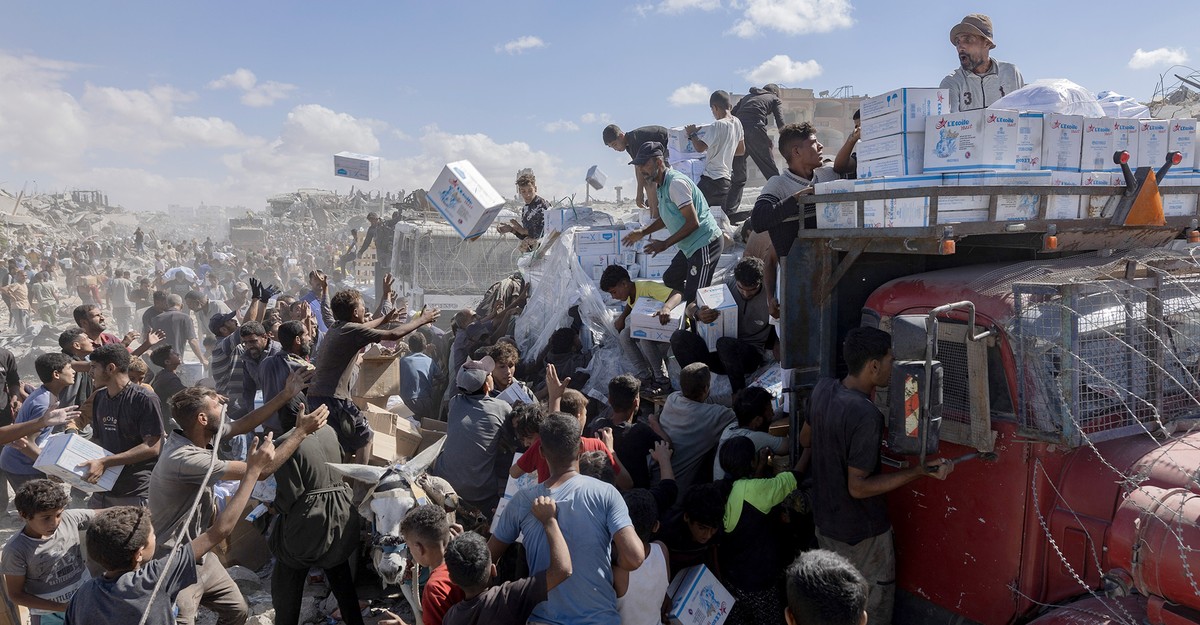
Recent reports, including coverage from The New York Times, detail scenes of Palestinians stripping aid trucks bare shortly after entering Gaza, with the most vulnerable – children – often left to scavenge for scraps. This underscores the critical need for a reliable, equitable, and transparent aid distribution system.
As UNICEF spokesperson Tess Ingram observed, when people lose faith in the promise of relief, they are forced to take matters into their own hands.
Keep reading