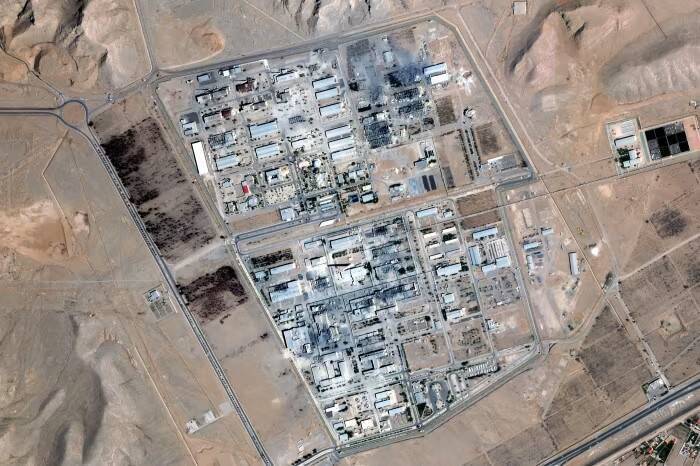
On April 16, 2025, U.S. President Donald Trump announced that Iran had agreed to surrender its stockpile of enriched uranium, marking a potential turning point in long-stalled nuclear negotiations between Washington and Tehran. Speaking outside the White House, Trump stated that Iran had “completely agreed” to abandon its nuclear weapons ambitions and emphasized that a comprehensive deal between the two nations was “remarkably close.” He further claimed that Iran had consented to hand over enriched uranium, including material reportedly buried underground following U.S. Military strikes in June 2024, which he referred to colloquially as “nuclear dust.”
Trump’s remarks, delivered amid heightened regional tensions and ongoing U.S. Sanctions pressure, suggested that diplomatic engagement could resume as early as the weekend of April 19–20, 2025, with possible talks hosted in Islamabad, Pakistan. He did not rule out personally attending any signing ceremony in Pakistan’s capital, praising both Pakistani leadership and military officials as “outstanding.” Although, as of the date of his statements, Iranian officials had not publicly confirmed or denied the specifics of Trump’s claims regarding uranium surrender or permanent renunciation of nuclear weapons development.
The assertions come within a broader context of stalled diplomacy. While Trump insisted that any agreement would involve Iran permanently forsaking nuclear arms—not merely a temporary pause—he rejected media speculation about time-limited frameworks, declaring that discussions centered on a “very strong statement” from Iran with effect lasting “over 20 years.” He explicitly denied the existence of a 20-year sunset clause, asserting instead that Iran’s commitment would be enduring. These positions contrast with earlier reports indicating that U.S. Officials had sought a 20-year suspension of uranium enrichment, while Iranian negotiators had proposed a five-year limit, which Washington reportedly dismissed.
Trump also linked progress in negotiations to the effectiveness of U.S.-led maritime restrictions, particularly a blockade on Iranian ports implemented earlier in April 2025. He described the measure as having a “surprising” impact, claiming it had severely curtailed Iran’s ability to conduct international trade. “The blockade effect is amazing,” he said. “They basically can’t do any business now.” He maintained that the restriction would remain “rock solid” throughout the negotiation process.
Despite the optimistic tone from Washington, independent verification of Iran’s alleged agreement remains absent from official Iranian statements or international nuclear monitoring bodies. The International Atomic Energy Agency (IAEA), which oversees verification of nuclear commitments under the Joint Comprehensive Plan of Action (JCPOA), has not issued any public confirmation regarding Iran’s transfer of enriched uranium stocks or a binding pledge to forgo nuclear weapons indefinitely. As such, while Trump’s declarations signal a shift in U.S. Diplomatic posture, the substance and durability of any prospective accord depend on corroborated actions from Tehran and transparent monitoring by multilateral institutions.
Context: The Status of Iran’s Nuclear Program and Enriched Uranium Stockpiles
Iran’s nuclear program has been a focal point of international concern for over two decades, particularly due to its uranium enrichment capabilities. Under the 2015 JCPOA, Iran agreed to limit its enrichment activities to 3.67% purity—far below the 90% threshold required for weapons-grade material—and to reduce its stockpile of low-enriched uranium to 300 kilograms for 15 years. However, following the United States’ unilateral withdrawal from the JCPOA in 2018 and the reimposition of sanctions, Iran began gradually scaling back its compliance, enriching uranium to higher purities and accumulating reserves beyond the accord’s limits.

As of late 2024 and early 2025, IAEA reports indicated that Iran had enriched uranium to up to 60% purity and possessed a growing stockpile of material approaching weapons-grade levels, though no evidence has emerged of actual weaponization efforts. The agency has repeatedly emphasized the need for renewed diplomatic engagement to restore transparency and verifiable constraints on Iran’s nuclear activities.
The term “nuclear dust,” used by Trump to describe recovered enriched uranium, is not a technical designation but appears to refer to particulate nuclear material dispersed or concealed following military strikes. In June 2024, U.S. Forces conducted airstrikes on three suspected nuclear-related sites in Iran, an operation reportedly aimed at degrading Tehran’s enrichment infrastructure. Subsequent assessments by defense analysts and international observers noted that some radioactive materials may have been dispersed or buried in the aftermath, though the recoverability and quantity of such material remain unverified.
Diplomatic Channels and the Role of Third-Party Mediators
Trump’s suggestion that negotiations could accept place in Islamabad reflects a pattern of utilizing regional intermediaries to facilitate U.S.-Iran dialogue, given the absence of direct diplomatic relations between Washington and Tehran since 1980. Pakistan, which maintains ties with both nations, has previously served as a backchannel conduit in periods of heightened tension. Other potential mediators have included Oman, Qatar, and European Union representatives, particularly during JCPOA negotiations between 2013 and 2015.
The prospect of U.S.-Iran talks resuming in mid-April 2025 aligns with broader efforts to de-escalate regional confrontations, including those involving Iran’s allies in Lebanon, Syria, Iraq, and Yemen. However, analysts caution that confidence-building measures—such as verified limits on enrichment, robust inspection protocols, and sanctions relief—are essential for any durable agreement. Without such mechanisms, unilateral declarations, even if reciprocated in principle, may lack the accountability required for long-term nonproliferation goals.
International Response and Ongoing Monitoring
As of April 17, 2025, no major global power—including China, Russia, or the European Union—has issued an official response to Trump’s claims regarding Iran’s uranium surrender. The IAEA continues to monitor Iran’s nuclear activities under its safeguards agreement, though access and transparency have been points of contention in recent years. Any verifiable reduction in Iran’s enriched uranium stockpile would require confirmation through IAEA inspections, environmental sampling, and surveillance technologies.
Observers note that while Trump’s framing emphasizes a permanent renunciation of nuclear weapons by Iran, the technical reality of nuclear latency means that even without a weaponized program, retention of enrichment capability could allow rapid reconstitution under changed circumstances. Nonproliferation experts often stress that sustainable constraints must address not only existing stockpiles but also centrifuges, research facilities, and the knowledge base enabling enrichment.
For ongoing developments, readers are directed to official statements from the U.S. Department of State, the Ministry of Foreign Affairs of Iran, and the International Atomic Energy Agency’s public reports and press briefings, which provide the most authoritative updates on nuclear diplomacy and verification efforts.
Stay informed. Share this article to help others understand the evolving dynamics of global security and diplomacy.
Worth a look