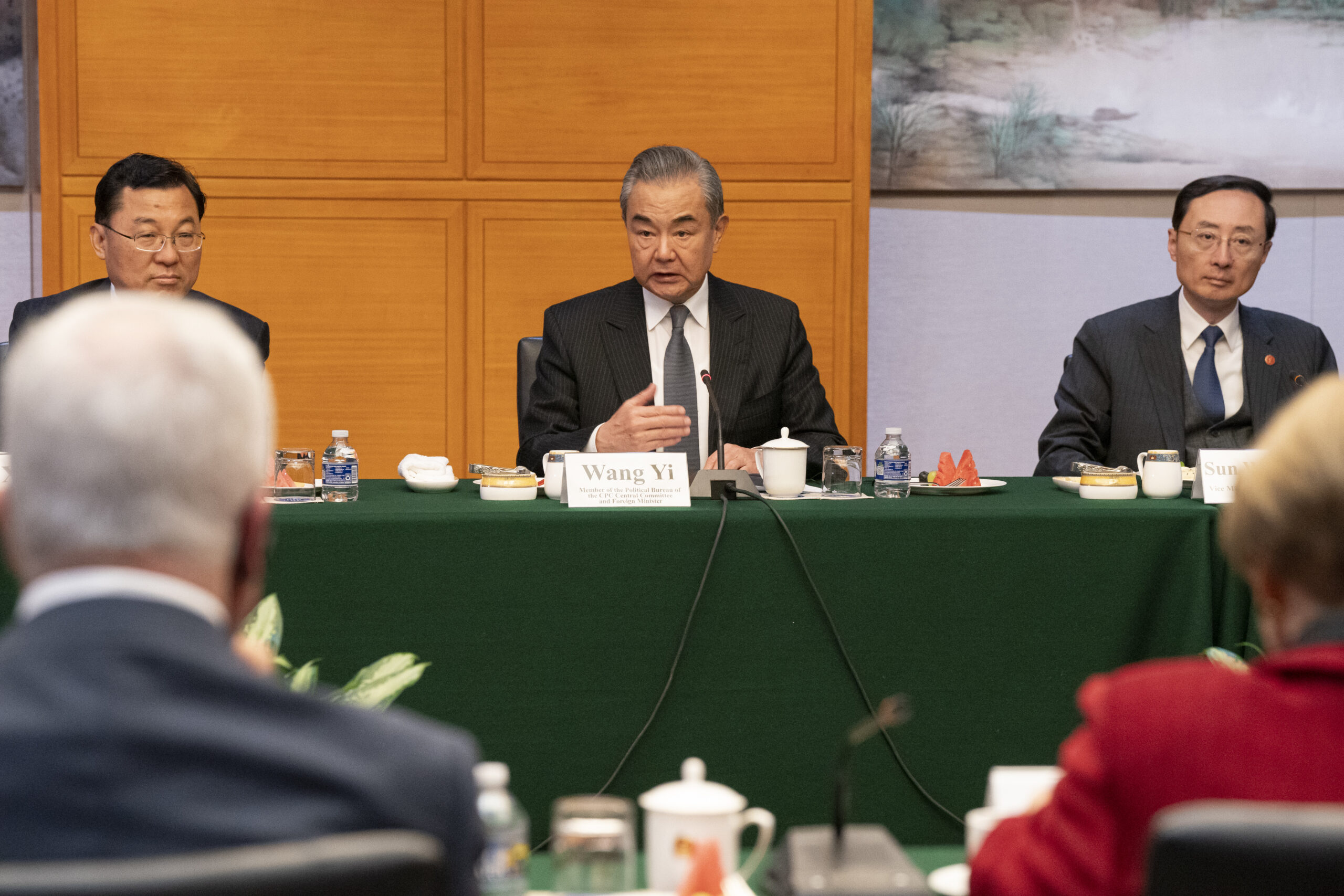
Chinese Foreign Minister Wang Yi held talks with Namibian Foreign Minister Peya Mushelenga in Beijing on April 17, 2026, underscoring the enduring partnership between China and Namibia amid evolving global dynamics. The meeting, held at the Diaoyutai State Guesthouse, focused on deepening bilateral cooperation in agriculture, livelihoods, and youth engagement, even as reaffirming mutual support for core interests such as the one-China principle and Namibia’s independent development path. Both officials emphasized the strategic importance of China-Namibia relations within the broader context of China-Africa ties and Global South solidarity.
During the discussions, Wang Yi highlighted that strengthening China-Namibia cooperation aligns with the aspirations of both nations’ peoples, corresponds to the prevailing trend in China-Africa relations, and exemplifies the collective self-reliance of Global South countries. He noted China’s readiness to work with Namibia to implement key consensus reached by their respective heads of state, leverage China’s zero-tariff policy for Namibian exports, and advance flagship projects in agriculture, people’s welfare, and youth development. Wang similarly reiterated China’s commitment to being a trustworthy partner for Africa at all historical stages, pledging continued support for peace, development, and justice in international affairs.
Mushelenga echoed these sentiments, describing China and Namibia as traditional partners and sincere friends whose comprehensive strategic partnership is grounded in mutual support and win-win cooperation. He expressed gratitude for China’s longstanding assistance to Namibia and other African nations, stating that Africa’s current developmental progress would not have been possible without China’s contributions. The Namibian foreign minister reaffirmed his country’s unwavering adherence to the one-China principle and its commitment to deepening friendly cooperation with China across all fields, aiming to elevate bilateral relations to new heights.
The talks also addressed global governance, with both sides advocating for a more just and equitable international order. Wang Yi called for enhanced coordination between China and Africa to uphold international fairness, promote peaceful development, and strengthen the voice of the Global South in shaping global institutions. He emphasized that China’s foreign policy remains firmly aligned with developing nations and African partners, aiming to jointly advance modernization and contribute to world peace and prosperity.
Mushelenga welcomed China’s proposal of four major global initiatives, expressing Namibia’s support for efforts aimed at enhancing global cooperation on peace, development, and governance. He noted that despite shifting international circumstances, Namibia remains steadfast in its friendship with China and its dedication to multilateralism rooted in equality and mutual respect.
The meeting builds on decades of diplomatic engagement between China and Namibia, which established formal relations in 1990—the year of Namibia’s independence. Over the years, cooperation has expanded from political solidarity during liberation struggles to comprehensive collaboration in infrastructure, mining, agriculture, and human resources development. Namibia has consistently been one of China’s key partners in Africa, particularly in uranium mining and fisheries, while China has invested in Namibian highways, hospitals, and educational institutions under frameworks such as the Forum on China-Africa Cooperation (FOCAC).
Analysts observe that the April 17 talks reflect a broader pattern of Chinese diplomatic outreach to African nations in 2026, coinciding with preparations for the next FOCAC summit and ongoing efforts to strengthen South-South cooperation. By emphasizing shared historical experiences and common development goals, China seeks to position itself as a reliable long-term partner in Africa’s pursuit of industrialization, food security, and sustainable growth—objectives that align with Namibia’s national development plans, including Vision 2030 and the Harambee Prosperity Plan II.
As both nations look ahead, the outcomes of the Wang-Mushelenga talks are expected to feed into upcoming bilateral mechanisms, including joint commission meetings and sector-specific working groups. Officials from both sides indicated that follow-up actions will focus on finalizing agreements on agricultural technology transfer, vocational training programs for Namibian youth, and pilot projects in renewable energy—areas identified as priorities during the discussions.
For continued updates on China-Africa diplomacy and foreign ministerial engagements, readers can consult official releases from China’s Ministry of Foreign Affairs and the Namibian Presidency. These sources provide authoritative information on scheduled meetings, signed agreements, and joint statements resulting from high-level interactions between the two countries.
We invite our global audience to share perspectives on the evolving China-Namibia partnership and its implications for regional development and international cooperation. Your insights aid deepen the conversation on how strategic bilateral relations contribute to broader goals of peace, prosperity, and inclusivity in a changing world.
Related reading