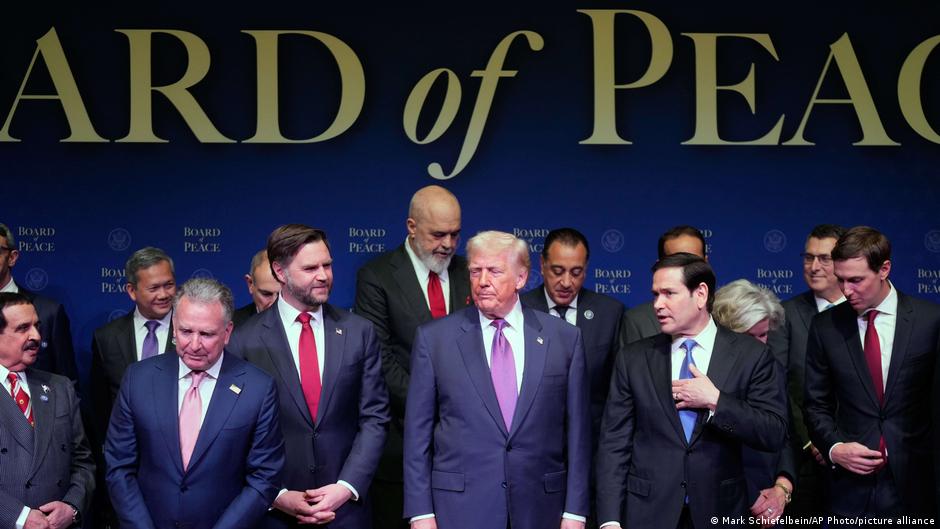
Washington D.C. – In a move signaling a potential shift in the international approach to the Israeli-Palestinian conflict, former U.S. President Donald Trump unveiled his “Peace Board” on Thursday, February 19, 2026. The initiative, framed as a parallel effort to the United Nations, aims to mobilize resources and political will for the reconstruction of Gaza and the establishment of lasting stability following the recent cessation of hostilities between Israel and Hamas. The launch, held in Washington D.C., was characterized by a display of support from a select group of nations and a pledge of substantial financial aid.
Trump announced an initial contribution of $10 billion from the United States, quickly followed by commitments of at least $1 billion each from Qatar, Saudi Arabia, and the United Arab Emirates. According to statements from the White House, total pledges for Gaza’s reconstruction have reached $6.5 billion, a figure intended to address the widespread devastation left in the wake of the conflict that concluded in October 2025. The scale of the destruction necessitates significant investment; the United Nations estimates that rebuilding Gaza will require billions of dollars and years of sustained effort.
The inauguration of the Peace Board was notably attended by allies including representatives from Gulf states, Turkey, and Argentina, as well as Gianni Infantino, the president of FIFA. The event featured a celebratory atmosphere, with music and expressions of mutual support. Trump, who has positioned himself as the driving force behind the initiative, has declared himself the “lifelong head” of the board and indicated that Gaza will not be its sole focus, suggesting potential interventions in other conflict zones. “We will help Gaza, we will set it back on its feet,” Trump stated, adding, “We will bring peace, and we will do similar things in other places.”
A New Framework for Peace or a Challenge to the UN?
The establishment of the Peace Board has sparked debate regarding its relationship with existing international bodies, particularly the United Nations. Trump expressed the view that the UN, while possessing “great potential,” has fallen short of fulfilling its founding promise. This sentiment echoes long-standing criticisms of the UN’s effectiveness in resolving complex geopolitical disputes. However, France has voiced concerns that the Peace Board may overstep the authority of the United Nations, potentially creating a fragmented and less coordinated approach to peacebuilding. The UN Security Council approved a mandate for the board in November 2025, specifically tasking it with promoting peace in Gaza, but the scope of its authority beyond this initial mandate remains a point of contention.
The composition of the Peace Board similarly raises questions about its inclusivity and legitimacy. As of February 20, 2026, 27 of the 60 countries invited have accepted membership. European participation is limited, with Bulgaria, Hungary, Albania, and Kosovo being the only European nations to join. Italy, Cyprus, Greece, and Romania have opted to participate as observers, without voting rights. The European Union, represented by Commissioner Dubravka Šuica, also sent an observer delegation, citing “several questions” regarding aspects of the board’s charter. This limited European involvement suggests a degree of skepticism regarding the board’s structure and objectives.
Funding and Reconstruction Efforts
A central focus of the Peace Board’s inaugural meeting is the mobilization of funds for the reconstruction of Gaza and the provision of humanitarian aid. The scale of the humanitarian crisis in Gaza is immense, with a significant portion of the population displaced and in need of essential supplies. The pledged $6.5 billion represents a substantial commitment, but whether it will be sufficient to address the long-term needs of the region remains to be seen. The board aims to coordinate international assistance and ensure that funds are allocated effectively and transparently.
Beyond financial contributions, the Peace Board is also exploring the potential deployment of personnel from member states to assist with reconstruction efforts and maintain security. The specifics of such deployments are still under discussion, but the prospect of a multinational force operating in Gaza raises complex logistical and political challenges. The board has not yet detailed the exact nature of these potential troop deployments, but It’s understood that they would be focused on supporting civilian reconstruction and preventing a resurgence of violence.
European Reservations and the Role of the UN
The limited participation of European nations in the Peace Board reflects broader concerns about the initiative’s potential impact on the existing international order. Several European countries have expressed reservations about the board’s structure and its relationship with the United Nations. The EU’s decision to send only an observer delegation underscores its cautious approach. Ursula von der Leyen, President of the European Commission, was invited to attend the meeting but opted to send Commissioner Šuica instead, citing ongoing questions about the board’s statute.
These concerns stem from a desire to maintain the primacy of the United Nations in addressing international conflicts and a reluctance to create parallel structures that could undermine the UN’s authority. The UN has been involved in the Israeli-Palestinian conflict for decades, and many European nations believe that a coordinated approach through the UN is the most effective way to achieve a lasting peace. The Peace Board’s emergence as a competing entity raises the risk of duplication of effort and potential conflicts of interest.
The Future of the Peace Board and Gaza
The success of the Peace Board will depend on its ability to overcome these challenges and build consensus among its members. The board’s long-term goals extend beyond the immediate reconstruction of Gaza, encompassing broader efforts to promote peace and stability in the region. Trump has indicated that the board may eventually address other conflicts around the world, but its initial focus remains firmly on Gaza.
The board’s next steps will involve establishing clear priorities for reconstruction, developing a detailed plan for allocating funds, and coordinating with international organizations and local authorities in Gaza. The board will also need to address the underlying political issues that have fueled the conflict, including the status of Jerusalem, the rights of Palestinian refugees, and the security concerns of both Israelis and Palestinians.
The situation in Gaza remains fragile, and the risk of renewed violence is ever-present. The Peace Board’s ability to navigate these challenges and foster a sustainable peace will be a crucial test of its effectiveness. The board is scheduled to hold its next meeting in March 2026, where it will review progress on reconstruction efforts and discuss strategies for addressing the long-term political challenges facing Gaza.
As the Peace Board embarks on its ambitious mission, the international community will be watching closely to see whether it can deliver on its promises and contribute to a more peaceful and prosperous future for Gaza. The coming months will be critical in determining whether this new initiative can truly build a difference in one of the world’s most intractable conflicts.
Stay informed: For the latest updates on the Peace Board and the situation in Gaza, please refer to official statements from the U.S. State Department and the United Nations.
Keep reading