
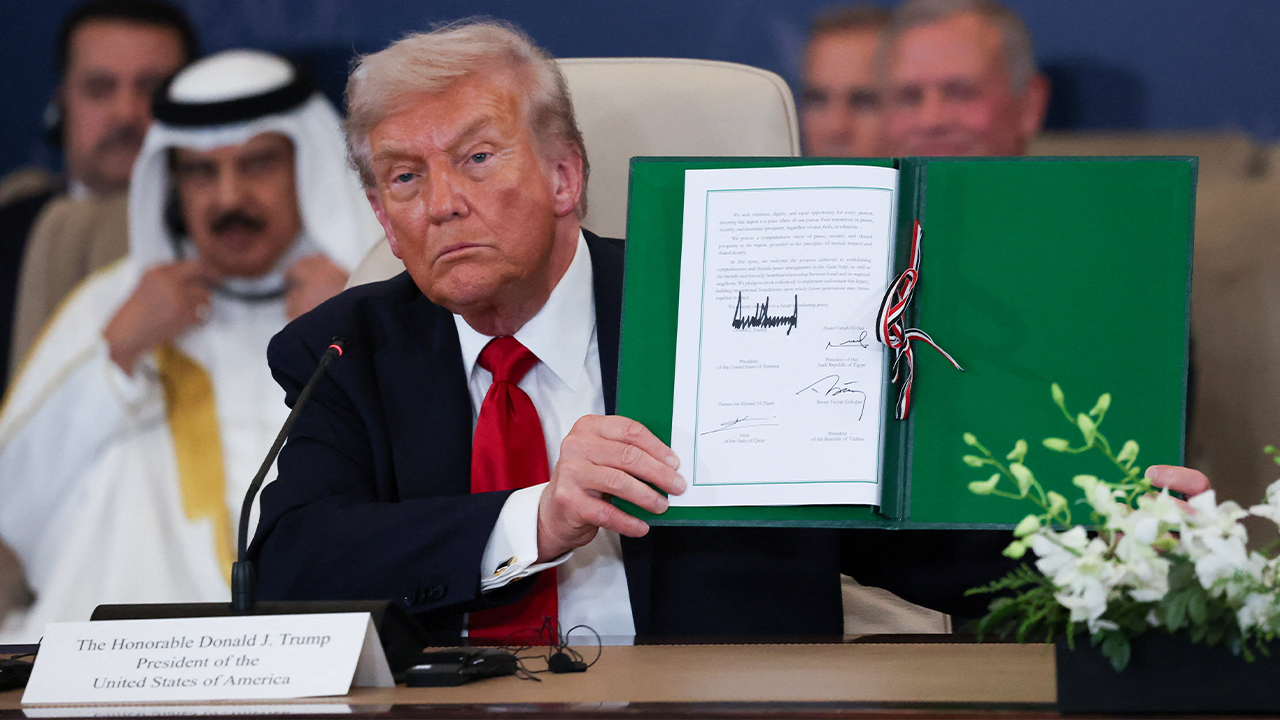
President Donald Trump has confirmed he is reviewing a new peace proposal from Iran aimed at ending the current conflict, though he expressed significant skepticism regarding its viability. Speaking to reporters on Saturday, May 2, 2026, before boarding Air Force One at Palm Beach International Airport in Florida, Trump stated he is examining the offer but doubted it would be acceptable
in its current form according to NBC News.
The proposal, described as a 14-point response to an earlier nine-point U.S. Outline, was submitted to Washington via a Pakistani intermediary. While the White House is analyzing the text, the administration has maintained a posture of military readiness, with the President warning that air strikes could resume if Tehran misbehaves
as reported by Al Jazeera.
This diplomatic overture comes at a critical juncture, marking the 65th day of the U.S.-Israel war on Iran. The tension between the desire for a diplomatic exit and the continuation of military pressure is underscored by recent U.S. Actions to bolster regional defenses, including the fast-tracking of billions of dollars in weaponry to Middle Eastern allies.
The 14-Point Proposal: Red Lines and Requirements
The Iranian proposal represents a shift from a temporary ceasefire toward a comprehensive settlement. According to the semi-official Tasnim News Agency, the 14-point plan addresses the specific points raised in the U.S. Proposal and outlines the “red lines” Tehran considers essential for a lasting peace via The Star.

A senior Iranian official indicated that the offer includes several key concessions and demands. Specifically, the plan proposes to open shipping lanes in the Strait of Hormuz and end the U.S. Blockade of Iran. Notably, the Iranian side has suggested postponing detailed negotiations regarding its nuclear program until after the immediate conflict is resolved according to Reuters via NBC News.
President Trump’s hesitation appears rooted in his belief that the Iranian regime has not yet faced sufficient pressure. He indicated that Iran had not yet paid a big enough price
to justify a deal that might be seen as too lenient as reported by Siasat.
Strategic Escalation: $8.6 Billion in Arms Sales
While the diplomatic channel remains open, the U.S. State Department has moved aggressively to strengthen the military capabilities of its regional partners. On May 1, 2026, Secretary of State Marco Rubio approved military sales totaling over $8.6 billion to Israel, Qatar, Kuwait, and the United Arab Emirates according to Al-Monitor.
To expedite these transfers, the administration invoked an emergency provision that bypassed the standard congressional review process. The urgency of these sales is tied to the volatility of the conflict, with the U.S. Rushing air defense missiles and laser guidance systems to the region per Bloomberg.
The allocation of these funds is heavily weighted toward Qatar, which secured two packages totaling approximately $5 billion. This includes $4.01 billion for Patriot air and missile defense replenishment and $992.4 million for Advanced Precision Kill Weapon Systems via Arabian Business.
Comparison of Diplomatic vs. Military Tracks
| Track | Primary Action | Objective | Status |
|---|---|---|---|
| Diplomatic | Review of 14-point Iranian proposal | End of war/ceasefire | Under Review (Skeptical) |
| Military | $8.6 billion in expedited arms sales | Regional deterrence/defense | Approved/Executing |
| Strategic | Threat of resumed air strikes | Pressure for “acceptable” terms | Active Threat |
What This Means for Global Stability
The current standoff reflects a “maximum pressure” strategy combined with a willingness to negotiate, a hallmark of the current administration’s foreign policy. By simultaneously reviewing a peace offer and arming allies, the U.S. Is attempting to maintain leverage over Tehran.

For the global community, the primary concern remains the Strait of Hormuz. As one of the world’s most critical oil transit chokepoints, any instability or continued blockade in the region has immediate implications for global energy prices and supply chain security. The Iranian proposal to reopen the strait is a significant carrot, but the U.S. Remains wary of granting such relief without comprehensive guarantees regarding Iran’s regional activities and nuclear ambitions.
The involvement of Pakistan as a mediator suggests a desire by both parties to maintain a discrete channel of communication, avoiding the public pitfalls of direct negotiations while the war continues on the ground.
Next Checkpoint: The White House is expected to provide a more detailed response to the 14-point proposal following the President’s full review of the exact wording. Official updates from the State Department regarding the delivery timelines of the $8.6 billion arms package are also anticipated in the coming days.
We invite our readers to share their perspectives on the current diplomatic efforts in the Middle East in the comments section below.