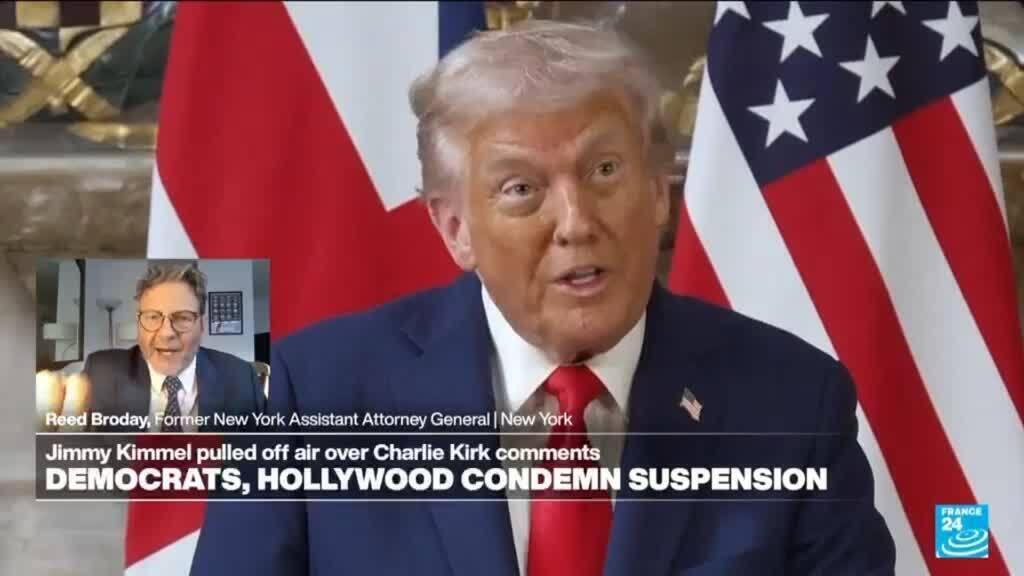
## The Erosion of Dissent: A Former Prosecutor Warns of a Systemic Threat to Free Speech in the US
The principles of free expression, long considered a cornerstone of American democracy, are facing a subtle yet alarming challenge. As of September 20, 2025, concerns are mounting regarding a coordinated effort to suppress dissenting viewpoints across various sectors – from media and legal institutions to non-governmental organizations and academia. This isn’t a direct assault on the First Amendment, but a more insidious tactic leveraging regulatory power and corporate influence to enforce ideological alignment. The core of this issue, as highlighted by legal expert Reed Brody, centers around a perceived “litmus test of obedience” to current political leadership, raising critical questions about the future of open debate in the United States.
This article delves into the escalating anxieties surrounding this trend, examining the mechanisms at play, recent examples, and the potential long-term consequences for American society.We will explore how this pressure manifests, the actors involved, and what steps, if any, can be taken to safeguard the fundamental right to freedom of speech.
did You Know? According to a recent report by the Knight First Amendment Institute at Columbia University (August 2025), public trust in media impartiality has declined by 15% in the last two years, coinciding with increased reports of external pressure on news organizations.
## The Tactics of Suppression: Beyond Direct Censorship
reed Brody, a former Assistant Attorney General for New York State and a veteran human rights lawyer celebrated for his work holding authoritarian regimes accountable, now directs his scrutiny inward. His assessment isn’t of overt censorship – the outright banning of speech – but of a far more nuanced and possibly perilous strategy. Brody argues that a systematic campaign is underway to silence opposition through indirect means, exploiting legal ambiguities and wielding the considerable weight of governmental authority. This approach, he contends, is “much more pernicious” than a straightforward violation of the First Amendment because it operates within the boundaries of the law while effectively chilling dissenting voices.
The method relies heavily on leveraging the power of regulatory bodies. Companies engaged in notable transactions, such as mergers or license renewals, are finding themselves under increased scrutiny. This creates a climate of self-censorship, where organizations preemptively curtail critical commentary to avoid potential repercussions. This isn’t simply about avoiding negative press; it’s about safeguarding billion-dollar deals and maintaining access to crucial government approvals. consider the recent example of Sinclair Broadcast Group‘s failed attempt to acquire Tribune Media in 2018 – while different in specifics, it illustrates how regulatory hurdles can be used to influence media ownership and, consequently, content. The current situation, though, appears more widespread and strategically targeted.
Pro Tip: Document any instances of perceived pressure or censorship. Maintaining a detailed record of communications, policy changes, and potential retaliatory actions can be crucial for legal challenges and public awareness campaigns.
### High-Profile Cases: A Pattern of Pressure?
Brody specifically points to recent developments in the late-night television landscape as illustrative of this trend. The suspension of Jimmy Kimmel‘s show following critical commentary,and the announced conclusion of stephen Colbert’s *The Late Show* in May 2026 amidst CBS’s ongoing merger negotiations,are presented as potential examples of this pressure in action. While CBS maintains the decision to end *The Late Show* was a creative one, the timing – coinciding with high-stakes regulatory discussions – raises legitimate questions.
this isn’t limited to entertainment. Elite universities are also reportedly experiencing similar pressures. Funding applications, accreditation reviews, and even the reputations of individual faculty members are potentially vulnerable to perceived deviations from a preferred ideological stance. A recent survey by the American Association of University Professors (July 2025) revealed that 42% of professors reported feeling less comfortable expressing controversial opinions in the classroom compared to five years ago. This self-censorship, driven by fear of reprisal, undermines the core mission of academic inquiry.
the situation echoes concerns raised in 2023 regarding Florida’s restrictions on academic freedom, as reported by the Foundation for Individual Rights and Expression, but the current allegations suggest a national pattern, not localized legislation. The key difference lies in the *indirect* nature of the pressure – it’s not a law explicitly prohibiting certain viewpoints, but a subtle leveraging of power to discourage them.
## The legal Landscape and the Exploitation of Loopholes
The effectiveness of this
Related reading
- Middle East Conflict: Iran Escalates Attacks Across Jordan, Kuwait, and the Gulf Region
- Son Heung-min Scores in LAFC Return to Lead 3-0 Victory
- Trump Calls 2026 World Cup the Biggest Sporting Event Ever (world-today-news.com)
- Trump Administration Says 250K Non-Citizens Registered to Vote in 4 States (time.news)