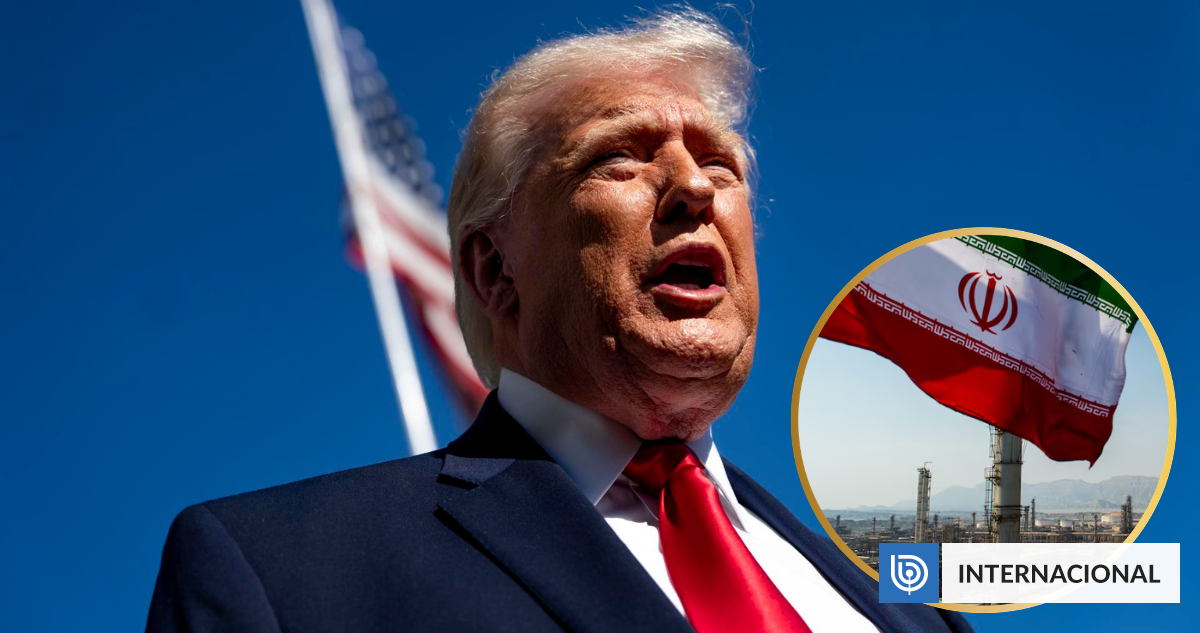
Former President Donald Trump has reiterated his position that any U.S. Blockade of Iranian ports will remain in place until a formal agreement is reached, according to recent statements reported by Chilean news outlet BioBioChile. The remarks come amid ongoing diplomatic tensions surrounding Iran’s nuclear program and regional security concerns, with Trump emphasizing that economic pressure will not be lifted without a verifiable, signed accord.
The former president’s stance underscores a hardline approach to Iran that characterized much of his foreign policy during his presidency from 2017 to 2021. Trump has consistently argued that maximum pressure tactics, including sanctions and port restrictions, are necessary to compel Tehran into negotiations over its nuclear activities and regional influence. His latest comments suggest a continuation of this strategy, even as he is no longer in office.
Trump’s remarks were made in the context of broader discussions about U.S.-Iran relations, including speculation about potential military action or diplomatic breakthroughs. Even as he has previously suggested the possibility of military intervention if diplomatic efforts fail, his current focus appears to be on maintaining economic leverage until a concrete agreement is achieved.
The U.S. Has maintained various sanctions on Iran for years, particularly targeting its energy and financial sectors. A blockade of Iranian ports would represent a significant escalation, potentially disrupting the country’s ability to export oil and import essential goods. Such measures would require coordination with international partners and likely face legal and diplomatic scrutiny under international maritime law.
Iran has repeatedly denied seeking nuclear weapons, insisting its nuclear program is solely for peaceful purposes such as energy production and medical research. However, Western nations and the International Atomic Energy Agency (IAEA) have expressed concerns about uranium enrichment levels approaching weapons-grade thresholds, fueling ongoing negotiations to revive or replace the 2015 Joint Comprehensive Plan of Action (JCPOA).
Efforts to restore the JCPOA, which lifted sanctions on Iran in exchange for limits on its nuclear program, have stalled in recent years. The agreement was abandoned by the Trump administration in 2018, leading to a resurgence of Iranian nuclear activity. Subsequent attempts by the Biden administration to revive the deal have faced challenges, including disagreements over verification mechanisms and regional issues.
Any new agreement would need to address not only nuclear enrichment but too Iran’s ballistic missile program and support for regional groups deemed hostile by the U.S. And its allies. These broader concerns have complicated negotiations, with Iran linking concessions on its nuclear program to the removal of all sanctions, including those unrelated to nuclear activities.
The Strait of Hormuz, a critical chokepoint for global oil shipments, has often been cited in discussions about Iranian leverage. Iran has previously threatened to close the strait in response to hostile actions, though such a move would likely provoke a strong international response. Trump has previously claimed the strait remains open despite tensions, though maritime security in the region remains a persistent concern for global energy markets.
Verifiable details about the current status of U.S. Naval operations or specific port restrictions targeting Iran are not publicly available in official government statements or defense department releases as of the latest reporting. Any implementation of a port blockade would constitute a significant military and diplomatic action requiring formal authorization.
International observers continue to monitor the situation closely, noting that any escalation could have far-reaching consequences for global oil prices, regional stability, and non-proliferation efforts. The United Nations and European Union have repeatedly urged diplomatic solutions to prevent further deterioration in U.S.-Iran relations.
As of the latest available information, no formal agreement between the U.S. And Iran has been signed that would meet the conditions Trump has outlined for lifting restrictions. Diplomatic channels remain open but stalled, with both sides appearing to await concessions from the other before proceeding to substantive negotiations.
For updates on diplomatic developments, readers are encouraged to consult official statements from the U.S. State Department, the European Union’s External Action Service, and verified reports from the International Atomic Energy Agency regarding Iran’s nuclear activities.
What do you think about the potential for renewed diplomacy between the U.S. And Iran? Share your thoughts in the comments below and help spread informed discussion by sharing this article with others interested in global affairs.
Related reading