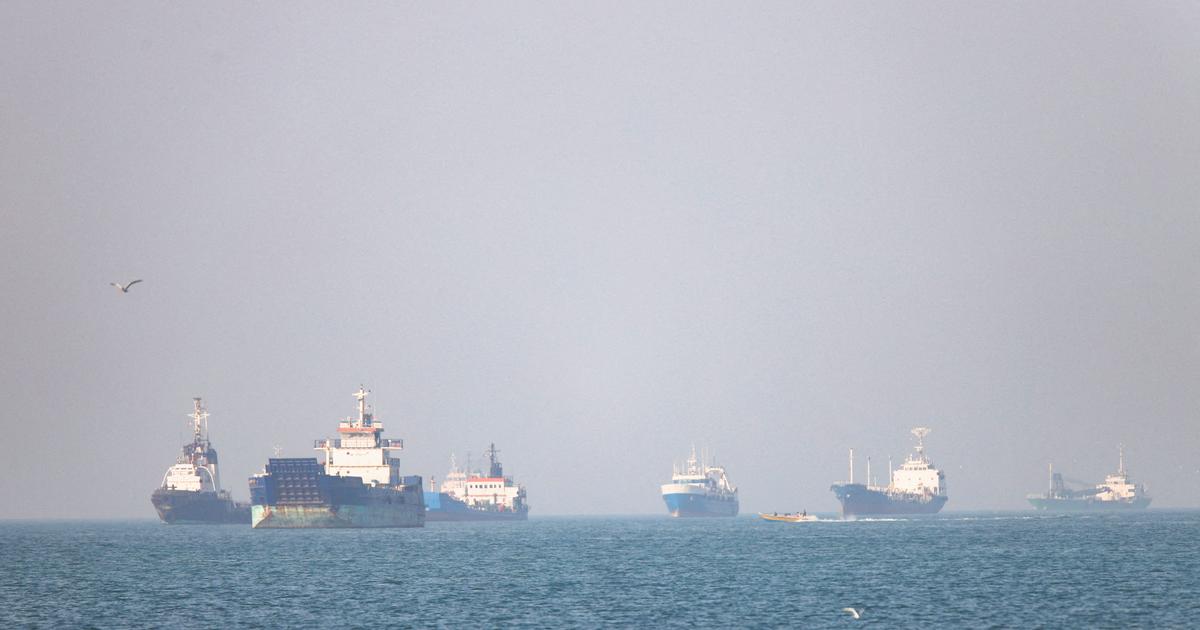
The diplomatic divide between Paris and Washington has widened as France maintains a hardline stance on Tehran, insisting that no sanctions will be eased while the Strait of Hormuz remains obstructed. French Foreign Minister Jean-Noël Barrot has made it clear that the restoration of maritime security is a non-negotiable prerequisite for any diplomatic thaw, directly contrasting with the more optimistic rhetoric emerging from the United States.
The tension comes at a critical juncture in the Middle East conflict, where the global energy supply hangs in the balance. While the Trump administration has signaled a willingness to negotiate a comprehensive peace deal, the French government is positioning itself as a guardian of international maritime law, refusing to reward the blockade of one of the world’s most vital shipping lanes with economic concessions.
This deadlock emerges as global markets react violently to conflicting signals. On Thursday, May 7, 2026, oil prices experienced a notable slide and stock markets climbed, driven by hopes that the Trump administration and Iranian officials might reach a breakthrough. However, the volatility underscores the fragility of the current ceasefire efforts and the deep strategic rift between the U.S. Approach of “deal-making” and the European insistence on strict compliance with international norms.
The ‘Red Line’ in the Strait of Hormuz
Foreign Minister Jean-Noël Barrot has adopted a definitive tone regarding the European Union’s position, asserting that This proves “out of the question” to lift “the slightest sanction” as long as the Strait of Hormuz remains blocked. For Paris, the blockade is not merely a regional dispute but a direct assault on the freedom of navigation—a principle that underpins global trade.
The Strait of Hormuz is the world’s most important oil choke point. Geographically, it is a narrow waterway connecting the Persian Gulf with the Gulf of Oman and the Arabian Sea. Because a significant portion of the world’s liquefied natural gas (LNG) and crude oil passes through this corridor, any prolonged closure threatens to trigger a global energy crisis. By linking the lifting of sanctions specifically to the reopening of the Strait, Barrot is attempting to create a tangible, verifiable metric for diplomatic progress, rather than relying on the “shifting signals” that have characterized recent negotiations.
The French position reflects a broader European anxiety that a rushed deal between Washington and Tehran—potentially prioritizing a quick diplomatic win over long-term security guarantees—could leave European interests vulnerable. By maintaining the sanctions regime, France aims to keep pressure on Tehran to ensure that any agreement includes ironclad guarantees regarding the security of international waters.
Market Volatility and the ‘Trump Effect’
The current geopolitical climate is characterized by a stark contrast between official diplomatic warnings and market optimism. On May 7, 2026, oil prices fell as investors bet on the likelihood of a renewed peace process. This market reaction follows statements from President Donald Trump, who suggested that a peace agreement with Iran is “particularly possible.”
This pattern of “maximum pressure” interspersed with sudden openings for negotiation has become a hallmark of the Trump administration’s foreign policy. Even as the President hints at a deal, he has continued to maintain a credible threat of military escalation, recently waving the possibility of resuming bombing campaigns if negotiations fail. This “carrot and stick” approach has created a high-stakes environment for global traders, where a single tweet or a brief press statement can swing the price of a barrel of oil by several dollars.
For the global economy, this volatility is perilous. The sudden drop in oil prices on Thursday suggests that the market is currently pricing in a “Trump victory”—the belief that the President’s personal diplomacy can override the structural deadlock. However, the French insistence on maintaining sanctions serves as a sobering counterweight, reminding investors that the U.S. Does not act in a vacuum and that European cooperation is essential for any lasting economic normalization with Iran.
A Divided Western Front
The disagreement between Barrot and the Trump administration highlights a fundamental difference in how the two powers view the utility of sanctions. To the current U.S. Administration, sanctions are often viewed as leverage—tools to be deployed or withdrawn to secure a specific agreement. To the French and many of their EU partners, sanctions are viewed as a regulatory framework designed to enforce international law and discourage aggression.
This divergence creates a complex landscape for Iranian officials. While they may find the prospect of a deal with Washington attractive—particularly for the relief of U.S. Primary sanctions—the persistence of EU sanctions, supported by France, limits the immediate economic benefits of such a deal. The European Union’s sanctions regime often targets specific sectors and individuals and without a coordinated Western front, any “deal” may remain partial and unstable.
the role of the French Ministry for Europe and Foreign Affairs has been to ensure that the “strategic autonomy” of Europe is preserved. By refusing to follow Washington’s lead blindly, Paris is signaling that Europe will not be a passive observer in the reconfiguration of Middle Eastern security architecture.
What This Means for Global Energy Security
The standoff over the Strait of Hormuz has immediate implications for consumers and industries worldwide. When a primary choke point is threatened or blocked, the “risk premium” is added to the price of oil, regardless of actual supply levels. If the deadlock between France and the U.S. Continues, this risk premium will likely remain high, contributing to inflationary pressures on fuel and transport.

Stakeholders affected by this crisis include:
- Energy Importers: Nations in Asia and Europe that rely on Gulf oil are facing increased uncertainty regarding delivery timelines and costs.
- Shipping Companies: Insurance premiums for vessels traversing the Gulf have spiked, increasing the cost of all goods transported through the region.
- Global Financial Markets: The disconnect between diplomatic rhetoric and on-the-ground reality is fueling short-term speculation over long-term stability.
The path forward requires a synchronization of demands. If the U.S. And France can align their requirements—making the reopening of the Strait a central pillar of any peace deal—Tehran faces a unified front that is much harder to manipulate. However, if the rift persists, Iran may find opportunities to play the two powers against each other, prolonging the crisis in the Strait.
As we move toward the next phase of negotiations, the international community will be watching for whether President Trump’s optimism can translate into a verifiable security arrangement, or if Jean-Noël Barrot’s “red line” will remain the defining boundary of the conflict.
The next confirmed checkpoint in this developing story will be the upcoming scheduled diplomatic briefing from the European External Action Service (EEAS), which is expected to clarify the EU’s unified position on the sanctions timeline relative to the maritime status of the Strait.
We invite our readers to share their perspectives on this diplomatic deadlock in the comments below. Do you believe the U.S. Approach of flexible diplomacy is more effective than the French insistence on strict preconditions?