
Former U.S. President Donald Trump has arrived in France for the Group of Seven summit, where diplomats are scrutinizing a newly signed memorandum of understanding between the U.S. and Iran. The agreement, electronically signed by Trump on Sunday, aims to ease tensions in the Strait of Hormuz but defers critical discussions on Iran’s nuclear program to a 60-day negotiation period. Meanwhile, French President Emmanuel Macron, who is hosting the summit, faces pressure to mediate between Washington and Tehran amid escalating regional tensions.
The memorandum, which has not yet been formally signed in Geneva, outlines a temporary easing of restrictions on maritime traffic through the Strait of Hormuz—a critical chokepoint for global oil supplies. However, key details about the agreement remain unclear, including whether it will lead to a broader diplomatic breakthrough or simply delay deeper negotiations on Iran’s nuclear capabilities, which have been a sticking point in U.S.-Iran relations for years.
As Trump engages with world leaders at the G7, analysts warn that the agreement’s success hinges on whether both sides can maintain momentum beyond the initial memorandum. The summit, taking place against a backdrop of geopolitical uncertainty, will also address economic recovery, climate change, and the war in Ukraine—issues that could overshadow the U.S.-Iran talks.
What Does the US-Iran Memorandum Actually Say?
According to Reuters, the memorandum of understanding (MOU) between the U.S. and Iran includes provisions to temporarily reduce tensions in the Strait of Hormuz, a narrow waterway through which roughly 20% of the world’s oil supply passes. The agreement is set to take effect upon formal signing in Geneva, with the Strait of Hormuz officially opening to unrestricted maritime traffic on Friday, June 14, though some sources suggest this timeline may shift.
The MOU does not address Iran’s nuclear program directly, instead deferring those discussions to a 60-day negotiation period. This delay has raised concerns among nuclear nonproliferation experts, who argue that any pause in negotiations could allow Iran to advance its uranium enrichment capabilities. The International Atomic Energy Agency (IAEA) has previously reported that Iran’s stockpile of enriched uranium has grown significantly since the 2018 U.S. withdrawal from the Joint Comprehensive Plan of Action (JCPOA), the 2015 nuclear deal.
IAEA data shows that as of February 2024, Iran had amassed over 5,000 kilograms of uranium enriched to up to 63.15%, a level far beyond the 3.67% cap set by the JCPOA. The MOU does not specify whether Iran will freeze or reduce its enrichment activities during the 60-day period.
How Did the Agreement Come Together So Quickly?
The rapid development of the MOU has surprised diplomats, given the long-standing hostility between the U.S. and Iran. According to BBC reporting, the agreement appears to have been brokered through backchannel negotiations, possibly involving Oman or another neutral mediator. The U.S. State Department confirmed the electronic signing but declined to provide further details, citing ongoing diplomatic sensitivities.

Trump, who has repeatedly criticized the Biden administration’s approach to Iran, has framed the MOU as a victory for his “maximum pressure” strategy. In a statement released ahead of his arrival in France, he said, “This agreement proves that direct engagement with Iran can yield results. The Biden administration’s weakness allowed tensions to escalate, but now we are taking action.” However, critics argue that the MOU’s focus on the Strait of Hormuz—rather than nuclear disarmament—could be seen as a tactical move rather than a strategic shift.
Meanwhile, Iranian officials have been more cautious in their public statements. The Iranian Foreign Ministry issued a statement calling the MOU a “positive step” but emphasized that “the nuclear file remains the core issue.” Analysts suggest that Iran may be using the 60-day window to test whether the U.S. is serious about reviving negotiations or simply buying time.
What Happens Next at the G7 Summit?
The G7 summit, taking place in Biarritz, France, will bring together leaders from the U.S., UK, Germany, France, Italy, Japan, and Canada, along with the European Union. While the U.S.-Iran agreement is not officially on the summit’s agenda, diplomats expect it to be discussed in private meetings. French President Emmanuel Macron, who has long advocated for diplomacy with Iran, is likely to push for a broader resolution to the nuclear standoff.
Key topics at the summit include:

- Economic recovery: Leaders will discuss the global economic outlook, particularly the impact of high interest rates and supply chain disruptions.
- Climate change: Expectations are high for new commitments ahead of the COP28 climate talks in Dubai later this year.
- Ukraine war: The G7 will reaffirm support for Ukraine and discuss long-term reconstruction efforts.
- China’s role: Leaders may address concerns over China’s economic influence and its support for Russia in the war.
Trump’s presence at the summit adds an unpredictable element. While he has not publicly commented on the G7’s broader agenda, his focus is likely to remain on Iran and his broader foreign policy priorities, which include restoring U.S. global influence and challenging what he calls “weakness” in international diplomacy.
Why Does the Strait of Hormuz Matter So Much?
The Strait of Hormuz is one of the world’s most strategically important waterways, connecting the Persian Gulf to the Gulf of Oman and the open ocean. According to the U.S. Energy Information Administration (EIA), roughly 21 million barrels of oil per day—about 20% of global consumption—pass through the strait. Any disruption, whether through piracy, blockades, or military action, could send oil prices surging.
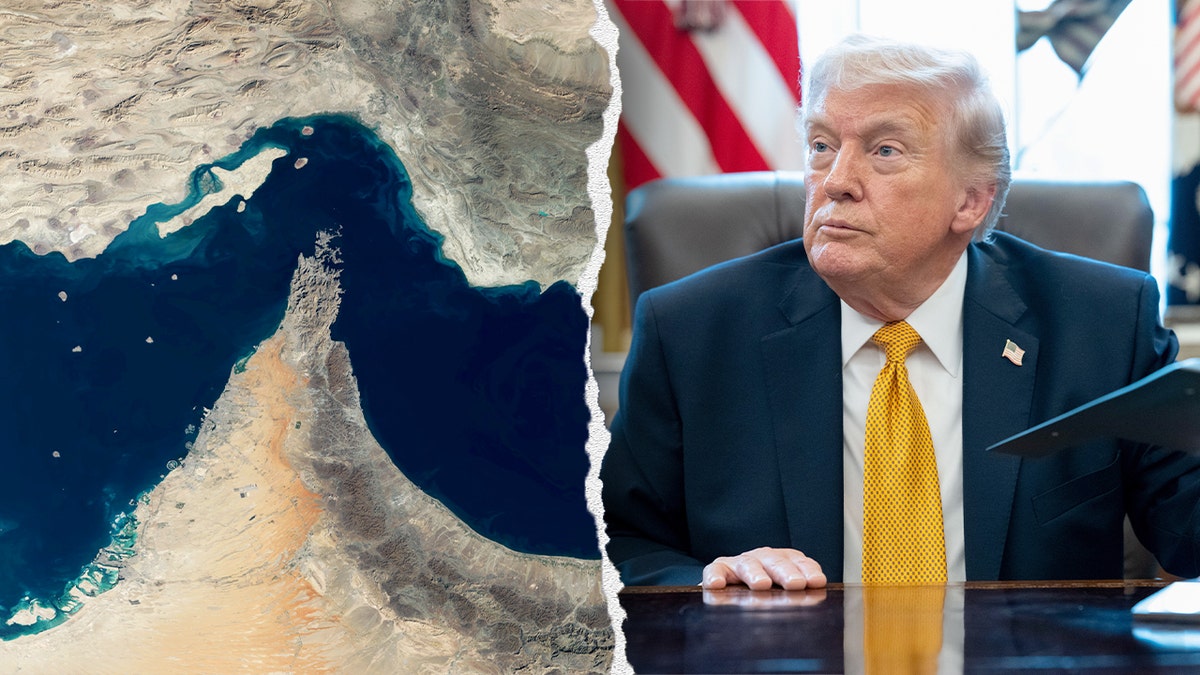
In recent years, tensions in the strait have flared multiple times. In 2019, the U.S. accused Iran of sabotaging oil tankers in the region, and Iran responded by seizing a British-flagged tanker. The U.S. has maintained a naval presence in the strait to deter Iranian aggression, but the MOU suggests a potential de-escalation—at least temporarily.
Economists warn that while the MOU may ease immediate risks to oil supplies, the underlying geopolitical tensions remain. “The Strait of Hormuz is a powder keg, and any agreement is only as strong as the parties’ willingness to enforce it,” said Amy Joffe, a senior fellow at the Brookings Institution. “If Iran perceives the U.S. as backing away from its demands on the nuclear program, we could see a return to hostilities.”
What Are the Risks of Delaying Nuclear Talks?
The 60-day delay in nuclear negotiations is a major point of contention. Under the JCPOA, Iran agreed to limit its uranium enrichment in exchange for sanctions relief. However, the deal collapsed in 2018 when Trump withdrew the U.S. from the agreement and reimposed sanctions. Since then, Iran has steadily expanded its nuclear program, raising concerns that it could develop a nuclear weapon within months if current trends continue.
The Institute for Science and International Security (ISIS) estimates that Iran could produce enough fissile material for a nuclear bomb within 12 to 18 months at its current enrichment rate. The MOU does not include any commitments from Iran to halt or reverse its enrichment activities, which could accelerate its progress toward a weapons-capable stockpile.
U.S. officials have privately expressed skepticism about the MOU’s long-term viability. A senior State Department source, speaking on condition of anonymity, told The Wall Street Journal that “the devil is in the details, and we haven’t seen them yet.” The source added that the U.S. is preparing for the possibility that Iran may use the 60-day window to further entrench its nuclear capabilities.
How Are World Leaders Reacting?
Reactions to the MOU have been mixed. European leaders, who have been pushing for a diplomatic solution to the Iran nuclear crisis, have generally welcomed the agreement as a step in the right direction. German Chancellor Olaf Scholz, whose country was a key architect of the JCPOA, called the MOU a “positive signal” but urged both sides to “seize the opportunity for substantive negotiations.”
In contrast, Israeli officials have expressed deep skepticism. “Iran is buying time to advance its nuclear program while pretending to engage in good faith,” said Israeli Prime Minister Benjamin Netanyahu in a statement. Israel, which views Iran as an existential threat, has conducted multiple cyberattacks and airstrikes against Iranian nuclear facilities in recent years.
China, which has maintained close economic ties with Iran, has also weighed in. A Chinese Foreign Ministry spokesperson said the MOU “shows the importance of dialogue and negotiation,” but did not commit to supporting further U.S.-Iran talks. Russia, meanwhile, has remained largely silent, though analysts suggest Moscow may see the agreement as an opportunity to weaken U.S. influence in the Middle East.
What Happens Next?
The next critical checkpoint is the formal signing of the MOU in Geneva, expected within days. If that proceeds as planned, the Strait of Hormuz will officially reopen to unrestricted traffic on June 14. However, the real test will come in the 60-day negotiation period, during which the U.S. and Iran must address the nuclear issue.
Diplomats say that any breakthrough will require significant concessions from both sides. The U.S. is likely to demand that Iran return to the JCPOA’s limits on enrichment, while Iran will push for the lifting of all sanctions. Meanwhile, regional allies like Saudi Arabia and Israel will be watching closely, as any perceived U.S. weakness could embolden Iran’s adversaries.
For now, the focus remains on the G7 summit. Trump’s meetings with Macron and other leaders will be closely scrutinized for any signals about the future of U.S.-Iran relations. As one European diplomat put it, “This is a moment of high stakes and low trust. The ball is in both courts, and the next move could change everything.”
The next official update on the U.S.-Iran negotiations is expected after the G7 summit concludes on June 11. The State Department has not yet scheduled a press briefing on the MOU, but officials may provide further details in the coming days.
What do you think about the U.S.-Iran agreement? Will it lead to broader diplomatic progress, or is it just a temporary pause? Share your thoughts in the comments below.
Related reading