The Enduring Appeal of “Seed Money”: From Paine to Trump and the Future of Global Endowments
The idea of providing every American child with a financial head start – a foundational endowment – isn’t a fleeting political fancy. It’s a concept with surprisingly deep roots, stretching back to the late 18th century and gaining renewed traction in response to modern economic anxieties. From Thomas Paine‘s 1797 proposal for a citizen’s dividend to the recent “Trump Accounts,” the notion of universal seed capital reflects a persistent desire to address wealth inequality and ensure broader participation in economic prosperity. But what’s driving this resurgence, and how do the latest iterations stack up against ancient proposals?
A History of Equitable Beginnings
The seeds of this idea were sown by Thomas Paine, a revolutionary thinker who advocated for a £15 endowment for every citizen upon reaching adulthood. While never implemented, Paine’s proposal highlighted a fundamental question: how can society ensure a basic level of economic security for all its members?
The concept lay relatively dormant for centuries, but re-emerged with force in the late 20th and early 21st centuries.Concerns about the long-term solvency of Social Security, coupled with the widening wealth gap and the increasingly uneven distribution of stock market gains, fueled a renewed interest in proactive wealth-building strategies.
This led to a wave of detailed proposals. In 1999, Bruce Ackerman and Anne Alstott, in their influential book The Stakeholder Society, argued for an $80,000 endowment for every high school graduate with a clean record, funded by a 2% wealth tax. A few years later, economist Robert Kuttner envisioned a system of universal “baby bonds,” starting with a $5,000 endowment at birth, supplemented by annual contributions for low-income families, and incentivized by tax-deductible contributions from middle-class families. More recently, in 2018, Senator Cory Booker championed “Baby Bonds,” offering a $1,000 seed deposit at birth, with additional contributions of up to $2,000 annually for lower-income children.(You can read more about the potential of Baby Bonds to close the racial wealth gap here: https://www.theatlantic.com/ideas/archive/2020/06/close-racial-wealth-gap-baby-bonds/613525/).
The Trump Account: A Symbolic Gesture or a Genuine Step Forward?
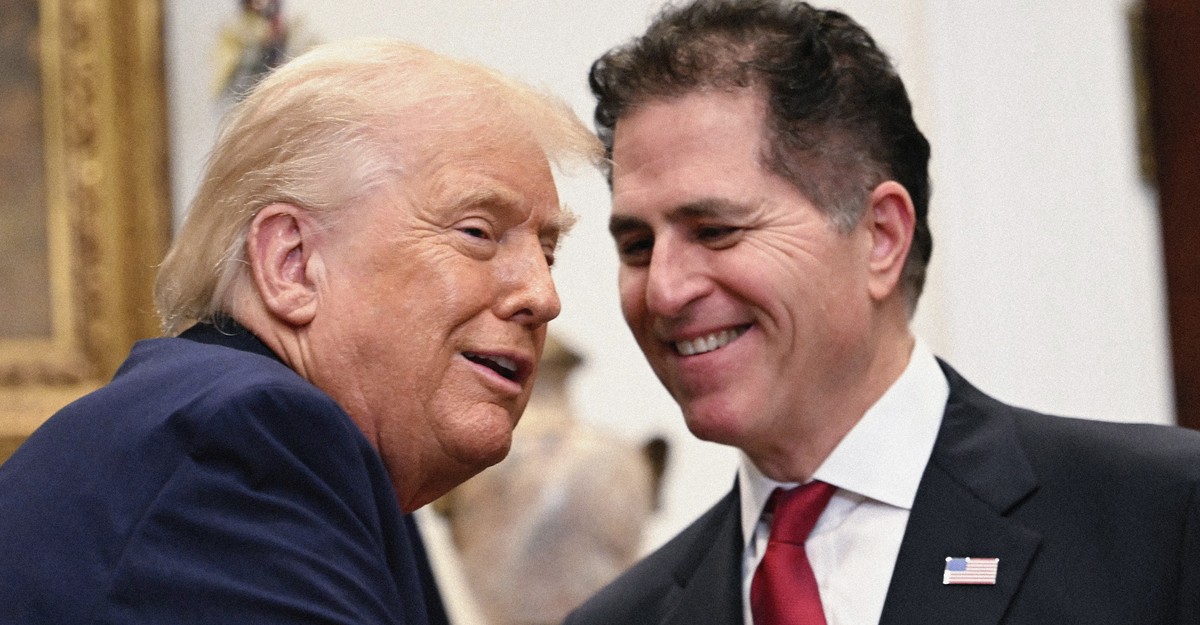
The recent introduction of “Trump Accounts” - $1,000 savings accounts for children born during his second term – is particularly noteworthy. What makes this advancement engaging isn’t necessarily the policy itself, but who is championing it. Historically, proposals for universal endowments have been associated with progressive thinkers and policymakers. To see figures like Donald Trump and Ted Cruz embrace the concept signals a potential shift in the political landscape, albeit a nuanced one.
However, a closer examination reveals a meaningful difference in scope and ambition. the earlier proposals – Ackerman’s, Kuttner’s, and Booker’s – represented substantial commitments of public funds, aiming for a transformative impact on wealth distribution. Trump Accounts, by contrast, are relatively modest.
Limitations and Missed Opportunities
Several key features limit the potential effectiveness of Trump Accounts. Crucially, enrollment isn’t automatic. Parents or guardians must actively opt-in, a barrier that will inevitably exclude a significant number of children, particularly those from disadvantaged backgrounds. The initial $1,000 deposit, while welcome, is a one-time contribution, lacking the ongoing investment that characterizes more robust proposals.
Furthermore, the accounts lack key incentives for sustained savings. Contributions aren’t tax-deductible,diminishing the appeal for families who might otherwise contribute. And withdrawals are taxed as regular income, reducing the long-term benefits. This contrasts sharply with 529 plans,wich offer tax-free withdrawals for qualified educational expenses and,in some states,tax deductions for contributions.
A Principle Worth Pursuing, But requiring Greater Commitment
The underlying principle – that the government should facilitate broader access to the benefits of economic growth – is sound. The enormous returns generated by American businesses should, arguably, be shared more equitably. However,a truly impactful initiative would involve ongoing