
A diplomatic firestorm has erupted between the United States and the Holy See, as President Donald Trump launched a scathing series of attacks against Pope Leo XIV. The conflict, which began on social media and has since spilled over into formal diplomatic channels, has placed Italian Prime Minister Giorgia Meloni in a precarious position, forcing her to publicly rebuke her close American ally.
The tension centers on a long Truth Social post in which President Trump accused the pontiff of being “WEAK on Crime and terrible for Foreign Policy.” The rhetoric did not stop there; the U.S. President later told reporters he was “not a big fan” of the Pope and explicitly refused to apologize for his remarks, doubling down on Monday by describing the Pope as “very weak” according to BBC News.
This public clash marks a significant departure from traditional diplomatic norms regarding the head of the Catholic Church. While Trump and Meloni have historically enjoyed a strong relationship based on shared right-wing political alignment, the nature of these attacks has crossed a line for the Italian leader. Prime Minister Meloni, a Catholic herself, described the president’s words toward the Holy Father as “unacceptable” as reported by The Hill.
The friction appears to be rooted in a fundamental disagreement over the Iran conflict. Pope Leo XIV has emerged as a staunch critic of the U.S. Administration’s approach to the region, specifically calling Trump’s threats to destroy Iranian civilization “unacceptable.” The Pope has consistently urged the U.S. President to find an “off-ramp” to finish the conflict and promote a path toward peace via BBC News.
A Conflict Over Iran and Global Diplomacy
The escalation began when Pope Leo XIV used his platform to speak out against the potential for total war in the Middle East. By challenging the U.S. Administration’s aggressive posture toward Iran, the Pope positioned himself as a moral counterweight to the White House’s foreign policy. This prompted the “unusual and scathing attack” from President Trump, who views the Pope’s calls for peace as a sign of weakness rather than diplomatic prudence.
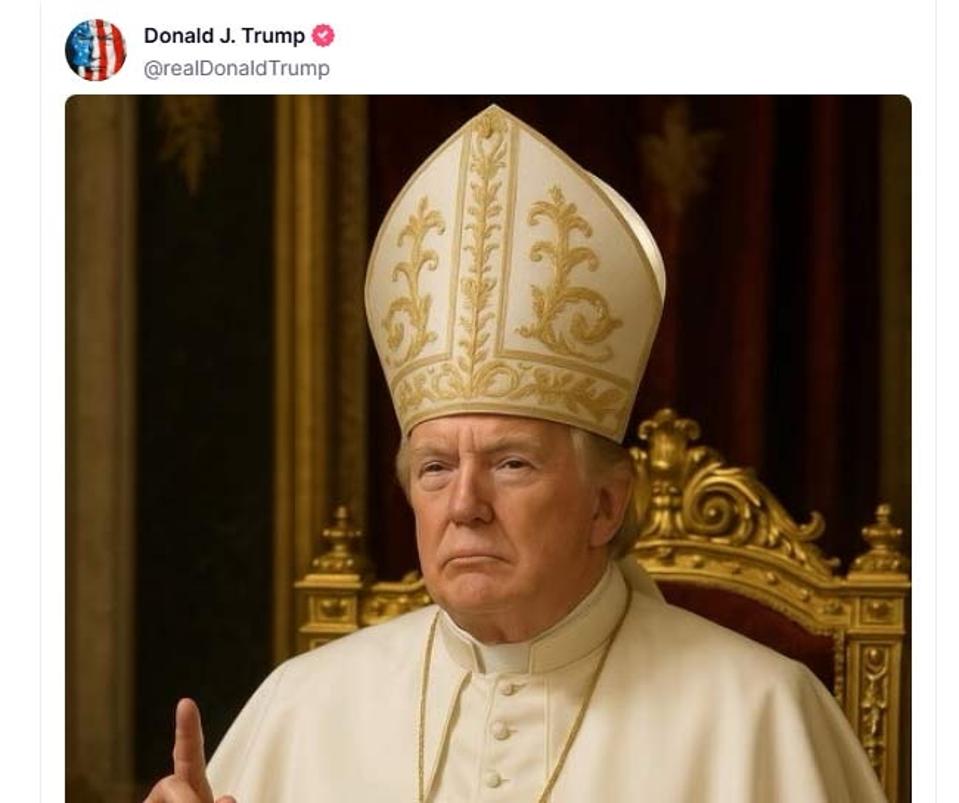
In a move that has drawn criticism from both political and religious circles, Trump initially posted his grievances on Truth Social before deleting the controversial post, which some observers noted featured imagery that appeared “Jesus-like” according to BBC News. Despite the deletion, the damage to the diplomatic relationship remains, as the president continues to characterize the Pope’s leadership as ineffective.
For his part, Pope Leo XIV has remained steadfast. Speaking to reporters en route to North Africa, the pontiff stated that he did not wish to engage in a personal debate with the U.S. President but would continue his mission to promote peace. He further emphasized that he has “no fear” of the Trump administration and will not be silenced in his opposition to war via BBC News.
Meloni’s Balancing Act: Faith vs. Political Alliance
The fallout has created a complex political crisis for Giorgia Meloni. As the head of a right-wing coalition government in Italy, she has long been viewed as one of Donald Trump’s most reliable European allies. Though, her role as a Catholic leader in a predominantly Catholic nation makes it impossible to remain silent during an attack on the papacy.
In an official statement, Meloni defended the Pope’s role, asserting, “The Pope is the head of the Catholic Church, and it is right and normal for him to call for peace and to condemn every form of war” via BBC News. This public condemnation represents a rare moment of friction between the two leaders.
The delay in Meloni’s response did not go unnoticed by her domestic opponents. Italian opposition parties have criticized the Prime Minister for failing to speak out promptly against the U.S. President’s tirade. Even within her own coalition, You’ll see signs of discomfort. Matteo Salvini, the leader of the populist League party, noted that “attacking the Pope… Doesn’t seem like a useful or intelligent thing to do” according to BBC News.
The First Papal Visit to Algeria
Amidst the diplomatic turmoil, Pope Leo XIV has continued his international mission. On the morning of April 13, the Pope arrived in Algeria, marking the first-ever papal visit to the North African nation via The Catholic Register.
This visit is the first stop of a planned 11-day, four-country tour of Africa. The journey is seen as a strategic effort by the Vatican to strengthen ties in North Africa and reiterate the Church’s commitment to peace and interfaith dialogue, even as the Pope faces unprecedented hostility from one of the world’s most powerful leaders.
Italian bishops have also stepped forward to reiterate their support for Pope Leo XIV, denouncing the online attacks from the U.S. President as an affront to the office of the papacy via The Catholic Register.
Key Takeaways of the Diplomatic Clash
- Root Cause: The dispute stems from Pope Leo XIV’s criticism of the U.S. Administration’s aggressive stance on the Iran conflict.
- Trump’s Rhetoric: The U.S. President labeled the Pope “WEAK on Crime,” “terrible for Foreign Policy,” and “very weak.”
- Meloni’s Stance: Italian PM Giorgia Meloni called the attacks “unacceptable,” balancing her alliance with Trump against her faith and national identity.
- Papal Response: Pope Leo XIV has stated he has “no fear” and will continue to advocate for peace and an “off-ramp” for the Iran war.
- Global Context: The tension coincides with the Pope’s historic first apostolic journey to Algeria on April 13 via The Catholic Register.
As the Pope continues his 11-day tour of Africa, the world will be watching to see if the Trump administration offers any olive branch or if the relationship between the White House and the Vatican will continue to deteriorate. The situation remains a critical test for the U.S.-Italy alliance and the intersection of religious authority and geopolitical power.
The next major checkpoint in this story will be the conclusion of the Pope’s four-country African tour and any subsequent official responses from the U.S. State Department regarding the diplomatic strain with Italy and the Holy See.
World Today Journal encourages readers to share their perspectives on the intersection of faith and foreign policy in the comments below.
Related reading
- Canada Wildfires: Millions of Hectares Destroyed by Summer Blazes
- UAE Accuses Iran of Striking ADNOC Tanker in Strait of Hormuz
- Taylor Swift Folklore Track Removed From Trump-Affiliated Account Over Copyright (world-today-news.com)
- MIT Scientists Identify Compounds That Prime Cells to Fight Viruses (time.news)