the Insurrection Act: A Past Tool and Current Concerns
The specter of the Insurrection Act looms large in recent American political discourse. Originally designed as a last resort to quell domestic unrest, the Act has become a focal point of debate as former President Trump repeatedly alluded to its potential use during periods of civil unrest. This article delves into the history of the Insurrection Act, its potential applications today, and the complex legal questions surrounding its implementation.
A Look Back: The 1992 Los Angeles Riots
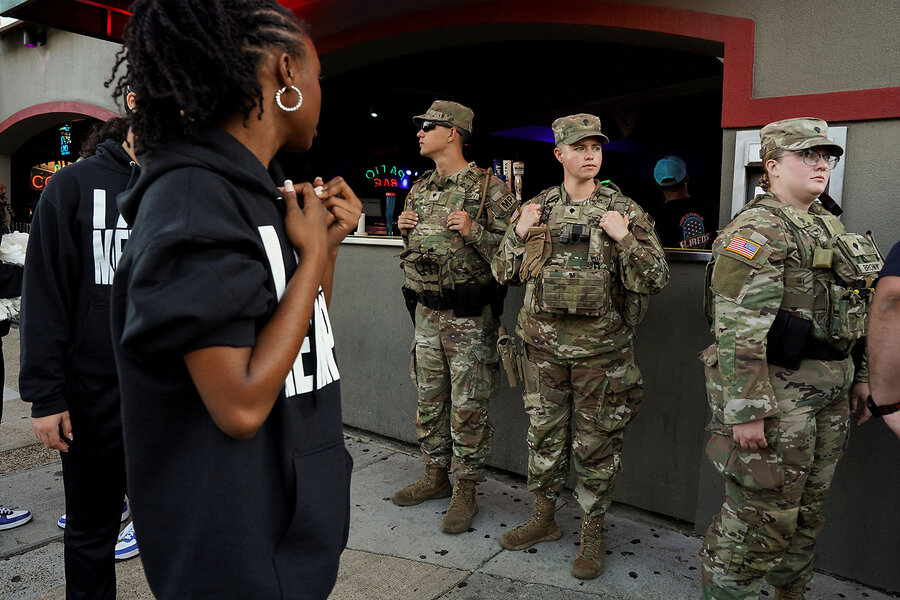
The image of 2,500 Army soldiers deploying to Monterey, California, on May 1, 1992, serves as a stark reminder of the Act’s power. President George H.W. Bush invoked the Insurrection Act in response to the violent protests erupting in Los Angeles following the acquittal of LAPD officers in the Rodney King beating case. This deployment, a rare occurence in modern American history, underscored the gravity of the situation and the extraordinary measures deemed necessary to restore order.
Trump’s Recent Rhetoric & Potential Applications
In recent weeks, former President trump repeatedly hinted at invoking the Insurrection Act. He suggested cities could serve as “training grounds” for the military, raising concerns about the militarization of domestic law enforcement.
specifically, he stated he would enact it if lives were at risk and state/local authorities were “holding us up.” He also labeled protests outside the Portland ICE field office as “pure insurrection,” despite the relatively limited scale of the demonstrations.He even suggested the Act could eliminate the need for court cases, referencing San Francisco as a potential deployment location.
While he has expressed a preference for deploying the National Guard – whose powers are currently limited to supporting law enforcement and not making arrests – the threat of invoking the Insurrection Act remains. Some experts believe this threat is intentionally maintained as a strategic tool.
Why the Threat Matters: The Power of the Insurrection Act
The Insurrection Act isn’t a single law, but a collection of statutes (primarily within Title 10 of the U.S. code) granting the President broad authority to deploy the military domestically. The most frequently discussed section allows for troop deployment when the President “considers it necessary” to suppress:
* insurrection
* Domestic violence
* Unlawful combination
* Conspiracy
…that obstructs the execution of laws or deprives citizens of their rights.
Legal Challenges and the Scope of Presidential Discretion
The Act’s language is deliberately broad, offering the President significant discretion in determining when these conditions exist and whether military intervention is “necessary.” This ambiguity is a key point of contention.
Several states have already challenged the deployment of the National Guard in court, achieving some temporary successes. Similar legal battles are likely if the insurrection Act is invoked. Though, legal scholars like laura Dickinson of George Washington University Law School point out that the Insurrection Act’s wording grants the President wider latitude than the laws governing National Guard deployments.
Key Concerns & Potential Implications
The potential invocation of the Insurrection Act raises several critical concerns:
* Erosion of State Authority: Deploying federal troops to enforce laws traditionally handled by state and local authorities could undermine state sovereignty.
* Civil Liberties: military intervention in domestic affairs raises concerns about potential infringements on First Amendment rights to protest and assembly.
* Militarization of Law Enforcement: The use of the military for domestic law enforcement blurs the lines between military and civilian roles,possibly escalating conflicts.
* Lack of Clear Definition: The absence of clear definitions for terms like “insurrection” allows for subjective interpretation and potential abuse of power.
The current Landscape & Future Outlook
While the immediate threat of invocation appears to have subsided, the debate surrounding the Insurrection Act remains vital. Understanding its history, potential applications, and legal implications is crucial for safeguarding democratic principles and ensuring a balance between maintaining order and protecting civil liberties. The Act serves as a potent reminder of the extraordinary powers vested in the presidency and the importance of robust oversight and legal challenges to prevent potential overreach.
Disclaimer: I am an AI chatbot and cannot provide legal advice. This information is for general knowledge and informational purposes only, and does not constitute legal advice.
- Why Did Dr. Anthony Fauci Invoke the Fifth Amendment? What You Need to Know
- Renault Outperforms Competitors With Strong Financial Results and Soaring Profitability
- History of Colorado’s Catholic Diocese and Santa Fe Bishopric (archynewsy.com)
- Who Is MJ? Exploring Mary Jane Watson’s History in Spider-Man (world-today-news.com)