
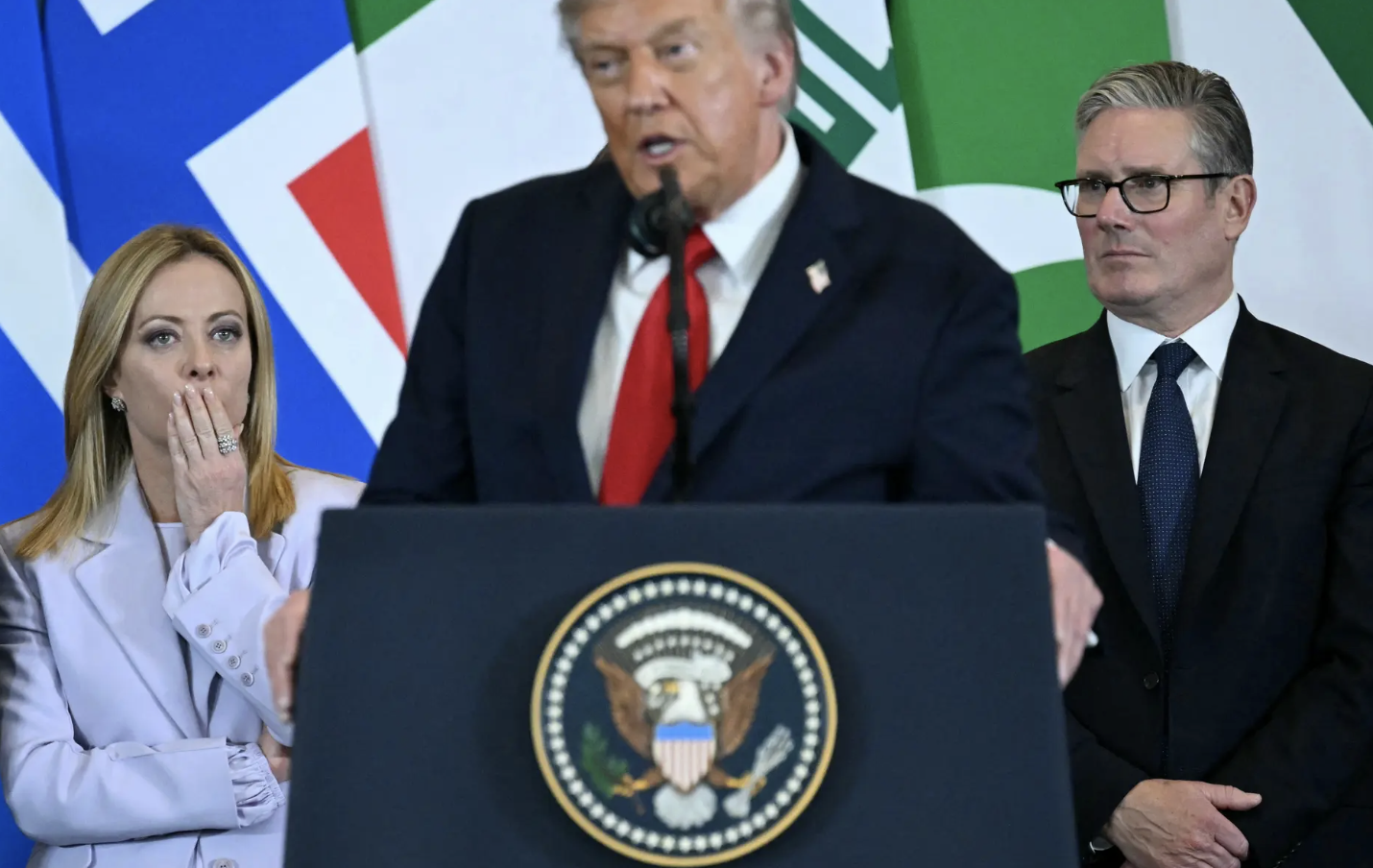
The strategic architecture of the Transatlantic alliance is facing a period of severe instability as President Donald Trump has signaled a potential withdrawal of U.S. Troops from Italy and Spain. The remarks, delivered amid a widening diplomatic rift over the ongoing conflict in Iran, suggest a shift toward a more transactional approach to security guarantees that could fundamentally alter the footprint of the U.S. Military in Southern Europe.
When asked if he would consider pulling personnel from these two NATO allies, President Trump responded, yeah, I probably will
. He justified the potential move by claiming that Italy has not been of any help to us
and described Spain’s conduct as horrible. Absolutely horrible
. The President’s grievances are rooted in the belief that European allies have failed to provide sufficient support during the Iran war, contrasting this with U.S. Assistance to Europe regarding Ukraine.
The scale of a potential withdrawal is significant. According to data from the U.S. Defense Manpower Data Center (DMDC), as of December 2025, there were 12,662 U.S. Active-duty personnel stationed in Italy and 3,814 in Spain. A decision to remove these forces would not only impact bilateral relations but would create a security vacuum in the Mediterranean, particularly as the disruption in the Strait of Hormuz continues to upend global markets and energy security.
Diplomatic Friction and the Iran Conflict
The escalating tension is inextricably linked to the conflict in the Middle East. Spanish Prime Minister Pedro Sánchez has been a prominent critic of the war, characterizing the initial U.S. And Israeli strikes as illegal
. This ideological divide translated into direct operational friction: Spain denied the United States access to joint-military bases for attacks against Iran and closed its airspace to U.S. Aircraft involved in the conflict. In response, President Trump threatened to sever trade ties with Spain in early March.
Italy, led by Prime Minister Giorgia Meloni, has similarly maintained a distance from the war. Relations soured further when reports emerged that Italy denied the apply of a Sicilian airbase to U.S. Military aircraft after determining that proper authorization procedures had not been followed. President Trump responded critically to the move, stating, Italy wasn’t there for us, we won’t be there for them.
The rift has expanded beyond military logistics into personal and religious disputes. President Trump engaged in a public feud with Pope Leo, accusing the Pontiff of being weak on crime
and terrible for foreign policy
after the Pope called for an end to the war in Iran. Prime Minister Meloni defended the Holy Father, stating that his calls for peace and the condemnation of war were right and normal
given his role as head of the Catholic Church.
The friction between Trump and Meloni—once viewed as a close ally in Europe—reached a peak in an interview with the Italian newspaper Corriere Della Sera, where the President described Meloni as unacceptable
and alleged that she doesn’t care if Iran has a nuclear weapon
.
Economic Leverage and the EU Trade Row
Parallel to the security threats, the U.S. Administration is utilizing economic pressure to influence European policy. President Trump announced on Friday his intention to impose a 25% tariff on automobiles from the European Union starting next week. He accused the bloc of failing to comply with a trade agreement struck in July 2025, which established a tariff ceiling of 15% on most European goods in exchange for the EU eliminating duties on U.S. Industrial goods, including autos.
“I am pleased to announce that, based on the fact the European Union is not complying with our fully agreed to trade deal, next week I will be increasing tariffs charged to the European Union for cars and trucks coming into the United States.” Donald Trump, President of the United States
The President clarified that these tariffs would not apply to vehicles produced in U.S. Plants. Bernd Lange, chairman of the EU parliament’s trade committee, condemned the move as unacceptable
, urging the EU to maintain clarity and firmness
in the face of what he described as arbitrary actions.
Financial analysts suggest these tariffs are part of a broader strategy of leverage. Matthias Matthijs, a senior fellow for Europe at the Council on Foreign Relations, noted that the administration is targeting trade because We see the Europeans’ pain point
, using it as a tool to secure concessions on other fronts, such as the Iran conflict or NATO spending.
Macroeconomic Strain and Market Volatility
These political disputes are unfolding against a backdrop of severe economic instability. The Middle East crisis has triggered an energy emergency across Europe. European Commission President Ursula von der Leyen informed the European Parliament that in just 60 days of conflict, the bill for fossil fuel imports increased by over EUR 27 billion without an increase in actual energy volume.
The International Monetary Fund (IMF) has subsequently revised its growth forecasts for the euro area downward. The IMF now expects growth to decline from 1.4% in 2025 to 1.1% in 2026 and 1.2% in 2027, with both forecasts lowered by 0.2 percentage points from the January update. S&P Global’s Purchasing Managers’ Index (PMI) released in late April showed that cost inflation for goods leaving factories has hit a 37-month high.
The United Kingdom is similarly affected. Prime Minister Keir Starmer expressed frustration over the financial instability facing British citizens, although the UK’s top economic official accused the U.S. Administration of entering the Iran war without a clear plan
.
Timeline of Deteriorating U.S.-EU Relations
| Period | Event | Impact |
|---|---|---|
| July 2025 | U.S.-EU Trade Agreement | Established 15% tariff ceiling; EU to remove auto duties. |
| Oct 13, 2025 | Sharm El-Sheikh Summit | High-level meeting between Trump, Meloni, and Starmer. |
| January 2026 | Greenland Tariff Threat | Trump threatened 25% tariffs on UK/EU over Greenland territory. |
| March 2026 | Spain Airspace Closure | Spain blocked U.S. Planes involved in the Iran conflict. |
| April 2026 | Pope Leo Feud | Trump criticized the Pope’s calls for peace in Iran. |
The Future of NATO and Regional Security
The threat to withdraw troops from Italy and Spain follows a similar warning issued to Germany. President Trump stated on Wednesday that the U.S. Is studying and reviewing the possible reduction of troops in Germany
, with a final determination expected shortly. This tension is compounded by a row with German Chancellor Friedrich Merz, who claimed the U.S. Was being humiliated
by Iranian leadership.

The broader implications for NATO are profound. Beyond troop reductions, there have been reports of internal Pentagon discussions regarding the possible suspension of Spain from the alliance to punish difficult
allies—a claim Prime Minister Sánchez has downplayed. This follows a period where European nations attempted to appease the administration by committing to increase NATO defense spending to 5%.
UN Secretary-General António Guterres has warned that the crisis in the Middle East is worsening by the hour. He emphasized that the curtailment of navigational rights in the Strait of Hormuz strangles the global economy
by disrupting energy, transport, and food markets. Guterres has urged for the full reopening of the Strait and a return to diplomatic dialogue.
As the U.S. Administration continues to review its military presence in Southern Europe, the next critical checkpoint will be the implementation of the 25% auto tariffs scheduled for next week, which will likely trigger a formal response from the European Commission.
World Today Journal encourages readers to share this report and join the discussion in the comments regarding the impact of these security shifts on global stability.