
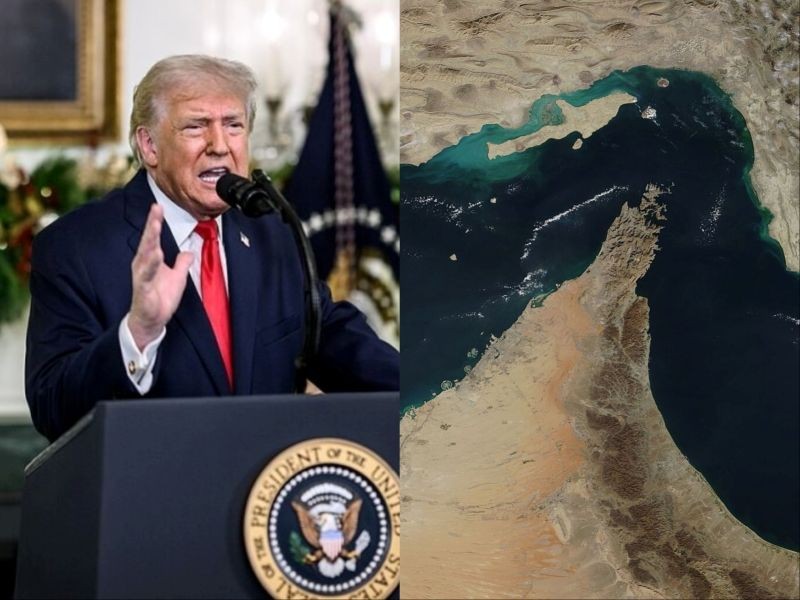
As the international community monitors shifting diplomatic currents in the Middle East, President Donald Trump has indicated that a final determination regarding a potential new framework for the Iran nuclear deal is imminent. Speaking from the White House, the President emphasized that while negotiations are fluid, his administration remains focused on securing regional stability, with a specific, non-negotiable demand that the Strait of Hormuz must remain open for global commerce. This latest signal from the executive branch comes amid a flurry of back-channel communications and ongoing efforts to manage regional tensions that have historically impacted global energy markets.
The situation remains complex, as the administration balances its “maximum pressure” legacy with a renewed appetite for transactional diplomacy. While observers in Washington and Tehran continue to parse signals regarding a potential nuclear agreement, the primary focus for the White House appears to be the immediate security of maritime transit routes. The Strait of Hormuz, a critical chokepoint through which approximately 20% of the world’s total petroleum consumption passes, has been a frequent flashpoint for naval posturing, according to data from the U.S. Energy Information Administration. The President’s insistence that this passage must remain unencumbered serves as a cornerstone of his current diplomatic messaging.
Navigating the Path Toward a Policy Determination
The prospect of a renewed agreement with Iran has prompted intense scrutiny from global policy analysts. Following various reports of tentative discussions, the White House has maintained a posture of calculated ambiguity. President Trump has stated that he is reviewing the progress of his diplomatic team, noting that a decision on whether to pursue a formal deal—or to maintain existing sanctions—would be made shortly. This approach reflects a broader strategy of keeping international counterparts, including regional allies and European signatories to the original 2015 accord, in a state of watchful anticipation.
Diplomatic progress is often measured by the ability to maintain communication channels even amidst deep-seated distrust. Recent reports indicate that while lower-level talks have touched upon various security concerns, the transition from informal dialogue to a binding international agreement remains a high-stakes hurdle. The administration has signaled that any potential deal would necessitate significant concessions from Tehran, particularly regarding its enrichment activities and regional influence. According to the International Atomic Energy Agency, the monitoring of Iran’s nuclear program remains a central pillar of international security efforts and any deviation from established safeguards would fundamentally alter the current diplomatic calculus.
Geopolitical Stakes in the Strait of Hormuz
The Strait of Hormuz represents more than just a maritime boundary; it is a vital artery for the global economy. By explicitly linking the status of the Iran deal to the freedom of navigation in these waters, the White House is signaling that economic and security interests are inextricably tied. The risk of disruption to this narrow passage has historically led to volatility in crude oil prices, affecting economies far beyond the Persian Gulf. For global markets, the “final determination” mentioned by the President is being treated as a market-moving event that could dictate energy price trends for the coming fiscal year.
Regional stakeholders, including Saudi Arabia and the United Arab Emirates, have long advocated for a robust international presence in the region to deter potential interference with shipping. The U.S. Navy’s Fifth Fleet, headquartered in Bahrain, continues to conduct regular patrols to ensure the flow of commerce, a role that remains a focal point of U.S. Military strategy in the region as documented by the U.S. Naval Forces Central Command. Any shift in the diplomatic landscape between Washington and Tehran will undoubtedly require a recalibration of these maritime security operations.
What Lies Ahead: A Timeline of Uncertainty
As we look toward the next phase of this diplomatic episode, it is essential to distinguish between official policy announcements and the surrounding conjecture. The administration has not provided a specific date for its final decision, leaving the diplomatic corps and global investors to navigate a period of continued volatility. In the coming weeks, the focus will likely shift to whether the current talks can produce a mutually acceptable text that satisfies the security requirements of the United States while remaining politically viable within the Iranian domestic landscape.

For those tracking these developments closely, official updates will be disseminated through the White House press office and the U.S. Department of State. It is advisable to rely on verified transcripts of briefings rather than secondary speculation, as the nuances of these negotiations are often lost in the noise of cable news cycles. As an editor, I maintain that the most reliable indicators of progress will be the formal statements issued by the administration and any subsequent notifications provided to the United Nations Security Council, which remains the primary venue for international oversight of the Iran file.
Key Considerations for the Global Community
- Economic Impact: The security of the Strait of Hormuz remains a primary driver of global oil price stability.
- Diplomatic Thresholds: The U.S. Administration’s “final determination” will hinge on verifiable limits to Iran’s nuclear capabilities.
- Regional Coordination: Any movement toward a deal will require close consultation with regional partners to maintain a unified front on security.
- Verification Protocols: Future agreements, if reached, will likely necessitate enhanced inspection regimes to ensure compliance.
The situation remains highly fluid. As we move closer to a potential announcement, our team at World Today Journal will continue to provide objective analysis, focusing on the facts as they emerge from official channels. We invite our readers to share their perspectives on the potential implications of this policy pivot in the comments section below. Your engagement is a vital part of our commitment to transparent, global-minded journalism.