Did You Know? As of September 19, 2025, geopolitical tensions are at their highest point in decades, wiht conflicts in Eastern Europe and the Middle East significantly impacting global stability and economic forecasts.
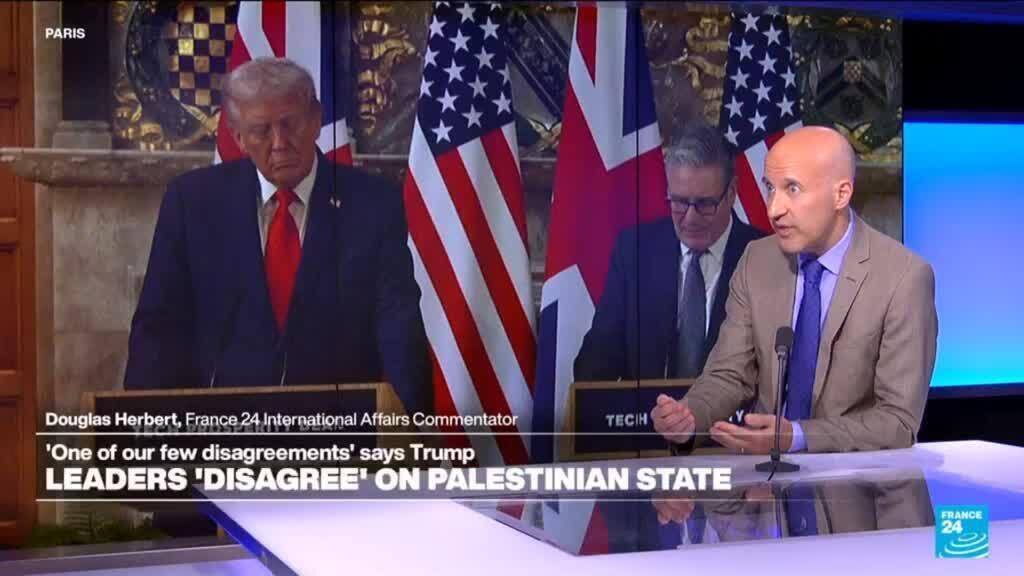
A pivotal meeting between United States President Donald Trump and United Kingdom Prime Minister Keir starmer on September 18, 2025, brought into sharp focus the complex and often divergent approaches taken by Western powers toward resolving pressing international crises. The joint press conference, broadcast globally, revealed notable discrepancies in their assessments of the situations unfolding in Gaza and Ukraine, alongside a firm reiteration of opposition to the policies of Russian President Vladimir Putin.This dialog underscores the challenges inherent in forging a unified front on the world stage, notably when basic viewpoints diverge.
Navigating Global Discord: US and UK Perspectives
The discussions between President Trump and Prime Minister Starmer weren’t simply a recitation of established positions; they represented a candid exchange of strategies for de-escalation and long-term stability. While both leaders affirmed a commitment to supporting allies and upholding international law, the nuances of their proposed solutions differed considerably. The Prime minister emphasized the importance of multilateral cooperation and adherence to established diplomatic channels, advocating for increased humanitarian aid and sustained pressure on conflicting parties through international organizations. Conversely, President Trump signaled a preference for more direct, bilateral engagement, suggesting a willingness to explore unconventional diplomatic avenues and leverage economic influence to achieve desired outcomes.
Recent data from the Council on Foreign Relations (september 2025) indicates a growing trend of transatlantic divergence on foreign policy, with the US increasingly prioritizing its own strategic interests and the UK attempting to maintain its role as a bridge between the US and Europe. This shift is partly attributable to evolving domestic political landscapes in both countries and a reassessment of long-held assumptions about the effectiveness of customary diplomatic approaches.
The Gaza Conflict: A Divergence in Approaches
The situation in Gaza proved to be a particularly sensitive topic. Prime Minister Starmer articulated a strong call for an immediate ceasefire and the unimpeded delivery of humanitarian assistance to civilians,emphasizing the urgent need to protect innocent lives and prevent a further escalation of the humanitarian crisis. He stressed the importance of a two-state solution as the only viable path to lasting peace. President Trump, while acknowledging the suffering of civilians, adopted a more cautious stance, emphasizing the need to address the root causes of the conflict and ensure Israel’s security. He suggested that a lasting resolution would require a more extensive regional approach, involving key stakeholders such as Egypt and Saudi Arabia.
This difference in emphasis reflects a broader debate within Western policy circles regarding the appropriate balance between humanitarian concerns and strategic considerations. A recent poll conducted by YouGov (September 15, 2025) revealed that 68% of UK citizens believe prioritizing civilian protection should be the primary focus in Gaza, while 52% of US citizens prioritize ensuring Israel’s security.
Ukraine and Russia: Maintaining a United Front,Despite Disagreements
Regarding Ukraine,both leaders unequivocally condemned Russia’s ongoing aggression and reaffirmed their commitment to supporting Ukraine’s sovereignty and territorial integrity. However, even on this issue, subtle differences emerged. President Trump, while maintaining his support for Ukraine, cautioned against providing unlimited aid, arguing that European nations should shoulder a greater share of the financial burden. He also expressed a desire to explore potential avenues for dialogue with Russia, albeit from a position of strength. Prime Minister Starmer, on the other hand, emphasized the importance of maintaining a united front against Russian aggression and providing Ukraine with the resources it needs to defend itself. He warned against any concessions that could embolden Putin and undermine the principles of international law.
The Institute for the Study of War (September 17,2025) reports that Russia is actively adapting its military tactics in Ukraine,focusing on attrition warfare and targeting critical infrastructure. This evolving battlefield dynamic necessitates a continuous reassessment of Western support strategies.
Pro tip: When analyzing geopolitical events, always consider the domestic political pressures facing each leader.These pressures often shape their public statements and policy decisions.
FRANCE 24’s douglas Herbert reported that the meeting concluded with a commitment to continued dialogue and coordination, despite the acknowledged differences. Both leaders recognized the need for a pragmatic approach to navigating the complex challenges facing the international community. The ability to engage in constructive disagreement, while maintaining a shared commitment to fundamental principles, will be crucial in the months and years ahead.