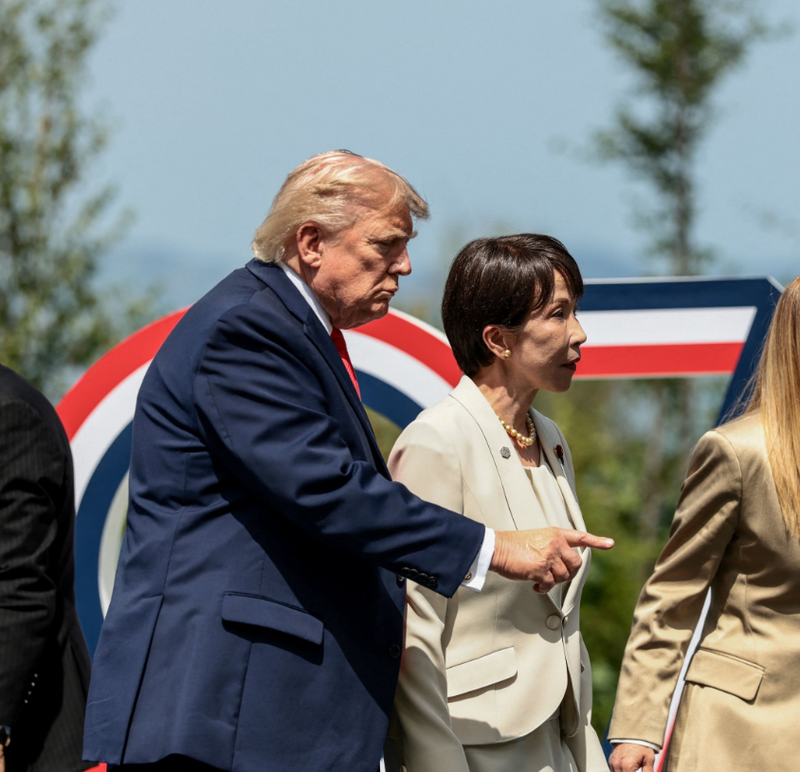
Reports circulating on social media regarding an alleged verbal altercation between former U.S. President Donald Trump and Japanese politician Sanae Takaichi during a G7 summit have been identified by regional analysts as lacking factual basis. The claims, which suggested a heated exchange over historical references to the attack on Pearl Harbor, have been dismissed by observers as a fabrication likely originating from partisan sources targeting Japan’s Liberal Democratic Party (LDP).
As the Editor of the World section at World Today Journal, I have tracked the emergence of these claims across various digital platforms. The narrative suggests that during an international diplomatic dinner, Donald Trump drew a comparison between the 1941 attack on Pearl Harbor and recent geopolitical conflicts, allegedly triggering a sharp response from Sanae Takaichi. However, no credible diplomatic records, official transcripts, or reports from major international news agencies support the occurrence of such an event.
Analyzing the Origins of the Alleged Incident
The spread of this narrative coincides with heightened political sensitivities surrounding the LDP and the international standing of Japanese political figures. According to commentary from observers familiar with Japanese media dynamics, the story surfaced through channels frequently associated with criticism of the ruling party. By attributing the incident to a high-profile, high-stakes setting like a G7 summit, the claim gained traction despite a complete absence of photographic evidence, witness statements, or corroboration from the diplomatic corps present at such gatherings.
In the context of international relations, G7 summits are governed by strict protocols. Every bilateral or multilateral engagement involving heads of state or high-ranking officials is meticulously documented by diplomatic staff and press pools. The lack of any record from these established, verified entities serves as a primary indicator that the reported altercation did not take place. The official G7 portal provides comprehensive documentation of summit proceedings, none of which reflect the alleged interactions described in the viral reports.
The Role of Misinformation in Political Discourse
The dissemination of this story highlights a growing trend in the digital information environment where fabricated anecdotes are used to influence public perception of political actors. By framing the interaction as a “clash” between an American political figure and a Japanese legislator, the content creators aimed to leverage existing historical tensions—specifically the memory of Pearl Harbor—to provoke an emotional response from readers.
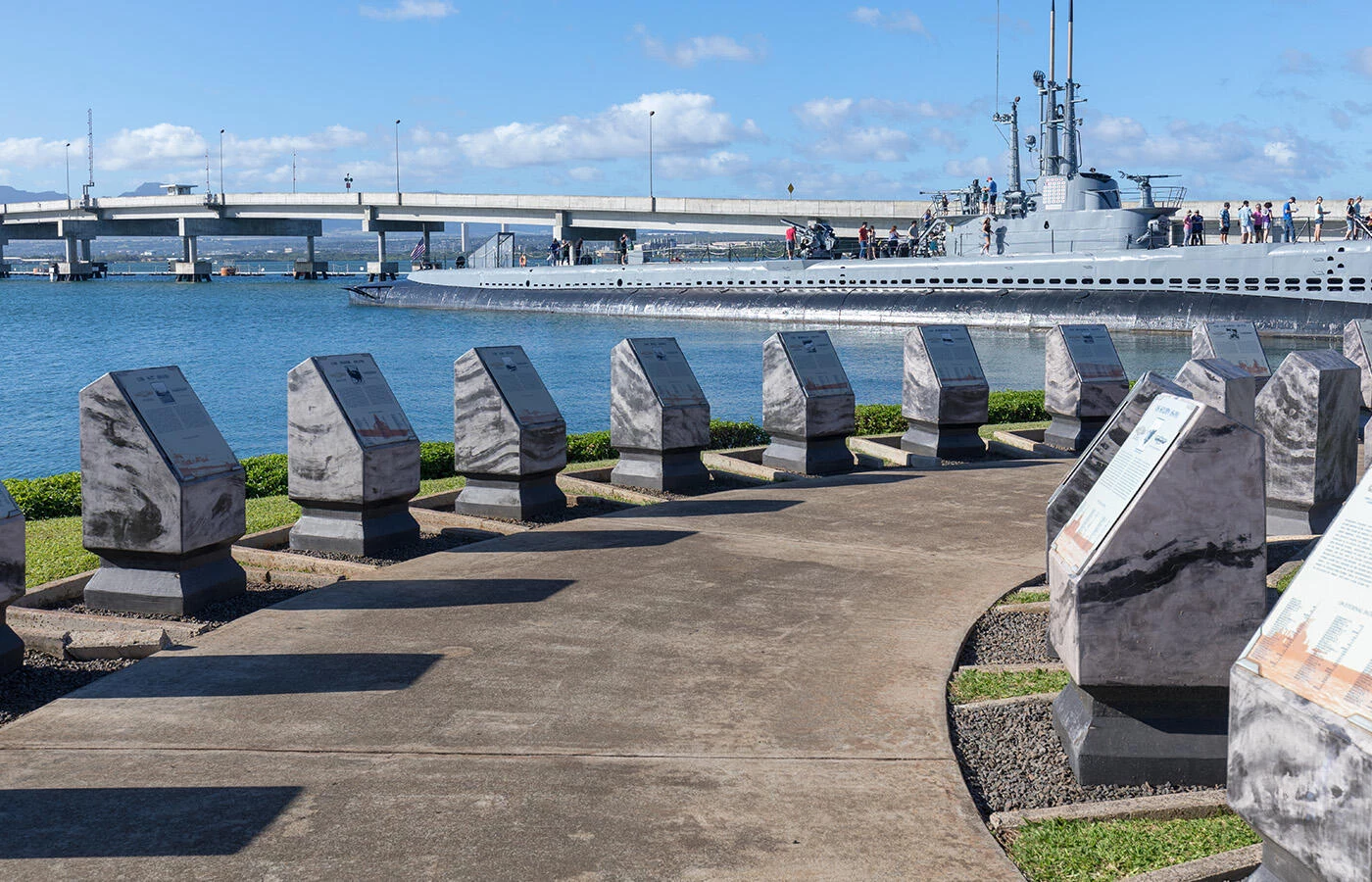
Journalistic standards require the verification of claims through multiple independent, reliable sources before reporting them as fact. The International Federation of Journalists emphasizes that in an era of rapid information exchange, the responsibility to debunk such “black propaganda” falls upon both media organizations and the public. In this instance, the story lacks the fundamental pillars of news: a verifiable time, an established location, and corroborated testimony.
Distinguishing Fact from Fabricated Narratives
When evaluating reports concerning diplomatic interactions, it is essential to consider the source’s intent. Analysts monitoring the situation have noted that the narrative appears designed to damage the reputation of individuals associated with the LDP by painting them as diplomatically inept or embroiled in unnecessary conflict. This strategy is a common feature of disinformation campaigns, which rely on the speed of social media to outpace the slower, more methodical process of fact-checking.
For readers seeking accurate information on international affairs, reliance on institutional sources remains the most effective safeguard against disinformation. Official government websites, such as the Ministry of Foreign Affairs of Japan, provide reliable updates on the activities and diplomatic engagements of Japanese officials. Similarly, the U.S. Department of State maintains records of official diplomatic travel and summit participation, ensuring that the public has access to an accurate account of international events.
Maintaining Journalistic Integrity
The incident serves as a reminder of the importance of critical media literacy. As global affairs become increasingly complex, the intersection of geopolitics and digital misinformation requires a vigilant approach to news consumption. When a report cites an event that would be of significant international interest—such as a public disagreement between a former U.S. president and a prominent G7-nation politician—the absence of coverage from reputable global news outlets is, in itself, a significant finding.

Moving forward, audiences are encouraged to verify major claims through official records and established, transparent news organizations. As the political landscape continues to evolve, the World Today Journal remains committed to providing verified, evidence-based reporting. We invite readers to share their thoughts on the impact of digital misinformation in our comments section below and to stay updated through our verified reporting channels.