
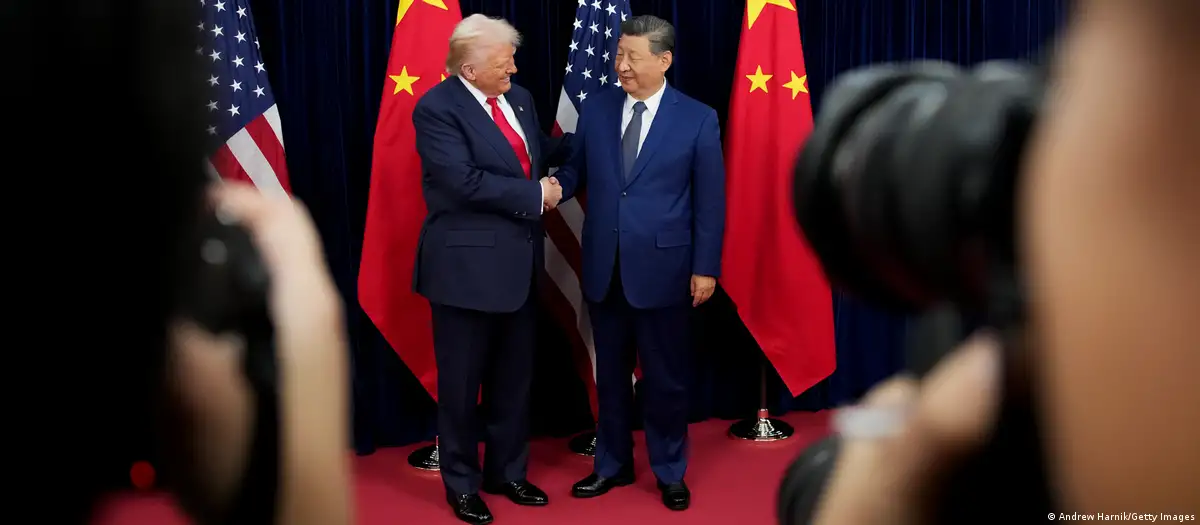
President Donald Trump has issued a stern warning to Beijing as reports emerge that China is preparing to provide critical military hardware to Tehran, threatening to destabilize a fragile ceasefire in the Middle East. The tension comes at a pivotal moment when the United States and Iran are attempting to maintain a tenuous peace, while the broader geopolitical struggle between Washington and Beijing intensifies.
The friction centers on intelligence assessments suggesting that China is preparing to deliver new air defense systems to Iran within the coming weeks, according to reports highlighted by CNN on April 11, 2026 CNN. This potential escalation has prompted the White House to signal that any move to arm Iran would carry significant consequences, just as both nations prepare for a high-stakes diplomatic encounter.
For the international community, the stakes extend beyond the immediate conflict. The intersection of the US-Iran war and the US-China rivalry has created a volatile environment where military shipments, energy security, and diplomatic summits are inextricably linked. As the U.S. Manages a complex military engagement in the Middle East, Beijing appears to be calculating its next moves to maximize its own strategic leverage.
Military Hardware and the Fragile Ceasefire
The core of the current dispute is the reported imminent transfer of advanced air defense technology from China to Iran. This move is seen by Washington as a direct challenge to U.S. Interests and a potential catalyst for the collapse of the current ceasefire agreement between the U.S. And Iran, which is described as holding for now AP News.

The delivery of such systems would not only bolster Iran’s defensive capabilities but could too embolden Tehran during ongoing negotiations. President Trump’s warning to China serves as a preemptive strike against any effort to shift the military balance of power in the region. The U.S. Administration has emphasized that maintaining the ceasefire is paramount to preventing a wider regional conflagration, though the path to a durable endgame remains unclear.
China, meanwhile, is weighing its role in the conflict. While Beijing has remained largely on the sidelines of the active fighting, We see considering how it might help find a long-term resolution to the war, potentially using its influence with Tehran as a bargaining chip in its own dealings with the United States AP News.
The Indo-Pacific Pivot and Beijing’s Strategic Gain
While the U.S. Focuses its military and diplomatic resources on the Middle East, experts suggest that China is reaping significant long-term benefits. Jon Czin, a fellow at the Brookings Institution, noted that the U.S.-Iran conflict has allowed Beijing to operate with less scrutiny, as American military assets are being pulled away from the Indo-Pacific theater ABC News.
This shift in U.S. Attention has provided President Xi Jinping with what analysts describe as “time and space” to strengthen China’s internal position. By avoiding direct involvement in the war while the U.S. Is preoccupied, Beijing is positioning itself as a relative point of stability in a chaotic foreign policy landscape. This strategic patience is intended to give Xi the upper hand ahead of his anticipated meeting with President Trump in May ABC News.
The geopolitical calculus is further complicated by the postponement of the Trump-Xi summit, which was delayed by six weeks due to the outbreak of the war ABC News. This delay has effectively granted Beijing a window to observe the conflict’s progression without committing to a specific diplomatic stance.
Energy Security and the Strait of Hormuz
A critical point of contention in the US-China-Iran triangle is the Strait of Hormuz. President Trump has publicly called on Beijing to assist in reopening the strait, which Iran had closed during the conflict ABC News. The strait is a vital artery for global oil shipments, and its closure threatens global energy prices.
Despite the U.S. Request, China has largely remained detached. This is possible because Beijing has proactively built up its own strategic oil reserves and made massive investments in green energy, providing a cushion that allows it to withstand disruptions in the Strait of Hormuz ABC News. Some Chinese ships have reportedly been able to transit the strait even after Iran’s closure, suggesting a level of diplomatic coordination between Beijing and Tehran that bypasses U.S. Influence.
Strategic Summary: US vs. China Interests in Iran
| United States | China |
|---|---|
| Maintain fragile ceasefire and prevent regional escalation. | Maintain strategic distance while gaining leverage over the U.S. |
| Prevent Iran from acquiring advanced air defense systems. | Potentially provide military hardware to strengthen ties with Tehran. |
| Reopen the Strait of Hormuz to stabilize global oil. | Rely on strategic oil reserves and green energy to mitigate risk. |
| Limit Iranian influence via military and diplomatic pressure. | Utilize U.S. Preoccupation in the Middle East to focus on the Indo-Pacific. |
Looking Toward the May Summit
The current tension over weapons deliveries and the Middle East ceasefire is setting the stage for the upcoming meeting between President Trump and President Xi. With the summit now anticipated for May, both leaders are attempting to secure the best possible positioning. For Trump, the goal is to ensure China does not undermine U.S. Security efforts in Iran. For Xi, the objective is to maintain the strategic advantage gained from the U.S. Military’s pivot away from the Indo-Pacific ABC News.
The outcome of this meeting could determine whether the US-Iran ceasefire holds or if the introduction of Chinese military hardware triggers a new phase of escalation. As the world watches, the interplay between these three powers—the U.S., China, and Iran—will likely define the security architecture of the Middle East for years to arrive.
The next confirmed checkpoint for this developing story is the anticipated diplomatic summit between President Trump and President Xi in May, where the status of the Iran ceasefire and the delivery of military hardware are expected to be primary agenda items.
We invite our readers to share their perspectives on the geopolitical implications of this tension in the comments below. Please share this report to keep others informed on the evolving dynamics of the US-China-Iran relationship.