
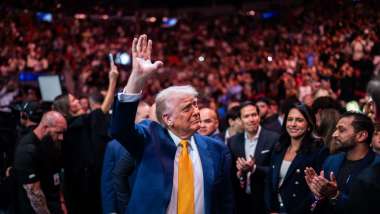
The intersection of high-stakes diplomacy and professional combat sports took center stage as President Donald Trump attended an Ultimate Fighting Championship (UFC) event in Miami. The timing of the visit coincided with a period of significant geopolitical tension, specifically as negotiations between the United States and Iran faced critical breakdowns.
This juxtaposition of a high-profile sporting event and escalating international conflict has drawn scrutiny, highlighting the unconventional nature of the administration’s approach to crisis management. While diplomatic channels struggled to uncover common ground with Tehran, the President’s presence at the UFC event underscored a distinct preference for public visibility and the spectacle of combat sports.
The event in Miami served as more than just a leisure activity; it reflected a broader cultural alignment between the administration and the growing popularity of mixed martial arts (MMA). But, the optics of attending a “carnival” of fighting while the threat of regional conflict loomed large created a stark contrast that has been widely analyzed by observers of American foreign policy.
Diplomatic Friction and the Iranian Standoff
The backdrop of this visit was the deteriorating relationship between Washington, and Tehran. Negotiations aimed at resolving tensions and addressing nuclear concerns had reached a stalemate, with both nations refusing to concede on core security demands. The breakdown in talks increased the risk of military escalation in the Middle East, making the President’s choice of activity a point of contention for critics.
The tension was further amplified by the administration’s aggressive posture toward Iran, which included economic sanctions and a “maximum pressure” campaign. The failure of these negotiations to produce a diplomatic breakthrough meant that the world was watching the U.S. Response closely, even as the leader of the free world focused on the Octagon in Miami.
The UFC Spectacle in Miami
The Ultimate Fighting Championship, known for its brutal efficiency and global reach, provided a high-energy environment for the President. The event attracted a massive crowd, blending the worlds of professional athletics and political celebrity. For the President, the UFC represents a brand of strength and competitiveness that mirrors his own public persona.
Observers noted that the atmosphere in Miami was one of celebration and excitement, which stood in direct opposition to the somber reports emerging from diplomatic circles regarding the Iran talks. The event showcased the UFC’s ability to draw the highest levels of government, further cementing the sport’s legitimacy in the American mainstream.
The Optics of Power and Entertainment
The decision to attend a combat sports event during a diplomatic crisis is often viewed through two different lenses. To supporters, it demonstrates a leader who remains unfazed by pressure and can manage multiple priorities without succumbing to panic. To detractors, it appears as a disregard for the gravity of international relations, suggesting that entertainment took precedence over urgent statecraft.
This dynamic is not unique to this specific event but has become a recurring theme in the administration’s public engagements. The blending of sports, entertainment, and governance has redefined how the presidency is communicated to the public, shifting away from traditional diplomatic decorum toward a more populist, event-driven style of leadership.
Analyzing the Impact on International Relations
When a head of state is seen enjoying a sporting event while negotiations with a hostile power fail, it can send mixed signals to the international community. In the case of Iran, such optics might be interpreted as a lack of urgency or, conversely, as a sign of confidence that the U.S. Is not intimidated by the breakdown of talks.
Diplomatic experts suggest that the perception of a leader’s priorities can influence the leverage they hold during negotiations. If an adversary perceives that a leader is distracted or indifferent, it may alter their strategy. Conversely, projecting an image of leisure during a crisis can be a psychological tactic intended to signal that the administration is in total control of the situation.
The Role of Combat Sports in Political Branding
The UFC’s rise to prominence has coincided with a shift in how power is projected. The sport celebrates individual dominance and physical resilience, traits that the President has frequently praised. By associating with the UFC, the administration aligns itself with a demographic that values strength and direct confrontation over nuanced diplomacy.
This alignment extends beyond the event itself, influencing the rhetoric used in political campaigns and official communications. The “fighter” mentality is often transposed from the arena to the negotiating table, where “winning” is prioritized over compromise.
Key Takeaways from the Miami Event
- Diplomatic Timing: The event occurred precisely as U.S.-Iran negotiations were collapsing, creating a sharp contrast between leisure and crisis.
- Cultural Alignment: The President’s attendance highlights a strong affinity for the UFC and the imagery of strength and combat.
- Public Perception: The visit sparked a debate over the appropriateness of attending entertainment events during periods of high geopolitical instability.
- Strategic Signaling: The move can be interpreted as either a lack of focus on diplomacy or a calculated show of confidence.
As the situation with Iran continues to evolve, the administration’s approach to both diplomacy and public image remains a focal point of global interest. The next critical checkpoint will be the official response from the State Department regarding the status of the collapsed negotiations and any subsequent diplomatic overtures or sanctions imposed on Tehran.
We invite our readers to share their thoughts on the intersection of sports and politics in the comments section below. How do you view the impact of a leader’s public activities on international diplomacy?