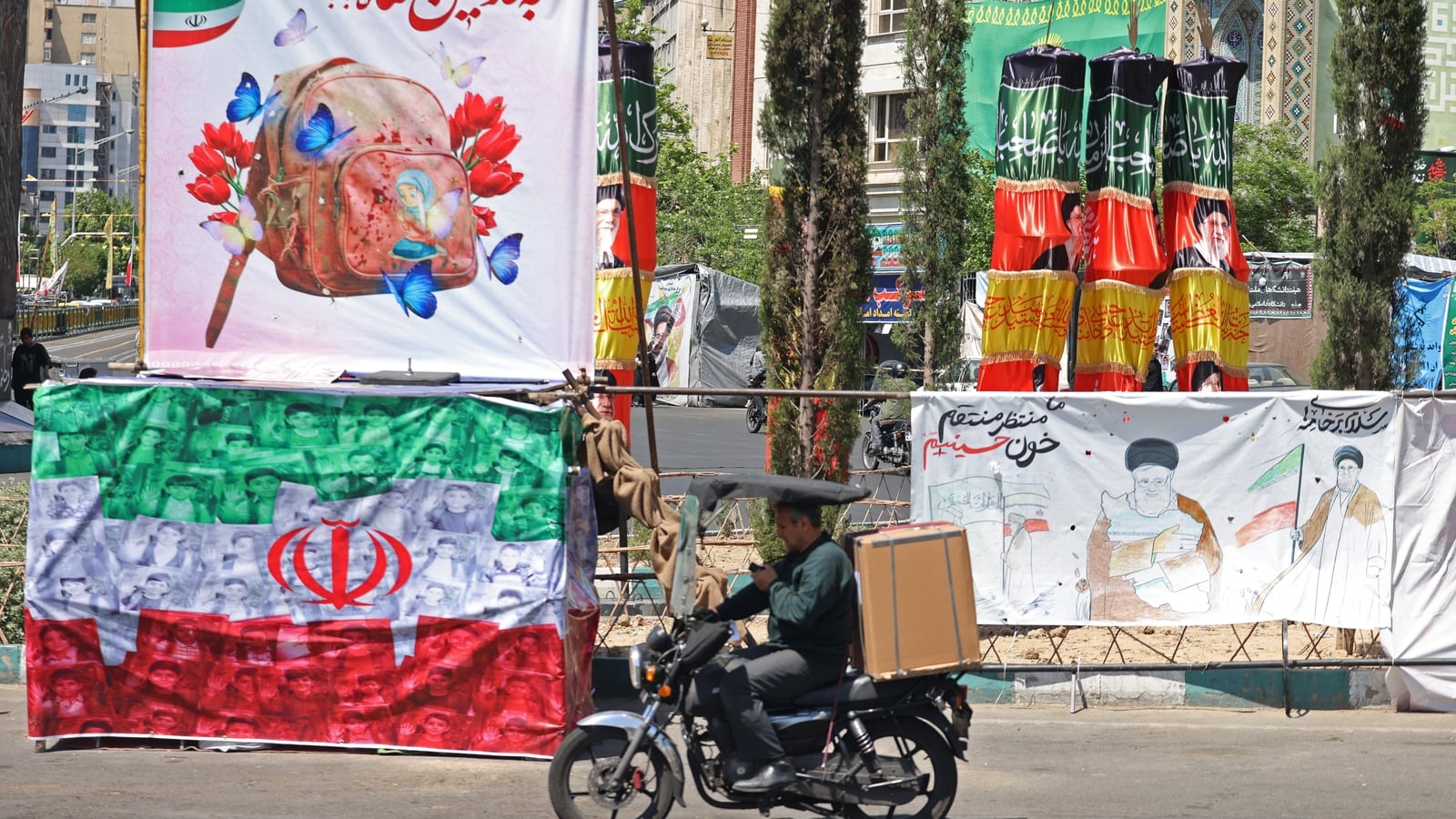
Washington D.C. – U.S. President Donald Trump has issued a stern warning to Iran, demanding the nation “get smart soon” and accept terms for tighter controls on its nuclear program. This comes amid heightened tensions in the region and continued U.S. Naval presence in the Persian Gulf, though reports of a complete “naval blockade” remain unconfirmed. The President’s remarks reflect a longstanding and increasingly fraught relationship with Tehran, rooted in concerns over Iran’s nuclear ambitions and regional influence.
The core of the dispute centers around Iran’s nuclear program, which has been a source of international concern for decades. While Iran maintains its nuclear program is for peaceful purposes, including energy production and medical isotopes, the United States and other nations fear it could be used to develop nuclear weapons. This concern led to the negotiation of the Joint Comprehensive Plan of Action (JCPOA), commonly known as the Iran nuclear deal, in 2015.
The JCPOA and its Aftermath
The JCPOA, reached after two years of negotiations, involved Iran agreeing to limit its uranium enrichment program and allow international inspections of its nuclear facilities in exchange for the lifting of economic sanctions. Then-President Barack Obama hailed the agreement as a critical step towards preventing Iran from acquiring a nuclear weapon, stating it was the “most consequential foreign policy debate” facing the U.S. Since the invasion of Iraq. The deal was signed by Iran, the United States, the United Kingdom, France, Germany, Russia, and China.
However, in 2018, President Trump withdrew the U.S. From the JCPOA, arguing that it was “a road to a nuclear weapon” and did not adequately address Iran’s ballistic missile program or its regional activities. FactCheck.org reports that Trump claimed Iran “would be sitting with a massive nuclear weapon three years ago” had he not terminated the deal. Following the U.S. Withdrawal, Iran began to gradually roll back its commitments under the JCPOA, increasing its uranium enrichment levels and reducing its compliance with inspection protocols.
Experts at the Carnegie Endowment for International Peace have noted the rising tensions between Israel, Iran, and the U.S. In recent years, exacerbated by the unraveling of the JCPOA. The situation has been further complicated by recent aerial strikes between Israel and Iran, following an attack on Tehran that reportedly killed several nuclear scientists and high-ranking military leaders.
Current Tensions, and U.S. Strategy
President Trump’s recent demand that Iran “get smart soon” underscores the administration’s continued hardline stance towards Tehran. While the term “naval blockade” has been used in some reports, the extent and nature of the U.S. Naval presence in the region remain a subject of debate. The U.S. Navy maintains a significant presence in the Persian Gulf, conducting patrols and exercises with regional allies, but a formal, legally defined blockade has not been officially declared.
The President’s comments similarly come after a series of U.S. Airstrikes on Iran in late February and early March of 2026, which Trump claimed had “obliterated” Iran’s ability to create nuclear weapons. However, this claim has been met with skepticism from some analysts, who argue that while the strikes may have caused some damage, they are unlikely to have completely dismantled Iran’s nuclear infrastructure. The Associated Press reports that Trump’s messaging on Iran’s nuclear capabilities has shifted over time, with earlier claims of complete destruction giving way to more urgent warnings about Iran’s ambitions.
The Question of a Nuclear Weapon
The central concern remains the possibility of Iran developing a nuclear weapon. Trump has repeatedly asserted that the JCPOA was flawed and allowed Iran to pursue a path towards nuclear capability. He argues that his withdrawal from the deal prevented Iran from acquiring a nuclear weapon within a few years. However, experts disagree on whether the JCPOA was truly a “road to a nuclear weapon” or whether it effectively constrained Iran’s nuclear program for the duration of its implementation. The Council on Foreign Relations has described the deal as now being “essentially defunct.”
The current situation is further complicated by Iran’s continued enrichment of uranium. Following the U.S. Withdrawal from the JCPOA, Iran has significantly increased its uranium enrichment levels, exceeding the limits set by the agreement. This has raised concerns that Iran is moving closer to having the capability to produce weapons-grade uranium, although it has not yet taken the step of actually producing a nuclear weapon.
Regional Implications and International Response
The escalating tensions between the U.S. And Iran have significant implications for regional stability. Iran’s regional activities, including its support for proxy groups in countries like Yemen, Syria, and Lebanon, are a major source of concern for the U.S. And its allies, particularly Israel and Saudi Arabia. The potential for a wider conflict in the region remains a serious risk.
The international community is deeply divided over how to address the Iranian nuclear issue. European powers, who were also signatories to the JCPOA, have expressed regret over the U.S. Withdrawal and have sought to preserve the agreement. However, their efforts have been hampered by U.S. Sanctions and Iran’s non-compliance with the deal. Russia and China continue to support the JCPOA and have criticized the U.S. For its unilateral actions.
Key Takeaways
- President Trump has demanded Iran accept tighter controls on its nuclear program, warning them to “get smart soon.”
- The U.S. Withdrew from the JCPOA in 2018, arguing it was insufficient to prevent Iran from developing a nuclear weapon.
- Iran has increased its uranium enrichment levels since the U.S. Withdrawal, raising concerns about its nuclear ambitions.
- The escalating tensions between the U.S. And Iran pose a significant risk to regional stability.
The situation remains highly volatile, and the path forward is uncertain. The U.S. Administration has signaled its willingness to engage in negotiations with Iran, but only if Iran demonstrates a willingness to address U.S. Concerns about its nuclear program and regional activities. Whether such negotiations will accept place, and whether they will be successful, remains to be seen.

The next key development to watch will be the upcoming meeting of the International Atomic Energy Agency (IAEA) in Vienna on May 15, 2026, where the agency is expected to discuss Iran’s nuclear program and its compliance with international safeguards. This meeting will provide a crucial opportunity for the international community to assess the situation and consider further steps to address the Iranian nuclear issue.
Do you think diplomatic solutions are still viable? Share your thoughts in the comments below, and please share this article with your network.
Keep reading
- Anne Hathaway Addresses Fan Fears Over Dog’s Fate in ‘The End of Oak Street
- Ziraat Bank Emekli Promotion 2026: Updated Payment Tables and Advance Rates Revealed
- Trump Claims Total US Control of Strait of Hormuz as Iran Rejects Assertions (archyworldys.com)
- Apple Warns iPhone Users in 110 Countries of Mercenary Spyware Attacks (archynewsy.com)