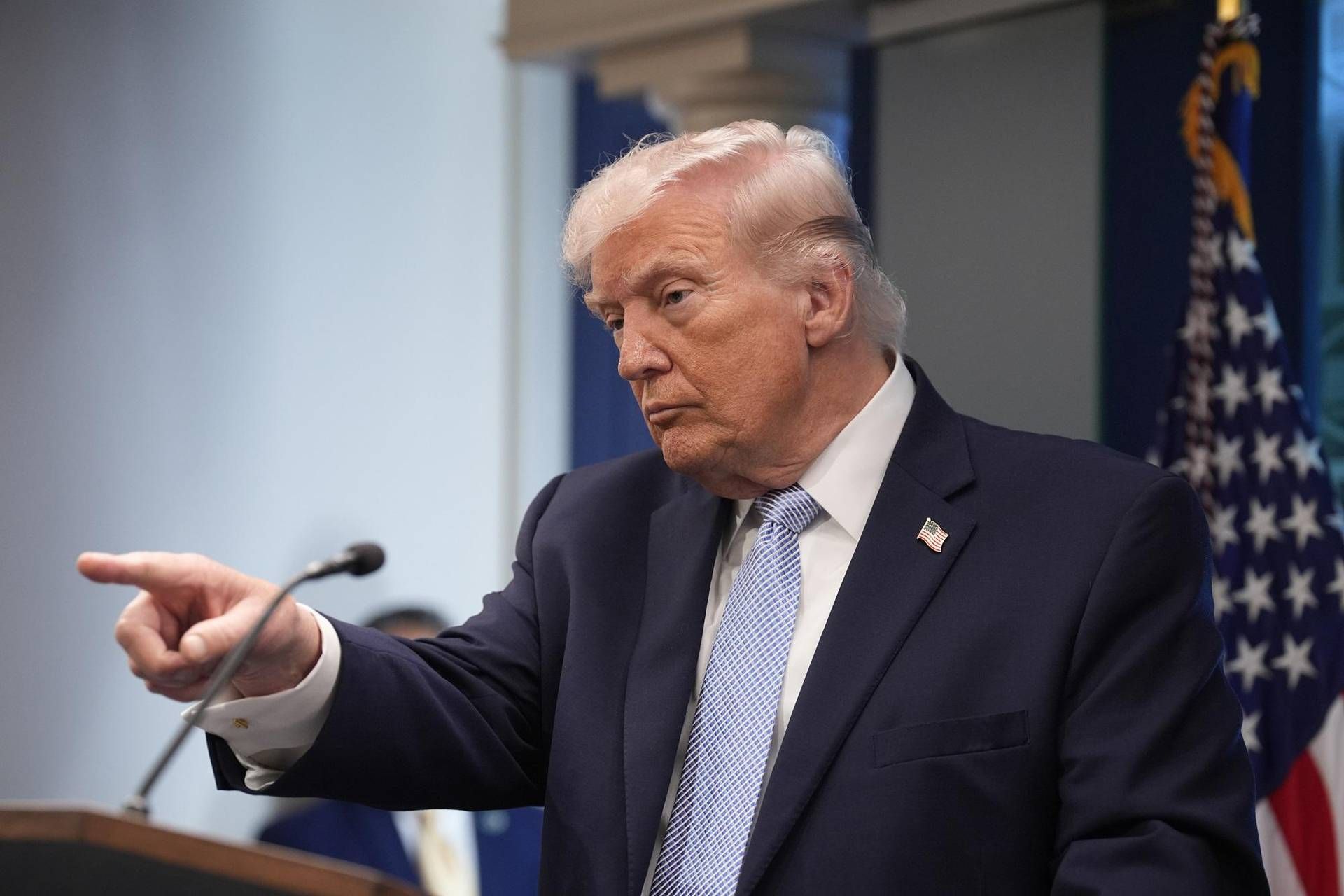
President Donald Trump has warned that Iran’s oil infrastructure could face imminent disruption, claiming the system risks “exploding” within three days amid escalating tensions in the Strait of Hormuz. The statement, made through his Truth Social platform, comes as the U.S. Maintains a naval blockade on Iranian ports and orders military forces to “shoot and kill” any vessels deemed to be laying mines in the critical waterway. Trump’s assertion follows weeks of heightened rhetoric and military posturing between Washington and Tehran, with both sides accusing each other of undermining regional stability and global energy flows.
The Strait of Hormuz remains one of the world’s most vital chokepoints for oil transportation, with approximately 20% of global crude oil and liquefied natural gas passing through its waters annually. Any disruption to traffic in the strait has the potential to trigger significant volatility in international energy markets, affecting prices and supply chains worldwide. Trump’s recent comments suggest he believes Iran’s ability to export oil is under severe threat, either due to U.S. Naval actions or internal vulnerabilities within Iran’s petroleum infrastructure.
In his social media posts, Trump emphasized that the U.S. Navy has been ordered to take immediate action against any Iranian boats attempting to deploy mines in the strait. “I have ordered the United States Navy to shoot and kill any boat, small boats though they may be … That is putting mines in the waters of the Strait of Hormuz,” he wrote. “There is to be no hesitation.” He likewise directed U.S. Minesweepers to intensify their operations, stating they should continue clearing the waterway “at a tripled up level.” These directives reflect a broader strategy aimed at pressuring Iran to negotiate over its nuclear program and regional influence, particularly as a previous ceasefire agreement neared expiration.
The U.S. Has maintained a naval blockade on Iranian ports in the region, directing dozens of vessels to turn around or return to port as part of efforts to restrict Tehran’s maritime trade. According to U.S. Central Command, 31 ships have been redirected under this blockade since its implementation. Trump has asserted that the United States now holds “total control” over the Strait of Hormuz, declaring that “no ship can enter or leave without the approval of the United States Navy.” This claim underscores Washington’s effort to leverage its military presence as a tool of economic coercion.
Despite these assertions, independent verification of the operational status of U.S. Minesweeping capabilities in the region reveals complications. The Trump administration previously decommissioned four Avenger-class minesweepers that had been permanently stationed in the Persian Gulf for the specific purpose of clearing naval mines. These ships were sent back to the United States in late 2025, leaving the Navy to rely on alternative platforms such as Littoral Combat Ships and unmanned drone systems for minesweeping missions. Experts have questioned the effectiveness of these substitute systems in a high-threat environment like the Strait of Hormuz, where mines pose a persistent danger to commercial and military vessels alike.
Iran has consistently denied placing mines in the strait, accusing the U.S. Of fabricating justifications for its military actions. Tehran maintains that its naval activities are defensive and compliant with international law. Still, satellite imagery and maritime security reports have occasionally detected suspicious small-boat movements near shipping lanes, fueling speculation about covert mining efforts. The difficulty of confirming such activities in real time contributes to the fog of uncertainty surrounding the situation, allowing competing narratives to persist.
The potential impact of any disruption to Iran’s oil exports extends beyond the immediate region. As one of OPEC’s founding members and a major global producer, Iran typically exports between 1.5 and 2 million barrels of crude oil per day under normal conditions. Sanctions imposed by the United States and its allies have already curtailed much of this output, but any further reduction—whether from military action, infrastructure damage, or self-imposed restrictions—could tighten global supplies and push benchmark prices higher. Analysts warn that even the perception of risk in the Strait of Hormuz can trigger speculative trading and premium adjustments in oil futures markets.
Internationally, the crisis has drawn concern from energy-dependent nations and multinational corporations reliant on stable shipping routes. Countries in Asia, particularly China, India, Japan, and South Korea, remain among the largest importers of Middle Eastern crude and are especially vulnerable to any prolonged interruption in Hormuz traffic. European nations, while less directly dependent on Gulf oil, face indirect risks through global market linkages and the potential for cascading effects on inflation and industrial production.
Diplomatic channels between the U.S. And Iran remain largely stalled, with both sides preconditioning negotiations on concessions the other views as non-starters. Trump has insisted that Iran must agree to a “deal” that fully addresses U.S. Concerns over its nuclear ambitions, ballistic missile program, and support for regional proxies before sanctions relief or maritime access can be considered. For its part, Iran demands the lifting of all economic sanctions as a prerequisite for meaningful talks, arguing that pressure tactics undermine trust and reciprocity.
As of late April 2026, no immediate breakthrough in talks appears imminent. The U.S. Continues to enforce its blockade and maintain heightened naval readiness in the region, while Iran has sought to strengthen ties with alternative partners, including Russia and China, to mitigate the effects of Western pressure. Recent reports indicate Iranian officials have engaged in diplomatic outreach to Moscow, potentially seeking political backing or economic coordination in response to U.S. Actions—though the substance and outcomes of such discussions remain unverified by independent sources.
The situation remains fluid, with military posturing, sanctions enforcement, and diplomatic maneuvering all playing concurrent roles in shaping the outlook for regional stability and global energy markets. Observers note that miscalculation or accidental escalation—such as an unintended clash between naval forces—could rapidly transform a tense standoff into an open confrontation, with far-reaching consequences.
For ongoing developments regarding U.S.-Iran tensions, naval operations in the Strait of Hormuz, and global energy market impacts, readers are encouraged to consult official statements from U.S. Central Command, the International Energy Agency, and reputable financial news outlets that provide real-time tracking of geopolitical risk factors.
Share your thoughts on how evolving dynamics in the Strait of Hormuz might affect global oil prices and international trade. Join the conversation below.
Keep reading