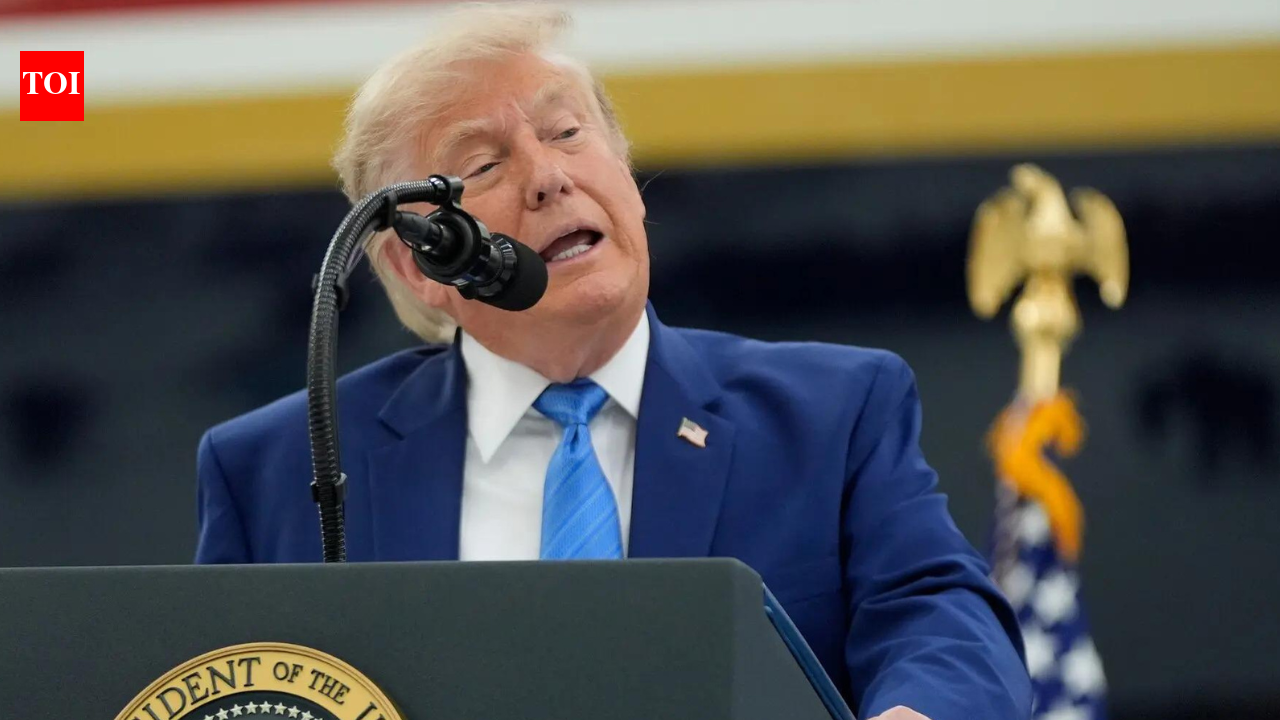
Donald Trump has signaled that the failure to reach a final agreement with Iran regarding its nuclear program could lead to significant shifts in maritime security and economic costs within the Strait of Hormuz. While formal “tolls” have not been officially proposed by the U.S. government, the former president’s rhetoric suggests a return to “maximum pressure” policies that could impact the costs of maritime transit and regional stability.
The warnings come amid renewed geopolitical tension regarding Iran’s nuclear capabilities and the stability of one of the world’s most critical energy chokepoints. For global markets, the prospect of a breakdown in diplomatic negotiations with Tehran raises immediate concerns about oil supply volatility and the security of international shipping lanes.
The Strait of Hormuz serves as the primary artery for the global petroleum market. According to data from the U.S. Energy Information Administration (EIA), approximately 20% of the world’s total daily petroleum consumption passes through this narrow waterway. Any disruption to this flow, whether through military conflict or heightened security protocols, has the potential to trigger immediate spikes in global crude oil prices.
The Strategic Importance of the Strait of Hormuz
The Strait of Hormuz is a narrow waterway located between Oman and Iran, connecting the Persian Gulf with the Gulf of Oman and the Arabian Sea. Its narrowest point is only about 21 miles wide, making it highly susceptible to naval blockades or localized maritime incidents. Because a significant portion of the world’s liquefied natural gas (LNG) and crude oil is exported through this passage, it remains a focal point for international security policy.

Security experts note that the “cost” of operating in the Strait is not merely a matter of official fees, but includes rising maritime insurance premiums and the expense of naval escorts. When tensions rise between the United States and Iran, commercial shipping companies often face increased “war risk” premiums. These costs are passed down the supply chain, ultimately impacting global energy prices and consumer costs.
The potential for economic disruption is compounded by the geographic reality of the region. Iran maintains significant influence over the northern coast of the Strait, allowing it to exert leverage through the threat of closing the passage or harassing commercial vessels. This capability has been a cornerstone of Tehran’s regional strategy for decades.
Trump’s Stance on the Iran Nuclear Deal
The current tension is rooted in the long-standing dispute over the Joint Comprehensive Plan of Action (JCPOA), commonly known as the Iran nuclear deal. Originally brokered in 2015, the agreement aimed to limit Iran’s nuclear program in exchange for relief from economic sanctions. However, the United States, under the Trump administration, formally withdrew from the agreement in 2018.

Trump’s policy, often described as “maximum pressure,” focused on using unilateral economic sanctions to cripple Iran’s economy and force it to negotiate a more expansive deal. This approach aimed to address not just nuclear enrichment, but also Iran’s ballistic missile program and its influence in regional conflicts such as those in Yemen and Syria.
The former president has consistently argued that the original JCPOA was flawed because it provided a “sunset clause” that would eventually allow Iran to resume certain nuclear activities. His recent warnings suggest that if a new, more stringent agreement is not reached, the U.S. may implement even more aggressive measures to secure the Strait of Hormuz and ensure that Iran does not achieve nuclear breakout capacity.
Economic Risks for Global Energy Markets
The intersection of Iranian nuclear ambitions and maritime security creates a high-stakes environment for global commodity markets. If diplomatic efforts fail, the market anticipates several cascading economic consequences:
- Oil Price Volatility: Even the rumor of a maritime disruption in the Strait of Hormuz can cause Brent and West Texas Intermediate (WTI) crude prices to surge within minutes of a news report.
- Increased Shipping Costs: Beyond insurance, the need for rerouting vessels or utilizing more heavily armed security details increases the overhead for tanker operators.
- Supply Chain Inflation: Because oil is a primary input for transportation and manufacturing, sustained high energy prices contribute to broader inflationary pressures across global economies.
Market analysts monitor the Reuters energy reports and other high-frequency data closely to gauge how geopolitical rhetoric translates into physical market movements. The uncertainty surrounding the “final agreement” creates a “risk premium” that is currently baked into the price of many energy-related commodities.
Comparing Diplomatic and Pressure-Based Strategies
The debate over how to handle Iran involves two fundamentally different geopolitical philosophies. One side advocates for multilateral diplomacy and strict monitoring, while the other favors economic coercion to force compliance.
| Feature | Multilateral Diplomacy (JCPOA Model) | Maximum Pressure (Trump Model) |
|---|---|---|
| Primary Tool | International treaties and IAEA inspections. | Economic sanctions and military presence. |
| Goal | Containment of nuclear enrichment via limits. | Total compliance or regime economic restructuring. |
| Key Risk | “Sunset clauses” allowing future enrichment. | Escalation into direct military conflict. |
| Impact on Iran | Gradual economic reintegration. | Severe economic isolation and hardship. |
While the JCPOA model relies on the International Atomic Energy Agency (IAEA) to verify compliance, the “maximum pressure” model relies on the strength of the U.S. financial system to limit Iran’s ability to fund its nuclear and regional activities. The effectiveness of each approach remains a subject of intense debate among foreign policy experts.
What Happens Next?
The immediate future depends on the progress of diplomatic channels and the level of enrichment activity detected by international monitors. The international community is currently watching for any shifts in the IAEA’s periodic reports regarding Iran’s stockpile of enriched uranium.
The next major checkpoint will be the scheduled monitoring updates from the IAEA, which provide the technical baseline for whether current diplomatic efforts are succeeding or failing. Any significant change in Iran’s enrichment levels could serve as a catalyst for the renewed maritime and economic policies warned of by the Trump campaign.
We invite you to share your thoughts on the implications of these maritime security warnings in the comments below. How do you think these geopolitical shifts will affect global energy stability? Please share this article with your network to keep the conversation going.
- Bronx Fire: Deadly New York Building Explosion Causes Unclear
- Man Arrested by LA County Sheriff’s Department with 16-Round Magazine and Ammunition
- Raphaël Glucksmann Warns Russian Interference Is Just the Beginning After Deepfake Video Attack (newsdirectory3.com)
- Trump Confronts Jeanine Pirro in Explosive Oval Office Showdown Over Reflecting Pool Case (news-usa.today)