
Trump Hosts Artemis II Astronauts, Veers into Tangents on Putin, Comey, and UFOs
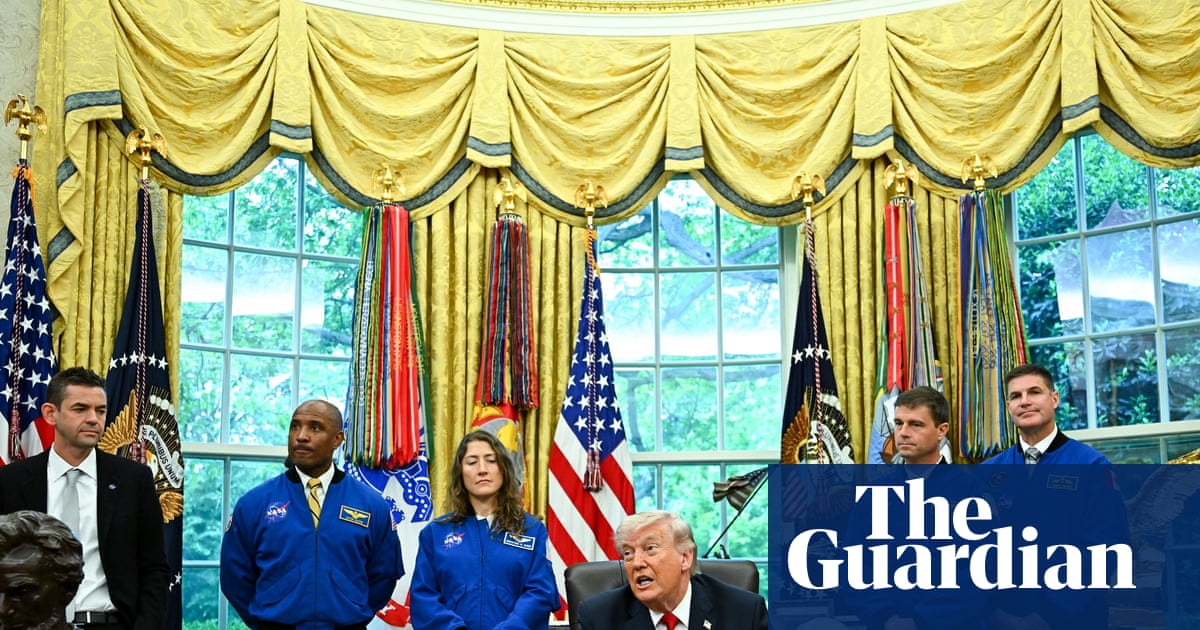
Washington, D.C. – President Donald Trump welcomed the crew of the Artemis II mission to the White House on Wednesday, April 29, 2026, celebrating their historic journey around the moon and back. However, the event took an unexpected turn as the President used the occasion to address a range of unrelated topics, including a recent phone call with Russian President Vladimir Putin, his ongoing criticism of former FBI Director James Comey, and his continued interest in unidentified flying objects. The astronauts – NASA Commander Reid Wiseman, NASA Pilot Victor Glover, NASA Mission Specialist Christina Koch, and Canadian Space Agency (CSA) Mission Specialist Jeremy Hansen – stood alongside Trump as he fielded questions from the media in the Oval Office.
The Artemis II mission, which concluded earlier this month, marked a significant milestone in NASA’s efforts to return humans to the moon. The crew spent approximately 10 days in space, orbiting the moon and conducting a series of tests to prepare for future lunar landings. NASA Administrator Jared Isaacman, who as well attended the event, confirmed plans to continue these efforts, with an Artemis III mission slated for 2027 and a potential crewed lunar landing in 2028. “We’ve authorized it,” Trump stated, referring to the possibility of another person walking on the moon during his presidency, adding a caveat: “We don’t like to say definitely, because then you say, ‘Oh, we failed.’”
A Tangled Web of Topics
Despite the celebratory nature of the event, President Trump quickly steered the conversation away from the accomplishments of the Artemis II crew and towards topics of personal and political interest. He referenced a recent phone call with Vladimir Putin, stating that the Russian President had “renewed his offer” for Russia to play a role in mediating international conflicts. Details of the call were sparse, and the White House has not released a transcript or further information regarding the specific nature of Putin’s offer.

The President also launched into a lengthy critique of James Comey, labeling him “a crooked man” and reiterating his long-held grievances regarding the former FBI Director’s handling of the investigation into Russian interference in the 2016 presidential election. This outburst appeared unprompted and unrelated to the Artemis II mission or space exploration.
Adding to the eclectic mix, Trump also addressed his fascination with UFOs, promising to release classified material related to the topic. He has previously expressed interest in declassifying information about unidentified aerial phenomena, and reiterated his intention to do so during the event. “We’re looking at it very seriously,” Trump said, without providing a specific timeline for the release of any classified information.
Space Force and Future Lunar Missions
Amidst the tangents, Trump did briefly highlight his administration’s space-related achievements, specifically the creation of the United States Space Force in 2019. He touted the Space Force as a critical component of national security, emphasizing its role in protecting American assets in space.
Isaacman provided further details regarding NASA’s future plans, confirming the agency’s commitment to establishing a sustainable presence on the moon. He also emphasized the strategic importance of maintaining NASA headquarters in Washington, D.C., stating that being located in the nation’s capital provides an “advantage” for the agency. Trump readily agreed with this assessment.
International Implications and Ongoing Conflicts
While the focus of the event was ostensibly on the Artemis II mission, President Trump also touched upon ongoing geopolitical tensions, particularly in the Middle East. He offered limited details, but alluded to continued efforts to address the conflict in the region. The President’s remarks on Iran were brief and lacked specifics, offering no new insights into his administration’s policy towards the country.
The juxtaposition of celebrating a landmark achievement in space exploration with discussions of international conflicts and personal grievances drew criticism from some observers. The event highlighted Trump’s tendency to use official occasions to address a wide range of topics, often veering off-script and introducing unrelated issues into the conversation.
The Artemis II Crew: A Historic Journey
The Artemis II mission represents a crucial step towards establishing a long-term human presence on the moon. The four astronauts – Wiseman, Glover, Koch, and Hansen – endured rigorous training and faced numerous challenges during their journey. Their successful completion of the mission provides valuable data and experience that will inform future lunar expeditions.

Commander Reid Wiseman, a veteran astronaut with extensive experience in spaceflight, led the mission. Pilot Victor Glover became the first African American astronaut to travel to the moon. Mission Specialist Christina Koch is a renowned engineer and scientist who has previously spent an extended period aboard the International Space Station. Canadian Space Agency Mission Specialist Jeremy Hansen represents Canada’s growing involvement in space exploration.
Looking Ahead: Artemis III and Beyond
NASA’s Artemis program aims to land the first woman and the next man on the moon by 2026, with Artemis III currently scheduled for 2027. The program also envisions establishing a sustainable lunar base, which could serve as a stepping stone for future missions to Mars. Isaacman emphasized the importance of international collaboration in achieving these ambitious goals, highlighting the contributions of partner agencies such as the Canadian Space Agency.
The success of the Artemis II mission and the continued commitment to lunar exploration signal a renewed focus on space exploration in the United States. However, the event at the White House served as a reminder of the complex political landscape surrounding space policy and the challenges of maintaining a consistent and focused approach to scientific endeavors.
Key Takeaways
- President Trump hosted the Artemis II crew at the White House, celebrating their successful lunar mission.
- The event was marked by the President’s digressions into unrelated topics, including his views on Vladimir Putin, James Comey, and UFOs.
- NASA Administrator Jared Isaacman confirmed plans for the Artemis III mission in 2027 and a potential crewed lunar landing in 2028.
- The Artemis II mission represents a significant step towards establishing a sustainable human presence on the moon.
The next major milestone in the Artemis program will be the launch of Artemis III in 2027. Further updates on the mission’s progress and the release of any classified information regarding UFOs are expected in the coming months. Readers interested in learning more about the Artemis program can visit the official NASA website: https://www.nasa.gov/artemisprogram/. We encourage you to share your thoughts on this story in the comments below.