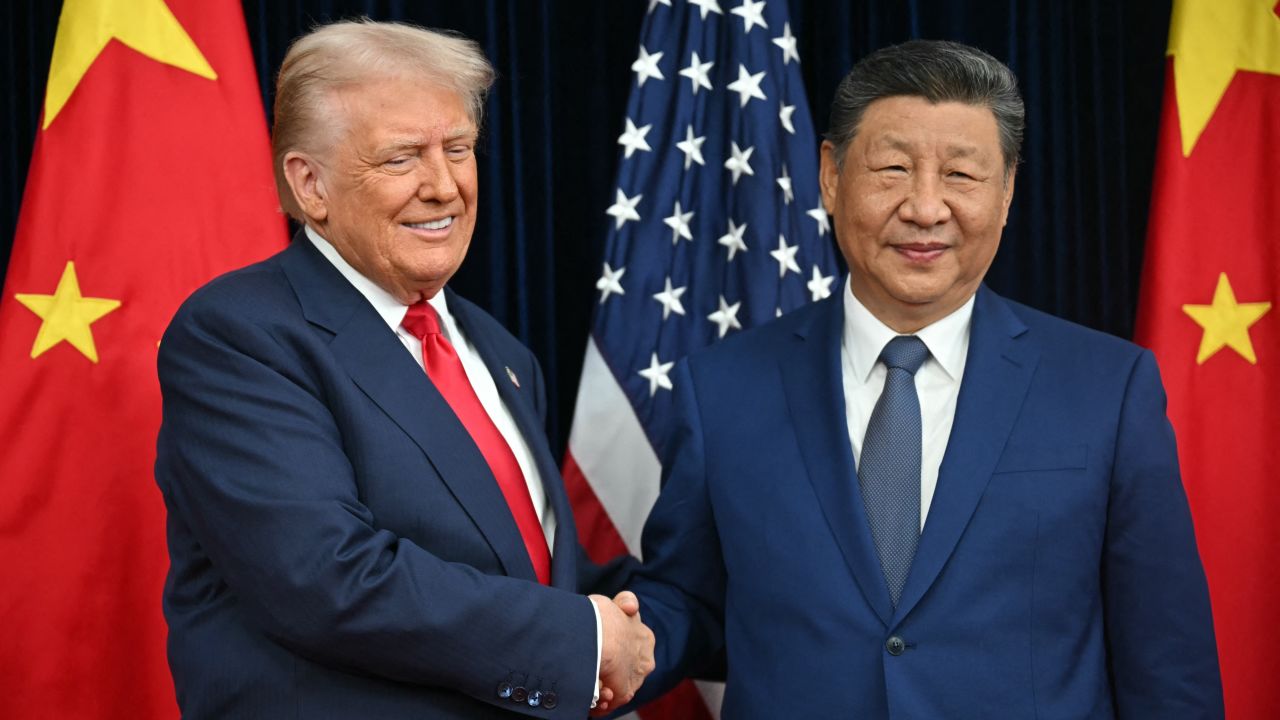
BEIJING — In a diplomatic pivot toward economic stability, U.S. President Donald Trump and Chinese President Xi Jinping announced the establishment of a joint U.S.-China Trade Board during their high-stakes summit in Beijing this week. The move, accompanied by a $17 billion annual commitment from China to purchase U.S. Agricultural products through 2028, marks the most concrete outcome yet from their bilateral negotiations amid escalating global trade tensions.
The agreement—officially outlined by the White House following two days of closed-door talks—includes provisions for expanded access to critical rare earth minerals, a long-standing U.S. Demand to reduce dependency on Chinese supply chains for technologies ranging from smartphones to defense systems. Analysts describe the summit’s outcomes as a deliberate choice by both nations to prioritize stability over ideological clashes, particularly as global markets remain volatile.
While the summit’s broader political and security dimensions remain opaque, the economic concessions—including resumed sales of U.S. Beef and poultry—reflect a calculated effort to ease trade frictions that have strained relations since 2024. The $17 billion agricultural commitment, which builds on China’s earlier pledge to purchase 25 million metric tons of U.S. Soybeans annually through 2028, underscores Beijing’s willingness to engage on commercial terms despite ongoing disputes over Taiwan, semiconductor restrictions, and currency policies.
Key Outcomes: Trade Board and Agricultural Commitments
The newly formed U.S.-China Trade Board—details of which were not immediately released—is expected to serve as a permanent forum for resolving commercial disputes and coordinating policy on key sectors, including agriculture, technology, and energy. The White House emphasized that the board’s creation was “a direct response to market demands for predictability,” while Chinese officials framed it as a step toward “mutually beneficial cooperation.”

Economic Impact: The $17 billion agricultural commitment alone represents a significant boost for U.S. Farmers, who have faced declining exports to China since tariffs were imposed in 2022. Soybean farmers, in particular, stand to benefit from both the new purchase agreement and the resumption of beef and poultry sales, which were suspended in 2025 amid food safety disputes. According to the U.S. Department of Agriculture, soybean exports to China accounted for nearly 30% of total U.S. Soybean sales in 2024, making the agreement a critical lifeline for Midwestern producers.
Official White House readouts confirm that China will also address “shortages of critical rare earth minerals,” including yttrium, scandium, neodymium, and indium—elements essential for electric vehicle batteries, military hardware, and renewable energy technologies. The U.S. Has increasingly sought to diversify its supply chains away from China, which controls over 80% of global rare earth production.
Symbolic Diplomacy: The Forbidden City Garden Visit
Beyond economic agreements, the summit included a highly symbolic gesture: Trump and Xi visited the Forbidden City’s Nanchan Garden, a restricted imperial site rarely open to foreign leaders. The visit, captured in photographs released by Chinese state media, was interpreted by analysts as a deliberate effort to signal “soft power” cooperation amid broader tensions. “The garden visit was not just about aesthetics—it was a carefully staged message that both sides are willing to engage on multiple fronts,” said Ken Jarrett, senior fellow at the Brookings Institution.
However, the summit’s broader political outcomes remain unclear. While the White House highlighted progress on trade, Chinese state media focused on “strategic communication” and “peaceful coexistence,” omitting details on contentious issues like Taiwan or semiconductor export controls. The discrepancy in messaging has fueled speculation that deeper divisions persist beneath the surface of the economic agreements.
Analysts Weigh In: Stability Over Ideology
Economists and trade experts largely view the summit’s results as a pragmatic choice by both leaders to stabilize relations amid global economic uncertainty. “This is not a thaw in the Cold War—it’s a recognition that neither side can afford prolonged hostility,” said Judith Shulevitz, financial columnist for the Financial Times. “The trade board and agricultural deals are about keeping supply chains open, not about resolving ideological differences.”
Yet challenges remain. The rare earth minerals agreement lacks specific timelines or enforcement mechanisms, raising questions about its enforceability. U.S. Farmers may face logistical hurdles in ramping up exports to meet China’s new purchase commitments, particularly given existing trade infrastructure constraints.
What Happens Next?
The two leaders have agreed to meet again in the U.S. In September, with expectations that further discussions will focus on technology transfers, intellectual property protections, and potential tariff reductions. The White House has also indicated that the Trade Board will hold its first formal meeting within the next 90 days, though no specific agenda has been released.

For now, the immediate impact of the summit is likely to be felt in agricultural markets, where soybean and beef futures have already seen modest gains following the announcement. Longer-term effects, however, depend on whether the trade board can operationalize its mandate and whether political tensions—particularly over Taiwan—escalate in the coming months.
Key Takeaways
- Trade Board Established: A new U.S.-China Trade Board will serve as a permanent forum for resolving commercial disputes.
- $17 Billion Agricultural Deal: China commits to purchasing $17 billion in U.S. Agricultural products annually through 2028, including soybeans, beef, and poultry.
- Rare Earth Minerals: China agrees to address shortages of critical minerals (yttrium, scandium, neodymium, indium) for U.S. Industries.
- Symbolic Diplomacy: Trump and Xi’s visit to the Forbidden City’s Nanchan Garden signals a focus on “soft power” cooperation.
- September Follow-Up: Leaders will meet again in the U.S. To advance discussions on technology and tariffs.
- Market Reactions: Agricultural commodity futures show early signs of stabilization following the announcement.
As global markets digest the summit’s outcomes, one thing is clear: the U.S. And China have chosen, for now, to prioritize economic stability over geopolitical confrontation. Whether this marks the beginning of a lasting detente or a temporary pause in their rivalry remains to be seen.
Next Steps: The U.S.-China Trade Board is expected to convene its inaugural meeting within the next three months. Official updates will be released by the White House and Chinese Ministry of Commerce. Readers are encouraged to monitor White House press releases and Chinese state media for further developments.
Share your thoughts on this diplomatic shift in the comments below—or connect with us on Twitter to discuss how these agreements may impact global trade.