Trump-Xi Summit 2026: Beijing’s Geopolitical Gamble as Global Tensions Peak
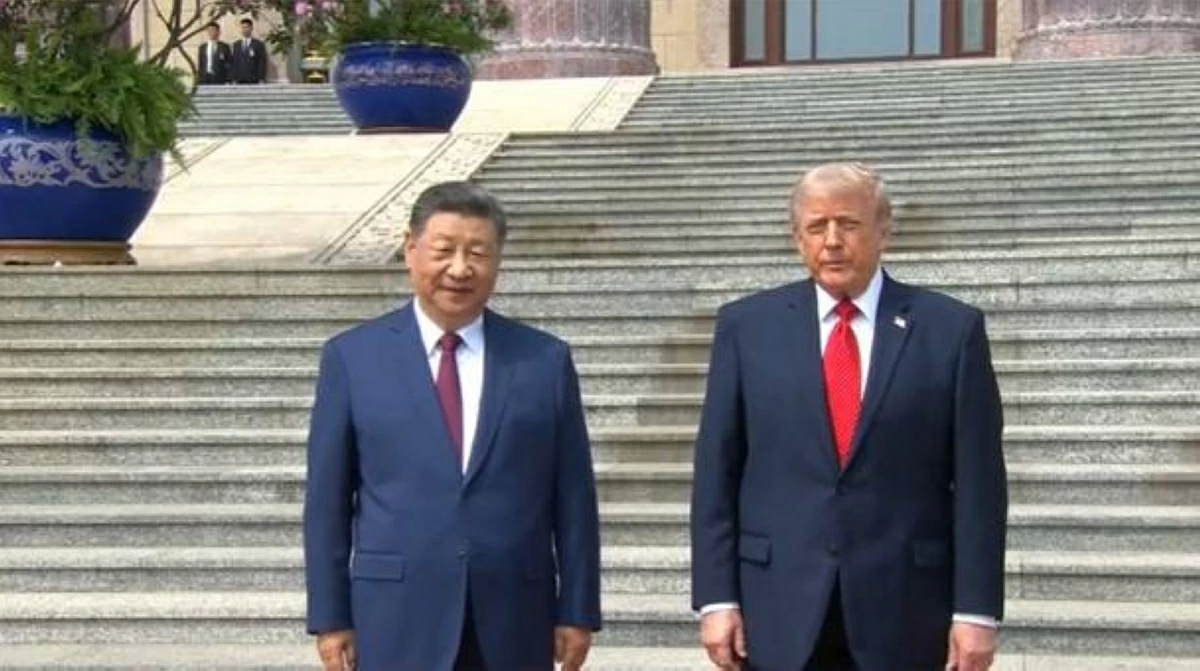
BEIJING — As U.S. President Donald Trump touched down in Beijing on Tuesday for his second summit with Chinese President Xi Jinping, the stage was set for what analysts are calling a defining moment in 21st-century geopolitics. The meeting, originally scheduled for March but delayed by the escalating U.S.-led military campaign against Iran, arrives against a backdrop of unprecedented global instability—soaring oil prices from the Strait of Hormuz blockade, a fragile trade truce between the world’s two largest economies, and simmering tensions over Taiwan that threaten to ignite a regional conflict.
While Trump enters the talks convinced of his negotiating prowess—echoing his 2017 visit when Xi staged a lavish “state visit-plus” with a $250 billion business bonanza—this summit carries far heavier stakes. With Xi’s signature phrase, “the East is rising and the West is declining,” now a mantra in Chinese state media, Beijing appears determined to use this moment to solidify its position as the world’s dominant economic and military power. The question hanging over the Great Hall of the People is whether Trump’s “America First” approach can counter China’s long-term strategic vision—or if this summit will merely accelerate the unraveling of the post-World War II order.
This represents not merely a bilateral meeting. The decisions made in Beijing over the next 48 hours could reshape global energy markets, determine the future of semiconductor supply chains, and set the parameters for how the next generation of artificial intelligence will be governed. With both leaders facing domestic pressures—Trump’s approval ratings sagging under economic strain and Xi preparing for what will likely be his final term as president—each side is entering the talks with carefully calibrated red lines and hidden concessions.
The Geopolitical Chessboard: What’s Really at Stake
Five major fault lines are shaping this summit, each with the potential to trigger global cascades:
- Iran Conflict Escalation: The U.S.-Israeli military campaign against Iran’s nuclear facilities has pushed oil prices to their highest levels since 2014, with the Strait of Hormuz now a flashpoint. China, Iran’s largest trading partner, has remained officially neutral but has quietly increased its strategic oil reserves. Trump is expected to press Xi to use China’s economic leverage to force Iran into negotiations, though Beijing has repeatedly rejected direct intervention.
- Taiwan Tensions: While both sides have maintained a fragile status quo since Xi’s 2023 pledge not to pursue unification by force, Chinese military drills near Taiwan have become more frequent, and aggressive. The U.S. Has accelerated arms sales to Taipei, and Trump has signaled he may go further if Beijing makes any moves toward coercion. “The Taiwan issue is a red line that cannot be crossed,” a senior White House official told reporters ahead of the summit.
- Trade War 2.0: Despite the fragile truce that saw tariffs temporarily suspended in 2025, both economies remain locked in a technological cold war over semiconductors, rare earth minerals, and AI. China’s dominance in critical minerals—particularly for electric vehicle batteries—has given Beijing unprecedented leverage. Analysts at Julius Baer predict no breakthrough on tariffs, with both sides preparing for a prolonged standoff.
- Artificial Intelligence Governance: With China and the U.S. Racing to dominate the next generation of AI, the summit will include closed-door discussions on export controls and data localization laws. The EU’s recent AI Act has created a template, but neither Washington nor Beijing appears willing to adopt similar restrictions without forcing the other to reciprocate.
- Global Economic Leadership: As the International Monetary Fund warned last week that the world economy faces its “most dangerous crossroads since 1945,” both leaders will be assessing whether their alliance—or rivalry—will determine which currency becomes the backbone of 21st-century trade. The yuan’s recent inclusion in the IMF’s SDR basket has been seen as a Chinese victory, but the dollar remains dominant.
— Rush Doshi, C.V. Starr Senior Fellow for Asia Studies at the Council on Foreign Relations
Doshi’s assessment aligns with recent analysis from the Council on Foreign Relations, which notes that Xi has spent years preparing for this moment, positioning China as the stable alternative to Western chaos. “The East is rising and the West is declining”—a phrase Xi has repeated in internal speeches—has become the ideological backbone of China’s foreign policy, with the summit serving as its public debut on the global stage.
The contrast with Trump’s 2017 visit could not be starker. Then, Xi staged a full state visit complete with a Tiananmen Square parade and $250 billion in business deals. This time, the agenda is dominated by security concerns, with no public events planned beyond the Great Hall meetings. “The optics are deliberate,” says The Wall Street Journal‘s Beijing bureau chief. “Xi isn’t offering Trump the same stage—because he doesn’t need to.”
Summit Timeline & Critical Numbers
- May 14-15, 2026: Trump-Xi summit in Beijing (originally scheduled for March 2026 but delayed due to Iran conflict)
- $250 billion: Value of business deals announced during Xi’s 2017 “state visit-plus” for Trump (no comparable figure expected this year)
- 120%: Increase in Chinese military drills near Taiwan since Xi’s 2023 pledge not to pursue unification by force (Reuters)
- 70%: Share of global rare earth mineral production controlled by China (critical for EV batteries and defense tech)
- 2025: Year China’s yuan was added to the IMF’s Special Drawing Rights basket, marking a symbolic victory in currency wars
- 15%: Estimated increase in global oil prices since U.S.-Israeli strikes on Iran began in February 2026
Who Wins and Who Loses: The Real-World Consequences
Beyond the diplomatic posturing, the summit’s outcomes will have tangible effects on billions of lives. Here’s how:

Key Takeaways: Global Impact
- Energy Markets: Any Chinese move to increase oil purchases from Iran could temporarily stabilize prices, but long-term relief depends on a broader Middle East ceasefire—something neither side appears willing to push for.
- Semiconductor Supply Chains: If talks fail to resolve export controls, global tech companies—particularly in the U.S. And EU—face prolonged disruptions, with potential ripple effects on everything from iPhones to military hardware.
- Taiwan’s Security: While no formal agreement is expected, leaks suggest the U.S. May offer limited concessions on arms sales in exchange for Chinese restraint. Any miscalculation could trigger a crisis.
- Global South Alliances: Developing nations watching the summit closely will interpret any U.S.-China détente as an opportunity to play both sides—particularly in Africa and Latin America, where infrastructure deals are being negotiated.
- AI Development: The most significant long-term impact may come from whatever agreement (or lack thereof) emerges on AI governance. A failure to reach consensus could lead to a fragmented global tech landscape.
The Road Ahead: What to Watch For
The next 72 hours will be critical, but the real test comes afterward. Here’s what to monitor:

- Joint Press Conference: Scheduled for May 15 at 3:00 PM local time, this will be the first public indication of whether any breakthroughs were made. Analysts expect vague language on trade and Iran, with pointed silence on Taiwan.
- Tariff Announcements: While no major changes are anticipated, watch for any mention of “phased reductions” in agricultural tariffs—a potential concession to U.S. Farmers ahead of the 2026 midterms.
- Semiconductor Talks: Closed-door meetings between U.S. Commerce Secretary Gina Raimondo and Chinese officials will determine whether any progress is made on easing export controls, particularly on advanced chip-making equipment.
- Iran Response: China’s official stance on Iran remains neutral, but any signal that Beijing is using its economic leverage to pressure Tehran could trigger a market reaction.
- Taiwan Monitoring: Increased Chinese military activity in the Taiwan Strait would signal dissatisfaction with U.S. Positions, while any U.S. Arms sale announcements would be seen as provocative.
— Heidi E. Crebo-Rediker, Senior Fellow for China and Emerging Technologies at CFR
Crebo-Rediker’s warning reflects a broader consensus among analysts that this summit is less about resolving conflicts and more about signaling intent. “Both leaders are positioning for their legacies,” she notes. “Xi wants to be remembered as the architect of China’s century; Trump wants to be seen as the man who stood up to Beijing.”
What’s Next?
The official next checkpoint is the G20 Leaders’ Summit in Hamburg on July 10-12, 2026, where both Trump and Xi are expected to reconvene. Until then, watch for:
- Daily briefings from the White House Press Secretary and Chinese Foreign Ministry
- Market reactions to any trade-related announcements (follow Bloomberg Markets)
- Military movements in the Taiwan Strait (Reuters Asia)
- Statements from the International Atomic Energy Agency on Iran’s nuclear program
We’ll be tracking developments live. Share your thoughts: Will this summit lead to détente, or are we heading toward a new Cold War? Join the discussion or follow us on Twitter for updates.
Maria Petrova is the World Editor at World Today Journal, with 14 years of experience covering geopolitics and international relations. She holds an MA in International Relations from Sofia University and has reported from conflict zones in the Middle East and Eastern Europe. Her work has been recognized with the European Press Prize for International Reporting (2022).