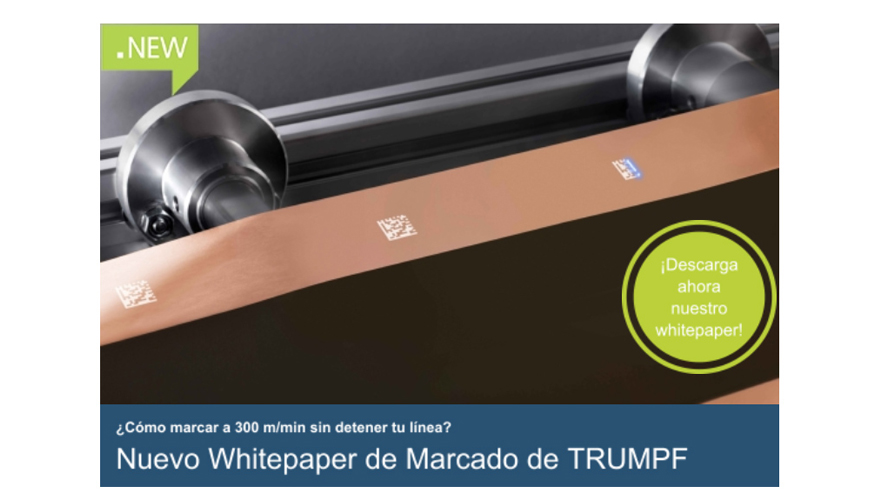
Trumpf has released a technical document detailing advancements in laser marking for moving parts within continuous production environments. The publication outlines how high-speed laser systems can mark components without halting production lines, a capability designed to increase manufacturing throughput and efficiency in automated industrial settings.
The technical release from Trumpf focuses on the integration of laser marking systems into fast-moving production workflows. In traditional manufacturing, marking a part often requires the conveyor or robotic arm to pause, allowing the laser to complete its cycle before movement resumes. According to the technical documentation, the transition to “on-the-fly” marking eliminates these pauses, allowing for a seamless flow of goods through the factory floor.
This shift addresses a growing bottleneck in automated manufacturing. As production speeds increase to meet global demand, the time lost during “stop-and-go” marking cycles becomes a significant cost driver. By synchronizing the laser pulse with the speed of the moving component, manufacturers can maintain high-speed output without sacrificing the precision or legibility of the marks.
How does laser marking on moving parts work?
Laser marking on moving parts relies on the highly precise synchronization of the laser head with the motion control system of the production line. Instead of a static application, the system uses real-time data to adjust the laser’s firing pattern based on the velocity and position of the object passing through the work zone.
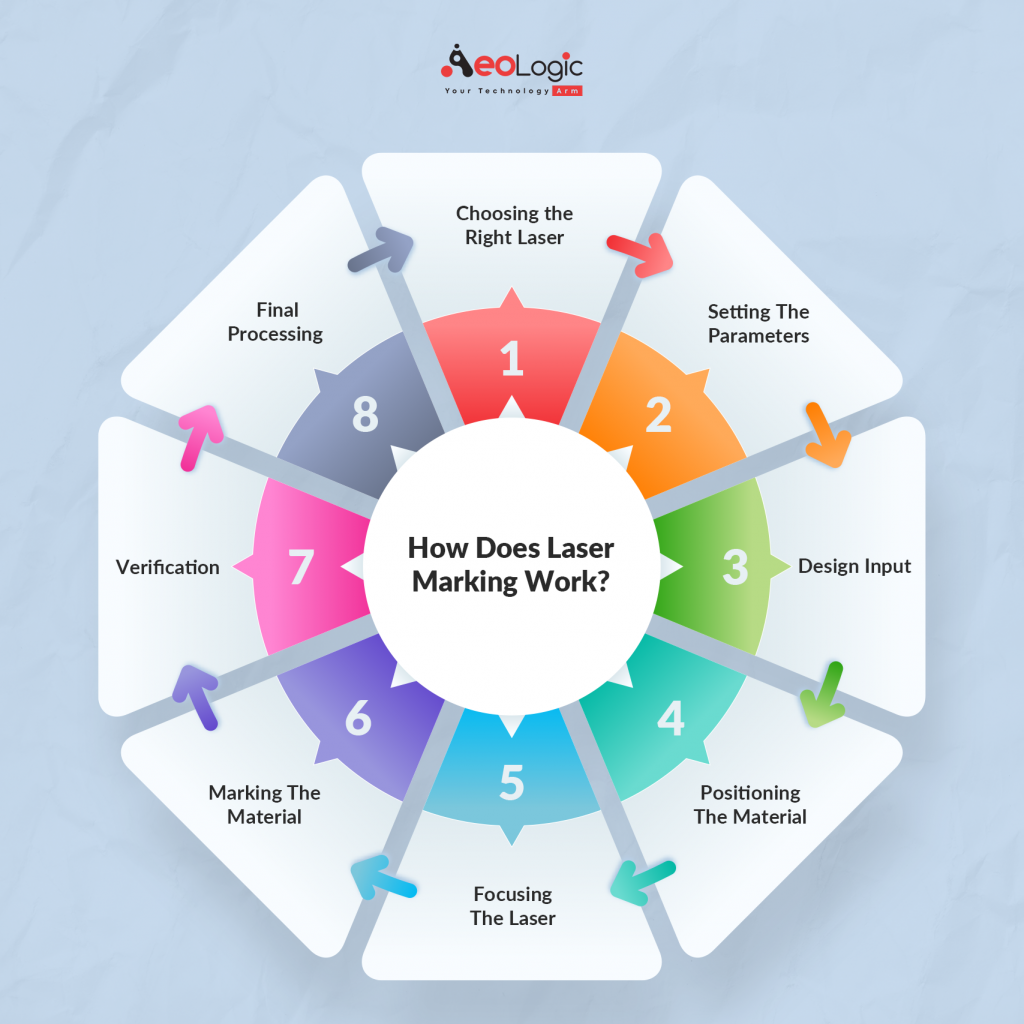
The process typically involves several key technological components:
- High-speed scanning heads: These components use galvo-mirrors to direct the laser beam at extremely high frequencies, allowing the beam to “keep up” with the moving part.
- Motion sensors and encoders: These devices provide constant feedback to the laser controller regarding the exact speed and position of the conveyor or robotic arm.
- Advanced software algorithms: The control software compensates for any micro-variations in speed, ensuring the mark remains consistent even if the production line experiences slight fluctuations in velocity.
This level of coordination ensures that the resulting mark—whether it is a serial number, a QR code, or a logo—remains undistorted. Without this synchronization, the movement of the part would cause the mark to appear stretched or illegible, rendering it useless for traceability purposes.
Why is continuous production efficiency critical for modern industry?
In the context of Industry 4.0, efficiency is measured by the ability to minimize downtime and maximize the “uptime” of expensive capital equipment. Any moment a production line stands still, the cost per unit increases. Continuous production laser marking directly addresses this economic pressure by integrating quality control and identification into the existing flow of work.

The move toward continuous marking provides several operational advantages:
- Increased Throughput: By removing the need for mechanical stops, factories can process more units per hour using the same amount of floor space.
- Reduced Mechanical Wear: Constant starting and stopping of conveyor belts and robotic actuators leads to increased mechanical fatigue. Continuous motion extends the lifespan of these components.
- Improved Traceability: Rapid, accurate marking allows for real-time data logging, which is essential for maintaining high standards in regulated industries.
The following table compares the operational differences between traditional marking methods and the continuous “on-the-fly” approach described in the Trumpf documentation.
| Feature | Traditional Laser Marking | On-the-Fly Laser Marking |
|---|---|---|
| Production Flow | Intermittent (Stop-and-go) | Continuous flow |
| Cycle Time | Higher due to pauses | Lower (no pauses required) |
| Mechanical Stress | High (frequent starts/stops) | Low (steady-state motion) |
| System Complexity | Lower | Higher (requires motion sync) |
Which industries benefit most from high-speed laser marking?
While laser marking is used across many sectors, the ability to mark moving parts is particularly vital for industries where high-volume, high-speed production is the standard. The precision required for these applications often dictates the type of laser technology used.
Automotive Manufacturing: As vehicle assembly lines move at high speeds, marking engine components, chassis parts, or electronic modules must happen without interrupting the line. This is critical for maintaining the strict traceability required for safety recalls and parts management.
Medical Device Production: The medical sector requires extreme precision and often involves marking very small, delicate components. Continuous marking allows for high-speed production of stents, surgical tools, or implants while ensuring that every single unit is uniquely identified for regulatory compliance.
Electronics and Semiconductors: In the production of circuit boards and consumer electronics, components move rapidly through various stages of assembly. Laser marking is used to apply tiny, high-contrast identifiers that must withstand various environmental conditions without affecting the electrical integrity of the device.
Food and Beverage Packaging: Although often involving different laser types, the principle of marking moving containers or packages is essential for expiration dates and batch coding to ensure consumer safety and logistics efficiency.
What defines high-speed laser precision?
Precision in a moving environment is significantly more difficult to achieve than in a static one. The technical document from Trumpf highlights that the quality of the mark is dependent on the stability of the laser beam and the speed of the scanning system. If the scanning head cannot react as quickly as the part moves, the mark will lose its geometric accuracy.

To achieve high-precision results, the system must manage “pulse shaping.” This refers to the ability of the laser to adjust the energy delivered in each individual pulse. When a part is moving, the laser must adjust its energy density to compensate for the relative motion, ensuring the depth and contrast of the mark remain uniform across the entire surface.
Furthermore, the software must account for the “edge effects” that occur when a laser hits a part at an angle or when the part’s surface is not perfectly flat. Sophisticated systems use 3D laser marking technology to adjust the focal plane in real-time, maintaining a consistent distance between the laser source and the moving target.
The adoption of these technologies represents a move toward more autonomous, “lights-out” manufacturing environments where human intervention is minimized and machine-to-machine communication is maximized.
Trumpf is expected to present further updates on its laser marking integration capabilities at upcoming industrial automation trade shows. For manufacturers looking to implement these systems, technical specifications and integration guides are typically available through official industrial technology distributors.
We invite you to share your thoughts on how automated marking technologies are changing your industry. Leave a comment below or share this article with your network.
Worth a look