The “Great American State Fair,” a project championed by the Trump administration to showcase state-level culture and industry, is facing a bifurcated rollout as several states formally decline to participate. While the initiative seeks to highlight regional contributions on a national stage, organizers are navigating a landscape where political considerations and budgetary constraints have prompted a series of opt-outs from Democratic-led states, while conservative-leaning groups and organizations have increasingly filled the resulting vacuum.
According to official state communications, the event, which is intended to serve as a high-profile exhibition in Washington, D.C., has encountered resistance regarding its underlying objectives and the associated costs of participation. As of early 2025, the New York Times has reported that the lack of universal state buy-in has forced event coordinators to pivot toward alternative partnerships, including private industry groups and non-governmental entities, to ensure the fair’s footprint remains substantial on the National Mall.
Reasons Behind the State-Level Boycotts
The decision by various states to abstain from the fair is largely rooted in fiscal policy and political alignment. For instance, officials in Oregon confirmed that the state would not send a delegation, citing both the financial burden of the exhibition and a broader disagreement with the administration’s policy agenda. Reporting from OregonLive indicates that state leadership prioritized local budget allocations over the costs associated with transporting and staffing a national showcase.
Similarly, Vermont officials have signaled that the state will remain absent, a move that aligns with the broader trend observed in states where the current administration’s platform does not mirror local political priorities. In contrast, states with Republican leadership or those seeking to maintain a neutral commercial presence are working to secure their spots. Pennsylvania, for example, has been actively negotiating to fill available exhibition space, according to recent updates from the Philadelphia Inquirer, highlighting the uneven participation map that currently defines the event’s planning phase.
The Role of Conservative Groups in the Fair
As state participation remains inconsistent, conservative organizations have stepped into the spotlight, taking on a more prominent role in the fair’s programming. The Freedom 250 initiative—a coalition of conservative advocacy groups—has moved to host events and exhibits on the National Mall that align with the fair’s timeline. This development has drawn attention to how the fair is evolving from a traditional, state-sponsored cultural showcase into a platform that reflects specific ideological interests.
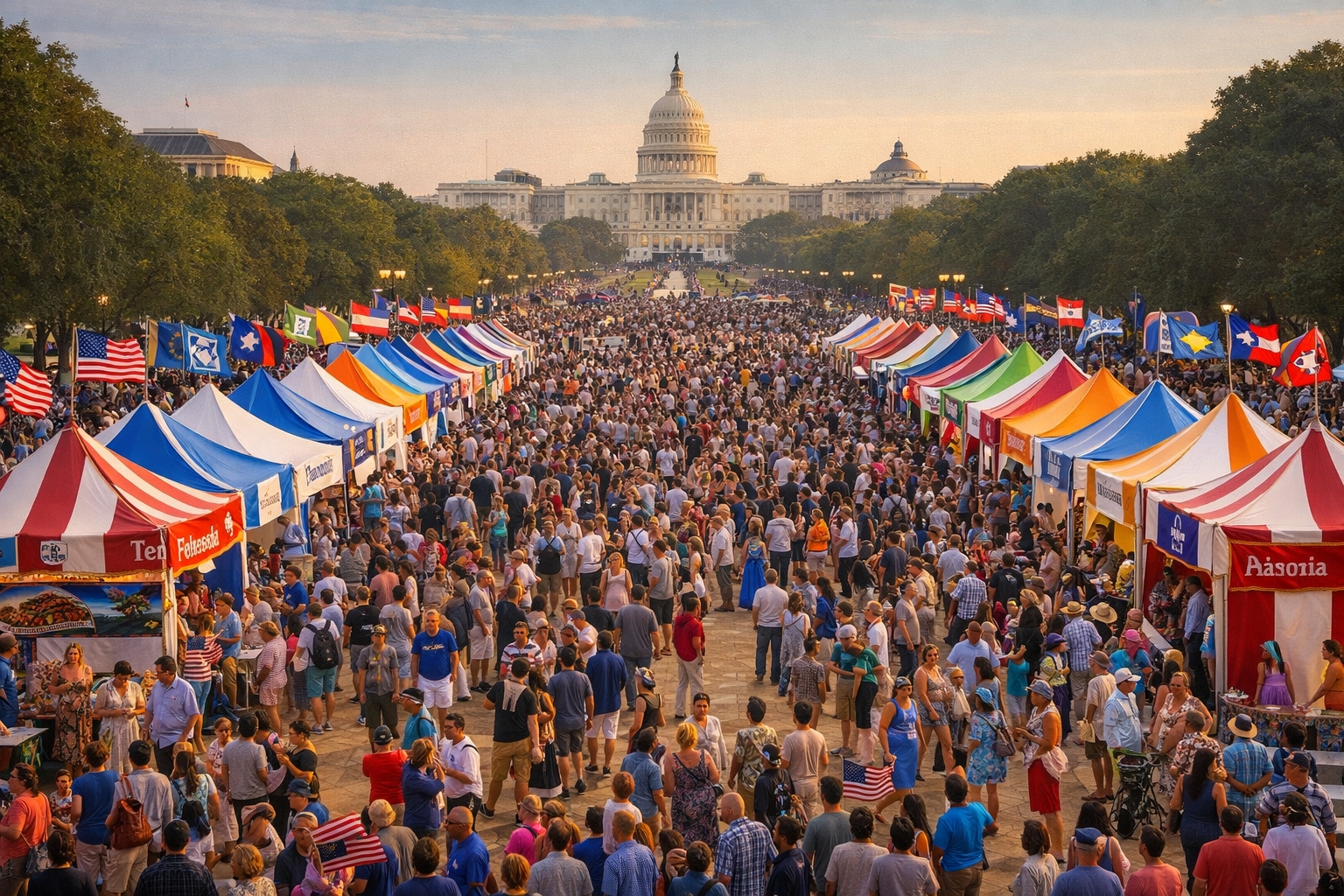
Political analysts note that the presence of these groups serves to solidify the fair’s identity as a conservative-leaning event. While the National Mall has historically hosted public exhibitions, the integration of political advocacy groups alongside state-sponsored displays presents a unique challenge for event organizers, who must balance the fair’s stated mission of national unity with the reality of a polarized participation list. The shift has effectively turned the exhibition into a focal point for debates regarding the use of public space for politically charged displays.
Fiscal and Logistical Hurdles
Beyond the politics, the fair faces significant logistical hurdles. Organizing a national exhibition requires substantial coordination with the National Park Service, which oversees the National Mall. Any entity planning to host a large-scale event on federal land must comply with strict permitting requirements as outlined by the National Park Service. These regulations include mandates for public access, security, and restoration of the grounds following the conclusion of the event.
The cost of such an endeavor is a primary factor for many state legislatures. Participation involves not only the cost of exhibit construction but also travel, lodging, and per diem expenses for state personnel. In an era of tightening state budgets, the return on investment for a high-profile D.C. exhibition is being scrutinized more heavily. For states that choose to participate, the fair is often viewed through the lens of economic development and tourism promotion, while non-participating states view the expense as an unjustifiable drain on taxpayer funds.
Looking Ahead: What Happens Next
The organizers of the Great American State Fair are expected to release a finalized list of participants in the coming weeks. For states that have yet to commit, the deadline for securing exhibition space remains a critical checkpoint. Meanwhile, the National Park Service continues to process permit applications for the various segments of the fair, and the public can monitor updates on the Department of the Interior website for any changes to the event’s schedule or site usage requirements.
As the date approaches, the tension between the administration’s goals and the reality of state-level participation will likely continue to dominate the discourse. Whether the fair succeeds in becoming a true national gathering or remains a fragmented event defined by political division remains to be seen. Readers interested in the final layout of the fair and the specific list of participating states are encouraged to check official government announcements for the most recent updates.
Jonathan Reed serves as the News Editor for World Today Journal, where he oversees international affairs coverage and investigative reporting. With over 16 years of experience, he focuses on providing fact-based, objective analysis of global political developments. Please share your thoughts in the comments section below or join the conversation on our social media platforms.
Related reading