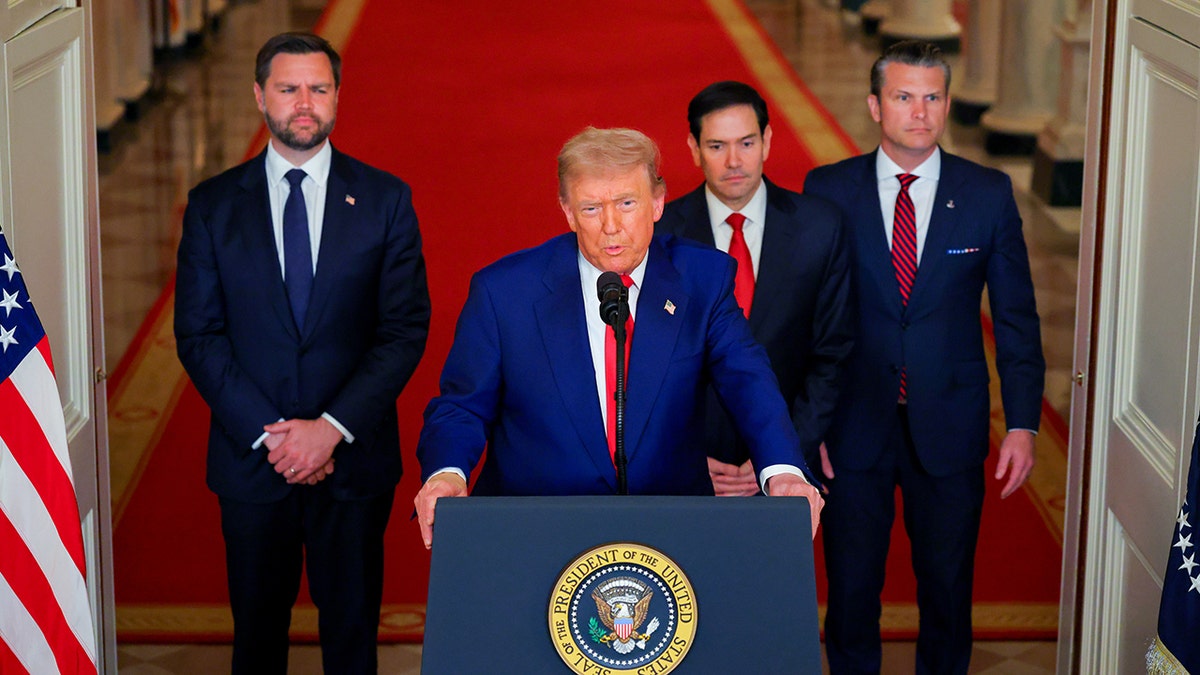
The United States military is facing an unprecedented legal and ethical crisis as President Donald Trump issues a series of escalating ultimatums to Iran, threatening the destruction of civilian infrastructure and the potential erasure of an entire civilization. These threats, delivered primarily via social media and press conferences, have created a volatile environment where Trump’s Iran threats raise moral stakes for military members who are bound by both U.S. Law and international treaties.
The tension reached a breaking point following a high-risk rescue mission on Sunday, April 5, 2026, in which U.S. Forces retrieved a wounded F-15 crew member from the mountains of Iran. While the administration touted the operation as an “AMAZING show of bravery,” the aftermath saw the President pivot to aggressive warnings. In a profanity-laden Truth Social post, Trump demanded that Iran “Open the F***in’ Strait” of Hormuz, warning that “Tuesday will be Power Plant Day, and Bridge Day, all wrapped up in one, in Iran,” and stating that failure to comply would result in the country “living in Hell” NPR.
The situation escalated further on Monday, April 6, when the President vowed to destroy “every bridge” and power station in Iran within a four-hour window if a deal is not reached by 20:00 EST on Tuesday. By Tuesday morning, the rhetoric shifted toward apocalyptic levels, with Trump warning that “a whole civilisation will die” if Iran does not agree to his terms BBC. These statements have placed the U.S. Department of Defense in a precarious position, as the orders potentially conflict with the laws of armed conflict.
For the service members tasked with executing these orders, the dilemma is not merely tactical but legal. Under international law, the deliberate targeting of civilian infrastructure—such as power plants and bridges not used for military purposes—can be classified as a war crime. Military experts and legal analysts warn that following orders to “blow up the whole country” could leave individual officers and personnel liable for prosecution for war crimes or inciting genocide BBC.
The Legal Quandary of ‘Illegal Orders’
A fundamental tenet of military service in the United States is the obligation to follow lawful orders. However, this is balanced by the requirement to disobey orders that are manifestly illegal. The threat to destroy an entire civilization or target non-military civilian infrastructure falls into a gray area that creates significant psychological and professional stress for the chain of command.
Military analysts speaking to the BBC suggest that the President’s specific timeline—destroying every bridge and power station in a country the size of Iran in just four hours—is a “herculean task” that may be physically and logistically impossible. Iran is approximately one-third the size of the continental U.S., and while the U.S. Knows the location of nuclear facilities, identifying and destroying thousands of civilian targets in such a short window is viewed as unfeasible by experts BBC.
The moral stakes are further complicated by the nature of the targets. Power plants and bridges are “dual-use” infrastructure; while they can support military movement, they are essential for the survival of the civilian population. Targeting them on a scale that would cause a “civilization to die” could be interpreted as a violation of the principle of proportionality and distinction, both of which are cornerstones of the Geneva Conventions.
Escalation and the Rescue Mission Catalyst
The current volatility is closely tied to the events of April 5, 2026. The U.S. Military launched a massive operation to retrieve an F-15 officer whose plane had been shot down and who had evaded capture for over a day in Iranian territory. President Trump described the mission as involving “dozens of aircraft, armed with the most lethal weapons in the World” NPR.
While the rescue was successful, the operation came with costs. An official reported that two C-130 aircraft were lost during the mission, and U.S. Forces subsequently destroyed the “stuck” aircraft to prevent them from falling into enemy hands ABC News. The CIA and Israeli intelligence also played critical roles; Israel reportedly shared intelligence and halted its own strikes in the search area to facilitate the U.S. Rescue NPR.
Despite the successful retrieval of the pilot, the diplomatic fallout has been severe. The Iranian government has dismissed the President’s threats. Sayed Reza Salihi-Amiri, Iran’s minister of cultural affairs and tourism, described Trump as an “unstable, delusional figure marked by a set of contradictions” in an interview with the Associated Press ABC News.
The Impact of Civilian Targeting
The threat to “blow up the whole country” has already seen precursors in recent strikes. On April 5, 2026, airstrikes hit the Sharif University of Technology in Tehran. According to Iranian state media, the strikes hit a gas station near the university, resulting in a “temporary gas outage” in the Sharif neighborhood ABC News.

Such strikes on educational and civilian-adjacent areas underscore the “moral quandary” mentioned by legal experts. When a commander-in-chief suggests that the objective is the destruction of a civilization rather than the neutralization of a military threat, the military’s role shifts from defense to potential participation in what some international law experts describe as inciting genocide BBC.
The strategic waterway of the Strait of Hormuz remains the primary flashpoint. Trump has extended an ultimatum multiple times in the last few weeks for Iran to completely open the strait to international shipping traffic ABC News. The threat to use “Power Plant Day” and “Bridge Day” as leverage is an attempt to force a deal through the threat of catastrophic civilian hardship.
Summary of Current Deadlines and Threats
| Date/Time | Threat/Ultimatum | Target/Objective |
|---|---|---|
| Sunday, April 5 | “Open the F***in’ Strait” | Strait of Hormuz shipping access |
| Monday, April 6 | Destroy “every bridge” and power station | Civilian infrastructure in Iran |
| Tuesday, April 7 | “A whole civilisation will die” | General Iranian population/state |
| Tuesday, 20:00 EST | Deadline for peace deal | Avoid “blowing up the whole country” |
What Happens Next?
The international community is now watching the 20:00 EST Tuesday deadline. The core of the issue remains whether the U.S. Military will execute orders that target civilian infrastructure on a scale that could be viewed as a war crime. Former defense officials have noted that such a massive attack is unlikely to force a ceasefire and may instead lead to a total collapse of regional stability.
The moral stakes for the military are at an all-time high. If the order to “blow up the whole country” is given, officers must decide if the order is legal. Under the Uniform Code of Military Justice (UCMJ), the duty to obey is not absolute; it is limited to lawful orders. Orders to commit genocide or target non-combatants indiscriminately are generally considered unlawful.
The next confirmed checkpoint is the expiration of the President’s deadline on Tuesday evening at 20:00 EST. Whether the U.S. Military initiates “major combat operations” or whether a deal is reached in the final hours will determine the legal and moral trajectory for thousands of service members currently deployed in the region.
World Today Journal encourages readers to share this report and leave their comments below regarding the legal obligations of military personnel in the face of unconventional executive orders.