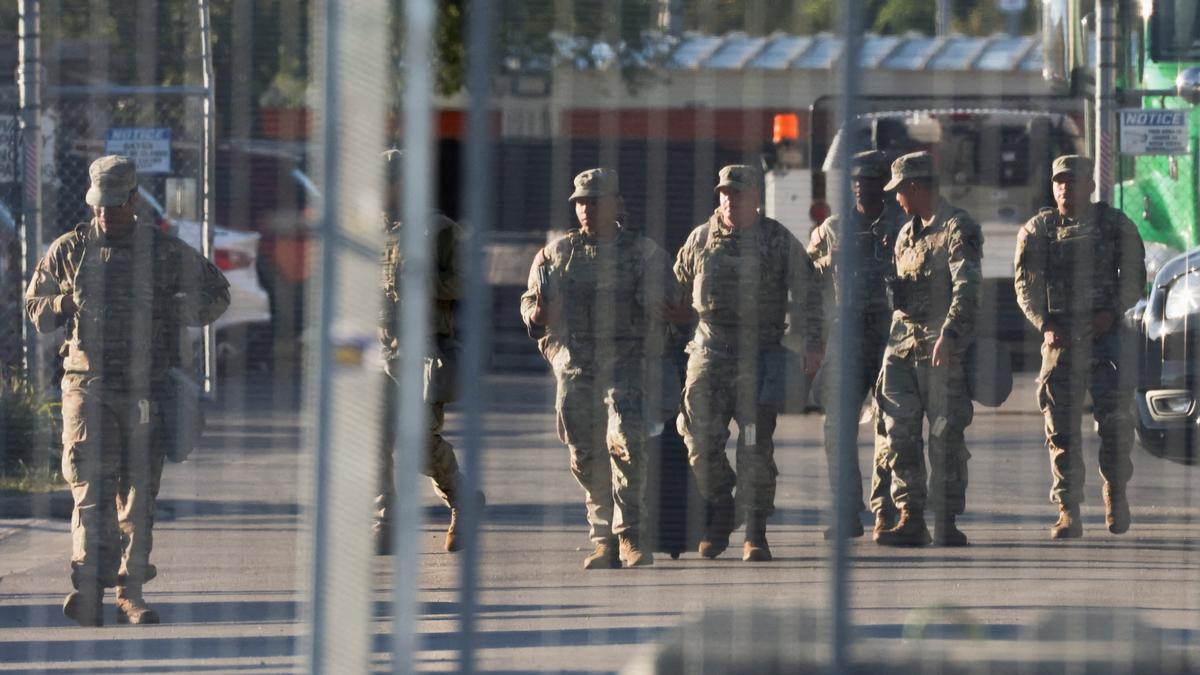
Federal Appeals court Limits Trump National Guard Deployment in Illinois
A federal appeals court has issued a ruling impacting the deployment of National Guard troops to Illinois authorized by former President Donald Trump. While the troops can remain stationed in the state under federal control, their deployment for proactive patrols or protection of federal property is currently suspended. This decision follows an initial temporary block issued by a district court judge earlier this week.
Background of the Dispute
The legal battle stems from Trump’s administration’s efforts to deploy National Guard personnel to several U.S. cities. The stated rationale was to address perceived increases in crime,a claim not consistently supported by available data. This move sparked a significant political and legal challenge, centering on the extent of presidential authority in deploying the National Guard.
Judge’s Initial Ruling & Concerns Over the Insurrection Act
on Thursday,federal Judge April Perry temporarily blocked the deployment,citing a lack of evidence demonstrating an imminent “danger of rebellion” within Illinois related to the administration’s immigration enforcement efforts. Judge Perry elaborated on her decision Friday, referencing historical context, including the Federalist Papers, to underscore the importance of civilian authority.
She specifically noted that existing law enforcement capabilities were sufficient. “there has been no showing that the civil power has failed,” Perry stated. “The agitators who have violated the law by attacking federal authorities have been arrested. The courts are open,and the marshals are ready to see that any sentences of imprisonment are carried out.”
Key Points from the Court’s Analysis
The judge’s analysis highlighted several crucial points:
* Adequate Law Enforcement: Federal agents have demonstrably increased arrests and deportations, indicating their ability to enforce the law.
* No Evidence of Rebellion: The administration failed to present substantial evidence of a brewing insurrection or a breakdown in civil order.
* Historical Precedent: The court drew upon historical documents like the Federalist Papers to emphasize the principle of civilian control over the military.
Current status & Next Steps
Currently, approximately 500 National Guard members from Texas and Illinois are stationed primarily at a U.S. Army Reserve Center in Elwood, Illinois, southwest of Chicago. A smaller contingent was previously assigned to a U.S. Immigration and Customs Enforcement (ICE) facility in Broadview.
The appeals court has paused further action pending a more extensive hearing. This means the troops remain in Illinois,but their operational capacity is limited until the court reaches a final decision. You can expect further developments as the case progresses.
Understanding the Insurrection Act
The core of this dispute revolves around the Insurrection Act.This act allows the President to deploy active-duty military personnel within states if the state government is unable or unwilling to suppress an insurrection or enforce federal law. However, invoking this act requires a clear demonstration of a breakdown in civil authority – a threshold the court found lacking in this case.
This situation underscores the delicate balance between federal authority and states’ rights, and the importance of adhering to constitutional principles when deploying military resources domestically. It’s a developing story with significant implications for the relationship between the federal government and individual states.
Published: October 12, 2025, 04:20 am IST
Worth a look
- UK Supreme Court Rejects Bahrain’s State Immunity in FinSpy Spyware Case
- Argentines Joining Russia Conflict Without Official Registration
- Donald Trump Softens Diplomatic Tone Toward Ukraine by July 2026 (archyworldys.com)
- Trump to Meet Zelensky at White House Amid Shift Toward Military Cooperation (time.news)