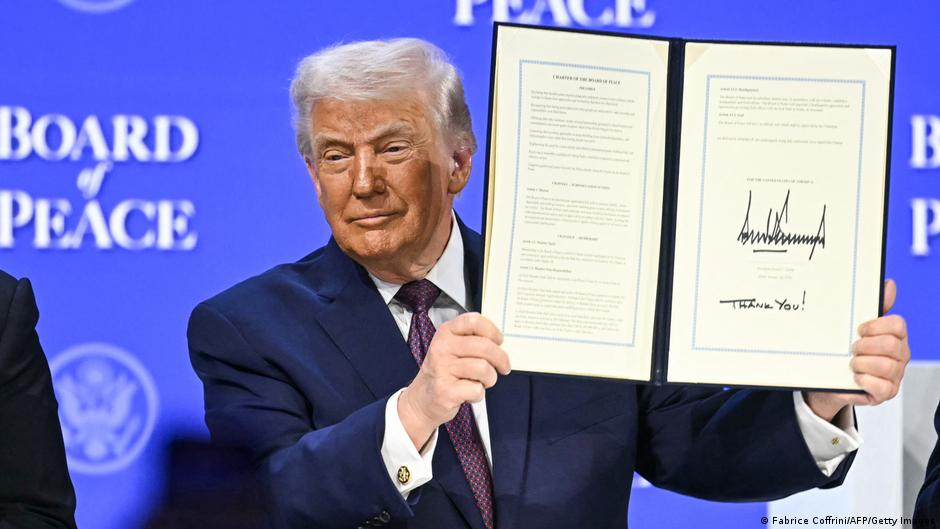
Washington D.C. – As the conflict in Gaza continues to draw international attention, a modern initiative spearheaded by former U.S. President Donald Trump is set to launch tomorrow, Thursday, February 19, 2026. The inaugural meeting of the “Peace Board,” as it’s being widely referred to, aims to address global conflicts, with a primary focus on achieving lasting peace and stability in Gaza. The gathering, confirmed by the White House on Wednesday, February 18, 2026, will bring together representatives from over 20 nations, signaling a potentially significant shift in the approach to resolving protracted international disputes.
The formation of the Peace Board follows the recent establishment of the National Committee for the Administration of Gaza (NCAG), a development President Trump lauded as a crucial step in implementing Phase Two of his Comprehensive Plan to Complete the Gaza Conflict. This 20-point roadmap, endorsed by United Nations Security Council Resolution 2803 (2025), seeks to facilitate reconstruction, restore essential public services, and establish self-sustaining governance in Gaza. The NCAG will be led by Dr. Ali Sha’ath, a technocratic leader tasked with overseeing the stabilization of daily life and laying the groundwork for long-term governance in the region. The initiative represents a bold attempt to move beyond traditional diplomatic channels and directly engage a broad coalition of nations in the pursuit of peace.
According to White House Press Secretary Karoline Leavitt, President Trump will formally open the meeting with a speech before departing for the state of Georgia. Leavitt indicated that the official list of participating countries will be released shortly, noting “there is a lot of interest” in the initiative. The administration is also expected to announce a commitment of over $5 billion from members of the Peace Board dedicated to humanitarian efforts and reconstruction in Gaza, a pledge initially previewed by Trump on his Truth Social platform. Leavitt stated that the board intends to deploy “thousands of personnel to an international stabilization force and local police” to ensure security and maintain peace for the residents of Gaza.
A Diverse, Yet Divided, International Gathering
While the Peace Board aims for broad international cooperation, the composition of its founding members reveals a complex geopolitical landscape. At least 35 heads of state and government have accepted participation, with 26 countries designated as founders. These include Israel, Argentina, El Salvador, Paraguay, Saudi Arabia, and Egypt. However, several European nations, including France, Spain, and Sweden, have declined to join the initiative. This divergence in participation highlights the varying perspectives on the best path forward for resolving the Gaza conflict and broader regional issues.
Several leaders have confirmed their attendance in Washington. Presidents Javier Milei of Argentina and Santiago Peña of Paraguay have announced their travel plans. Indonesian President Prabowo Subianto, along with the leaders of Cambodia, Hun Manet, and Vietnam, To Lam, are also expected to participate. Notably, Israeli Prime Minister Benjamin Netanyahu will not be attending in person, instead sending his Minister of Foreign Affairs, Gideon Saar, as his representative. Netanyahu’s decision comes amid ongoing discussions with the U.S. Regarding the principles of negotiations with Iran, a topic expected to be central to discussions during his separate meeting with President Trump. Mexico, Romania, Italy, and the Czech Republic will participate as observers, alongside Dubravka Suica, the European Commissioner for the Mediterranean.
Trump’s Vision: Beyond Gaza and Collaboration with the UN
President Trump has articulated a vision for the Peace Board that extends beyond the immediate crisis in Gaza, aiming to address conflicts globally. Speaking earlier this week, Trump stated that the board would work with the United Nations “in some cases,” while also emphasizing its intention to pursue peace initiatives independently. This assertion raises questions about the potential for overlap or conflict between the Peace Board and established international bodies like the UN Security Council, particularly given the Council’s recent endorsement of Trump’s Comprehensive Plan through Resolution 2803 (2025). The White House statement details the 20-point plan and its objectives.
The initiative’s focus on Gaza is particularly timely, as the region faces ongoing challenges related to disarmament, governance, and security arrangements. According to reports, Prime Minister Netanyahu has been seeking to influence the agenda of upcoming U.S.-Iran negotiations, expressing concerns that the current trajectory is not conducive to lasting peace and security in the Middle East. The Peace Board’s involvement could potentially reshape the dynamics of these negotiations, introducing a new layer of complexity and potentially altering the existing framework for dialogue.
Concerns and Criticisms
The establishment of the Peace Board has not been without its critics. Some observers express concern that the initiative may circumvent established diplomatic processes and potentially undermine the authority of the United Nations. The UN Security Council is scheduled to hold a meeting on Gaza the same day as the Peace Board’s inaugural session, a scheduling conflict that underscores the potential for tension between the two bodies. The Palestinian ambassador to the UN, Riyad Mansour, has called on the international community to halt Israel’s alleged efforts at annexation, whether in Washington or New York. AP News reported on the upcoming UN Security Council meeting and the potential conflict with the Peace Board.
the composition of the founding members raises questions about the board’s inclusivity and representativeness. The absence of key European nations and the inclusion of countries with varying geopolitical interests could limit its effectiveness and potentially exacerbate existing divisions. The success of the Peace Board will ultimately depend on its ability to forge consensus among its diverse membership and to address the complex challenges facing the region with a nuanced and collaborative approach.
The Role of the Board of Peace and Future Steps
Central to the implementation of President Trump’s plan is the Board of Peace, which will provide strategic oversight, mobilize international resources, and ensure accountability as Gaza transitions from conflict to peace and development. A founding Executive Board, composed of leaders with expertise in diplomacy, development, infrastructure, and economic strategy, has already been formed, with President Trump serving as its chairman. This structure aims to ensure a coordinated and comprehensive approach to the multifaceted challenges facing Gaza.
The commitment of over $5 billion for humanitarian aid and reconstruction in Gaza represents a significant financial contribution, but the effective allocation and utilization of these funds will be crucial. The deployment of an international stabilization force and local police, as announced by the White House, is intended to enhance security and maintain order, but the composition, mandate, and accountability mechanisms of this force will require to be carefully defined to avoid unintended consequences. The long-term success of the Peace Board’s efforts will hinge on its ability to address the root causes of the conflict, promote sustainable development, and foster a sense of hope and opportunity for the people of Gaza.
The next key checkpoint will be the release of the official list of participating countries and the detailed agenda for the inaugural meeting of the Peace Board. The international community will be closely watching to observe how this new initiative unfolds and whether it can deliver on its ambitious goals. The future of Gaza, and potentially the broader region, may well depend on the outcome of this unprecedented diplomatic endeavor.
What are your thoughts on the Peace Board? Share your comments below and join the conversation.
Worth a look