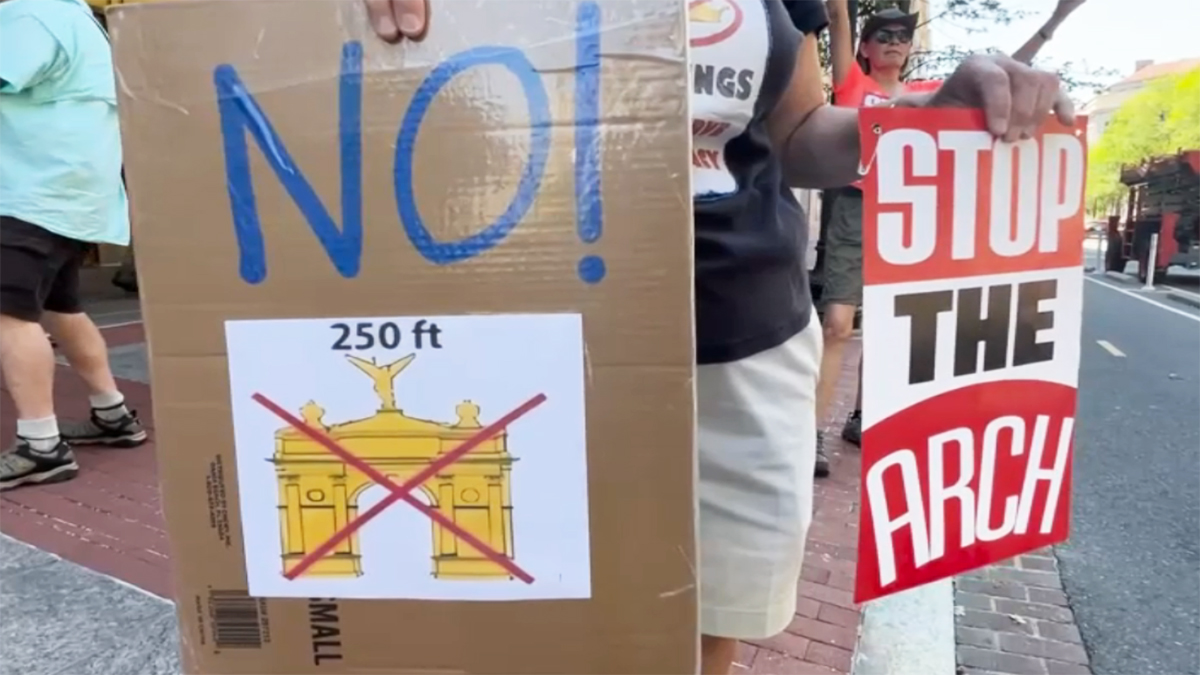
A contentious proposal to construct a massive 250-foot triumphal arch near Arlington National Cemetery has ignited a firestorm of debate, pitting federal planning authorities against a vocal coalition of residents, preservationists, and lawmakers. The project, which seeks to establish a monumental structure at Memorial Circle, is currently navigating a complex regulatory gauntlet, with the National Capital Planning Commission (NCPC) at the center of the deliberation process.
The proposed Arlington National Cemetery arch has become a flashpoint for broader discussions regarding federal land use, the sanctity of historic memorial sites, and the interpretation of long-standing zoning regulations in the nation’s capital. As stakeholders weigh the aesthetic and symbolic intent of the structure against concerns regarding its scale and placement, the project’s future remains uncertain, pending further review from multiple federal agencies.
Regulatory Hurdles and the Height Debate
At the heart of the current procedural standoff is the federal Height of Buildings Act of 1910. The commission is tasked with determining whether the 250-foot monument—significantly taller than most structures in the immediate vicinity—violates the spirit or the letter of the law, which traditionally restricts building heights in the District of Columbia to ensure the prominence of federal monuments and the Capitol dome, generally capping heights at 160 feet in most contexts, according to the National Capital Planning Commission’s official project filings.
NCPC Chair Will Scharf, during recent deliberations, expressed a perspective that the Height of Buildings Act may not apply to federal construction projects in the same manner as private developments. This interpretation, however, is met with skepticism by those who argue that the scale of the proposed arch would fundamentally alter the visual corridor between the Lincoln Memorial and the hallowed grounds of Arlington National Cemetery. The Commission of Fine Arts has previously granted a measure of approval following design modifications, but that endorsement has done little to quell the public outcry.
Public Opposition and Symbolic Concerns
Public discourse surrounding the project has been notably intense. During recent hearings, citizens and advocacy groups voiced strong objections, citing concerns that the project’s funding could be redirected toward more pressing infrastructure or veteran support initiatives. The presence of a miniature model at the commission’s hearings served as a focal point for critics who argued that the structure’s size and design are inconsistent with the solemnity of the surrounding cemetery.
Beyond the aesthetic debate, there are significant logistical concerns. The Federal Aviation Administration (FAA) is currently conducting an aeronautical study to determine whether a structure of this height poses a hazard to flight paths, given its proximity to Ronald Reagan Washington National Airport, located just across the Potomac River. The intersection of aviation safety, historic preservation, and political symbolism has rendered the project one of the most scrutinized development proposals in the capital region this year.
What Happens Next?
The timeline for a final decision remains fluid. The NCPC has requested additional documentation and clarification regarding the project’s impact, meaning no immediate resolution is expected. The project continues to be a subject of intense scrutiny from Congress, with various representatives expressing concerns that such a monument might infringe upon the “reverence” required for a site dedicated to those who have served in the United States military.

For those following the development of this project, official updates and meeting minutes are available through the National Capital Planning Commission website, which serves as the primary repository for public comments and regulatory filings. As the commission prepares for future sessions, the debate over the arch serves as a reminder of the delicate balance required when proposing new monuments in a city defined by its history and the preservation of its public spaces.
We invite our readers to share their perspectives on this developing story in the comments section below. How should the city balance the desire for new commemorative architecture with the preservation of historic views and the practical requirements of urban planning?
Related reading