Rising Fears and Shifting Political Alignments: A Deep Dive into the Anxieties of America’s Immigrant Community
Recent data reveals a significant surge in anxiety and fear within the U.S. immigrant community, driven by evolving immigration policies and enforcement practices. A thorough new survey conducted by KFF and The New York Times paints a stark picture of a population increasingly apprehensive about their safety, well-being, and future in the country. This article delves into the key findings of the 2025 KFF/NYT Survey of Immigrants, analyzing the implications for public health, economic stability, and the political landscape. As immigration experts with decades of experience tracking these trends, we aim to provide a clear, authoritative understanding of this critical issue.
A Dramatic Increase in Fear of Deportation and Detention
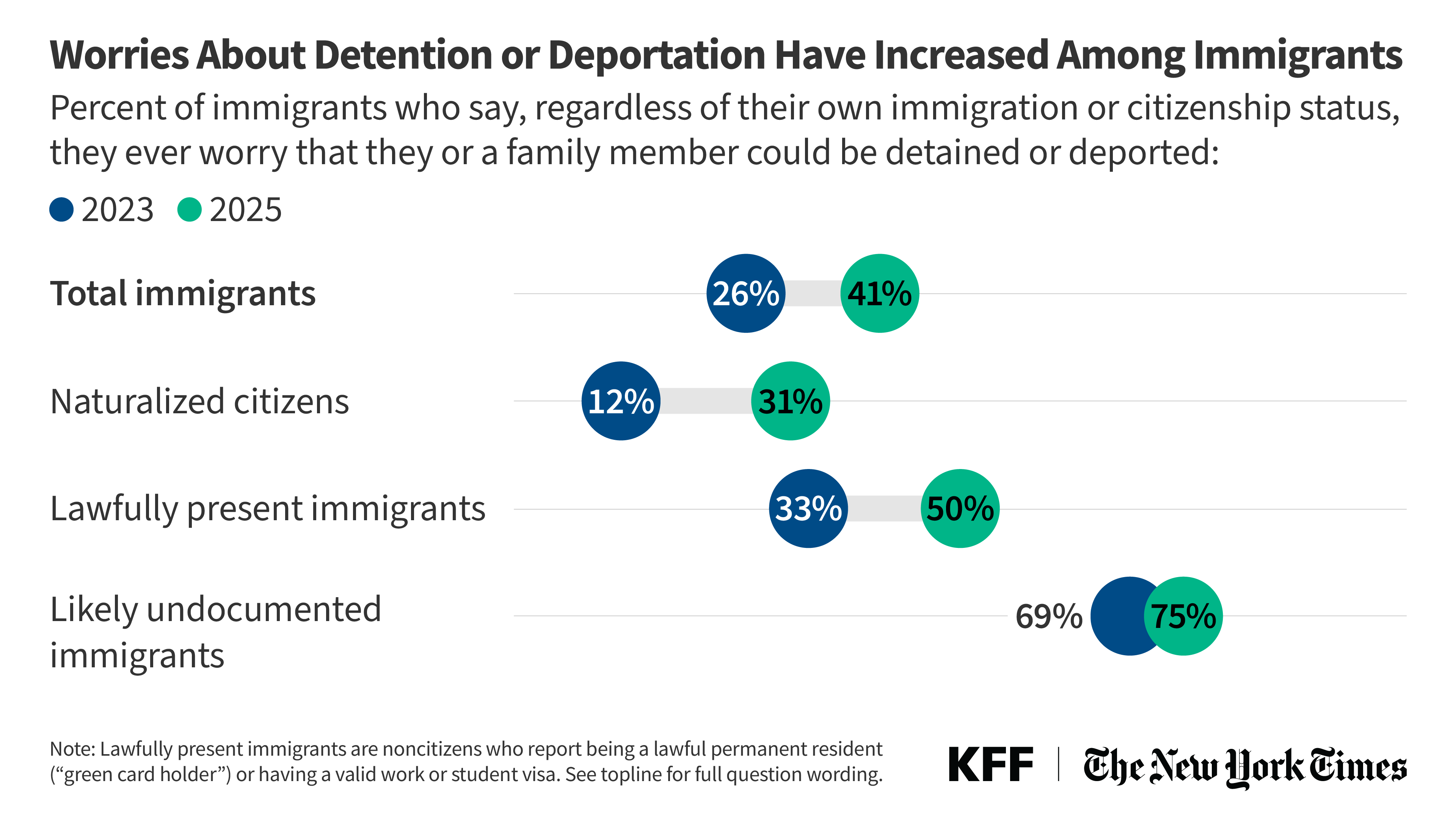
The survey reveals a substantial jump in the percentage of immigrants who fear deportation or detention – 41% now express this concern, a sharp increase from 26% in 2023. This isn’t limited to undocumented immigrants; the rise in fear is particularly pronounced among lawfully present immigrants and naturalized citizens, demonstrating that the current climate is fostering widespread unease across the entire immigrant population. this broad-based anxiety is a critical indicator of a systemic shift in how immigrants perceive their standing in the United States.
Impact on Daily Life: Avoiding Essential activities
The consequences of this fear are tangible and far-reaching. Approximately half of all immigrants report feeling less safe since the beginning of the current presidential term. This heightened anxiety is directly impacting daily life, with three in ten immigrants admitting they or family members are avoiding essential activities – travel, work, public spaces, and even medical care – due to fear of enforcement.
This avoidance is even more pronounced among likely undocumented immigrants,where three in four report altering their behavior to minimize potential encounters with authorities. This self-imposed isolation has serious implications for public health and economic participation. The reluctance to seek medical care, for example, can lead to worsening health conditions and increased healthcare costs in the long run.
Erosion of Trust and Confidence in Fair Treatment
A concerning 53% of immigrants lack confidence that they would be treated fairly if detained. This lack of trust underscores a deep-seated concern about potential bias and injustice within the immigration enforcement system. Building trust between immigrant communities and law enforcement is crucial for effective public safety, and this survey highlights a significant erosion of that trust.
Political Realignment: A Growing Shift Away from the Republican Party
The anxieties surrounding immigration policy are also having a significant impact on the political landscape.With roughly one in ten eligible U.S. voters being naturalized citizens, this demographic represents a perhaps powerful voting bloc. The survey reveals that nearly six in ten immigrant voters say their views on the administration’s immigration policies have influenced their political party preference, with over four in ten describing this impact as “major.”
Crucially, the shift is largely away from the Republican Party. 36% of immigrant voters express views reflecting negative perceptions of the administration’s policies or a move away from Republican support, compared to just 19% who express support for these policies or the party. This represents a potential realignment of a significant voting segment, driven by concerns over immigration.
Beyond Fear: Economic Hardship and Health Impacts
The survey doesn’t just highlight fear; it reveals a growing economic and health crisis within immigrant communities.
* Economic Strain: Approximately half of immigrants are struggling to afford basic necessities like housing, food, and healthcare – a significant increase from 31% in 2023. Many report that earning a living has become more difficult since january.
* Negative Health Impacts: 40% of immigrant adults and a staggering 77% of likely undocumented immigrants, report experiencing negative health impacts due to immigration-related worries. these include increased stress, anxiety, depression, sleep disturbances, and exacerbation of chronic conditions. 18% of immigrant parents report their children’s well-being has been negatively affected.
* Delayed Healthcare: The share of immigrants delaying or skipping healthcare has risen from 22% to 29% between 2023 and 2025. 19% cite immigration-related concerns as the reason, while 30% of parents report their children delaying care due to similar fears, cost, or access issues. For undocumented parents, this figure jumps to 58%.
**A Dim
Keep reading