
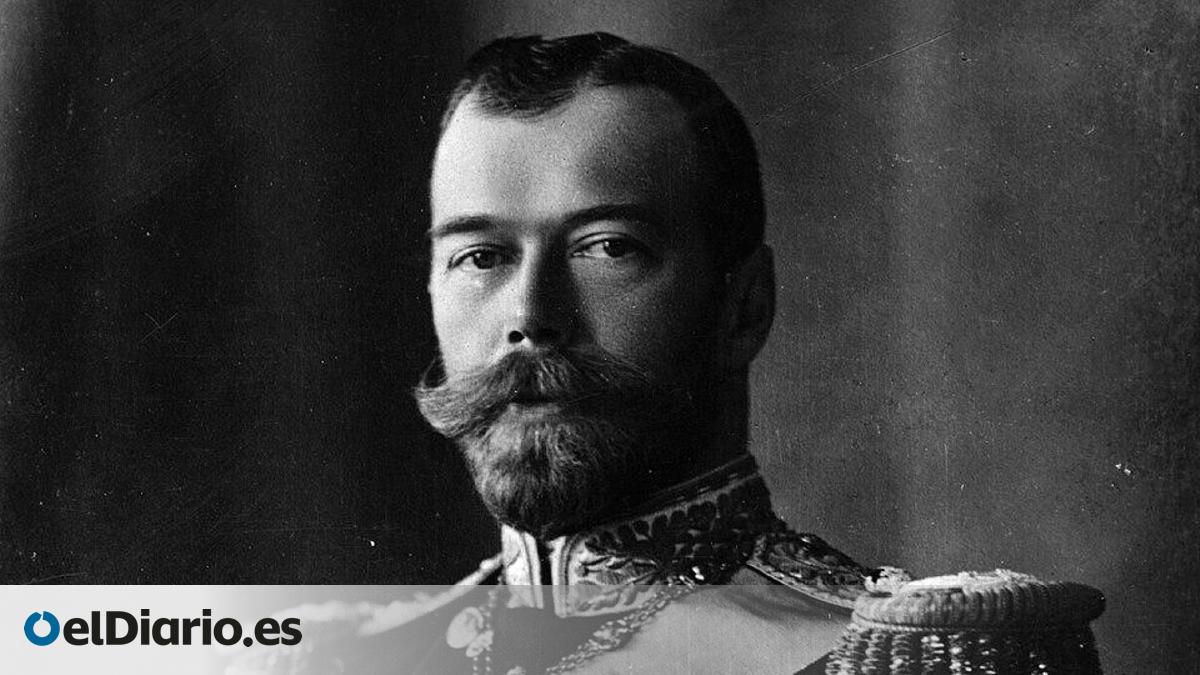
Nicholas II: The Last Tsar Who Inherited an Empire Too Large to Sustain
By Jonathan Reed, Editor, News
May 18, 2026 • Updated 12:45 PM BST
When Nicholas II ascended to the Russian throne on November 1, 1894, he inherited the largest territorial empire in history—a vast domain stretching from Eastern Europe to the Pacific, united under the autocratic rule of the Romanov dynasty. Yet within two decades, that empire would collapse under the weight of its own contradictions: a rigid political system clinging to 19th-century absolutism while the rest of Europe raced toward democracy, a rapidly industrializing society chafing against feudal inequalities, and a military machine ill-prepared for the demands of modern warfare.
The story of Nicholas II is not merely the biography of a doomed monarch, but the obituary of an imperial model that had outlived its usefulness. His reign—marked by stubborn resistance to reform, catastrophic military defeats, and the rise of revolutionary movements—reveals how a system built on divine right and bureaucratic inefficiency could not survive the 20th century. By the time he abdicated in March 1917, the Russian Empire was already a corpse waiting to be buried.
Today, as historians and political scientists continue to dissect the fall of the Romanovs, Nicholas II’s legacy serves as a cautionary tale about the dangers of clinging to outdated power structures in an era of rapid change. His story remains relevant not just as a chapter in Russian history, but as a case study in how even the most entrenched regimes can be undone by their own rigidity.
A Fragile Empire Built on Sand
The Russian Empire under Nicholas II was a paradox: on paper, it was a superpower, spanning 22.8 million square kilometers and encompassing 130 million subjects from the Baltic to the Bering Strait. In practice, its control was often tenuous. The Encyclopædia Britannica later observed that the tsar’s effective power was “constrained by the vastness of the territory, the inefficiency of the administration, and a generally antiquated conception of politics.”
This fragility stemmed from three critical weaknesses:
- Administrative paralysis: The empire’s sheer size made centralized governance nearly impossible. Communications between Moscow and provincial capitals could take weeks, and local officials often acted with impunity, exacerbating regional grievances.
- Ethnic and religious divisions: Nicholas II ruled over a patchwork of 100+ ethnic groups—Polish Catholics, Finnish Lutherans, Armenian Christians, Tatar Muslims, and Siberian shamans—many of whom resented forced rusification policies that suppressed their languages and cultures. The Baltic provinces, Finland, and Armenia became hotbeds of nationalist resistance.
- Economic duality: While cities like St. Petersburg and Moscow industrialized rapidly under Finance Minister Sergei Witte, the countryside remained mired in serfdom-like conditions. Peasants made up 80% of the population but owned only 20% of the arable land, fueling revolutionary ideologies.
Nicholas II’s refusal to modernize the political system only deepened these fractures. Unlike European monarchs who granted constitutions (Belgium, 1831; Germany, 1871), he dismissed demands for reform as “insane dreams.” His court, dominated by reactionary nobles and his German-born wife, Empress Alexandra, isolated him from reality. By 1914, Russia was a powder keg waiting for a spark.
The Last Autocrat of Europe
Born on May 18, 1868, Nicholas II was the eldest son of Emperor Alexander III, who had ruled with an iron fist. Unlike his father, Nicholas was described by contemporaries as “timid, indecisive, and vacillating”—traits that would prove fatal for an empire. The Library of Congress archives note that his advisors often manipulated him, while his reliance on mystics like Grigori Rasputin further eroded public trust.
Nicholas II’s reign began with cautious reforms. In 1905, after the disastrous Russo-Japanese War (1904–05) exposed the military’s incompetence, he created the State Duma, Russia’s first parliament. But the concessions were cosmetic: he dissolved the Duma four times when it challenged his authority and rigged elections to favor conservative landowners. The Encyclopædia Britannica calls this “a constitutional facade masking absolute power.”
The turning point came on January 9, 1905, when troops fired on peaceful protesters during the Bloody Sunday massacre in St. Petersburg. Estimates of the dead range from 96 to over 1,000, depending on the source. The event shattered Nicholas’s legitimacy and triggered a revolution that forced him to accept limited reforms. Yet by 1914, the Duma was again sidelined as the war effort demanded centralized control.
World War I: The Death Knell
When World War I erupted in 1914, Nicholas II’s empire was ill-prepared. The Russian army, though numerically massive, suffered from poor leadership, outdated tactics, and logistical nightmares. By 1915, defeats on the Eastern Front had cost over 2 million soldiers—a figure that would rise to 9 million by 1917. Food shortages, fueled by poor harvests and supply chain collapses, turned cities into cauldrons of protest.
The final blow came when Nicholas, desperate to restore morale, assumed direct command of the army in September 1915. This move backfired spectacularly: as defeats mounted, he became the public face of failure. Meanwhile, rumors swirled about Rasputin’s influence over Empress Alexandra, who was accused of sabotaging the war effort by promoting unpopular generals. The University of York’s archives document how these scandals “accelerated the erosion of the tsar’s authority among the military and intelligentsia.”
By early 1917, Russia was on the brink. Petrograd (St. Petersburg) erupted in protests over bread shortages. Soldiers joined the strikes, and the Duma formed a provisional government. On March 15, 1917, Nicholas II abdicated in favor of his brother, who refused the throne. The Romanov dynasty, which had ruled Russia for 300 years, was over.
The End of the Romanovs
After his abdication, Nicholas II and his family were imprisoned first in Tobolsk, Siberia, then moved to Ekaterinburg under Bolshevik control. On July 17, 1918, as White Army forces advanced, the Bolsheviks executed the entire family—Nicholas, Alexandra, and their five children—to prevent their rescue. The murders were later justified as necessary to suppress counter-revolutionary sentiment, though the Bolsheviks initially denied responsibility.

The fall of Nicholas II was not just the end of a man, but the collapse of an entire worldview. The Russian Empire had been built on the myth of autocracy, the idea that a single ruler could hold together a continent. By 1917, that myth had become a millstone around the regime’s neck. As the Britannica concludes: “The revolution was not merely about Nicholas II, but about the failure of an entire political and social order.”
Legacy: Why Nicholas II Still Matters
Nicholas II’s story offers three key lessons for understanding 20th-century revolutions:

- The cost of rigidity: His refusal to adapt to industrialization and nationalism ensured that Russia would be left behind while Europe democratized. Modern autocrats from Putin to Xi Jinping study his failures.
- The fragility of legitimacy: Even absolute rulers depend on public trust. Nicholas’s loss of moral authority after Bloody Sunday and WWI made his downfall inevitable.
- The dangers of overreach: The Russian Empire was too large and diverse to govern effectively. Today, similar challenges face states like China and the EU, where centralized control struggles against regional diversity.
For Russians, Nicholas II remains a complex figure. Some monarchists still mourn the “lost empire,” while communists dismiss him as a symbol of oppression. Yet most historians agree: his reign was a microcosm of the broader crisis of empire in the modern era. As the world watches other large, authoritarian states grapple with similar tensions, Nicholas II’s story serves as a grim reminder of what happens when power outstrips reality.
Key Takeaways
- Autocracy in decline: Nicholas II ruled as Europe moved toward democracy, making Russia an anachronism by 1914.
- Military failure: WWI exposed the Russian army’s unpreparedness, costing millions of lives and accelerating revolution.
- Economic dualism: Rapid industrialization coexisted with feudal agriculture, fueling class warfare.
- Nationalist backlash: Forced russification policies radicalized minorities, from Finland to Armenia.
- The Rasputin factor: The mystic’s influence over Alexandra became a symbol of the regime’s moral decay.
- Bloody Sunday’s impact: The 1905 massacre shattered Nicholas’s legitimacy and triggered the first Russian Revolution.
What Happens Next?
While Nicholas II’s story is a chapter closed, its lessons remain open. Current debates about authoritarianism, nationalism, and state legitimacy continue to echo his era. For those interested in tracking how historical parallels play out today:
- Follow BBC’s coverage of Russian politics for updates on modern autocracy.
- Explore the Library of Congress archives for primary documents from the 1917 revolution.
- Read Britannica’s analysis of how Nicholas II’s failures compare to other imperial collapses.
We welcome your thoughts on Nicholas II’s legacy and its relevance today. Share your perspectives in the comments below or on our Twitter.