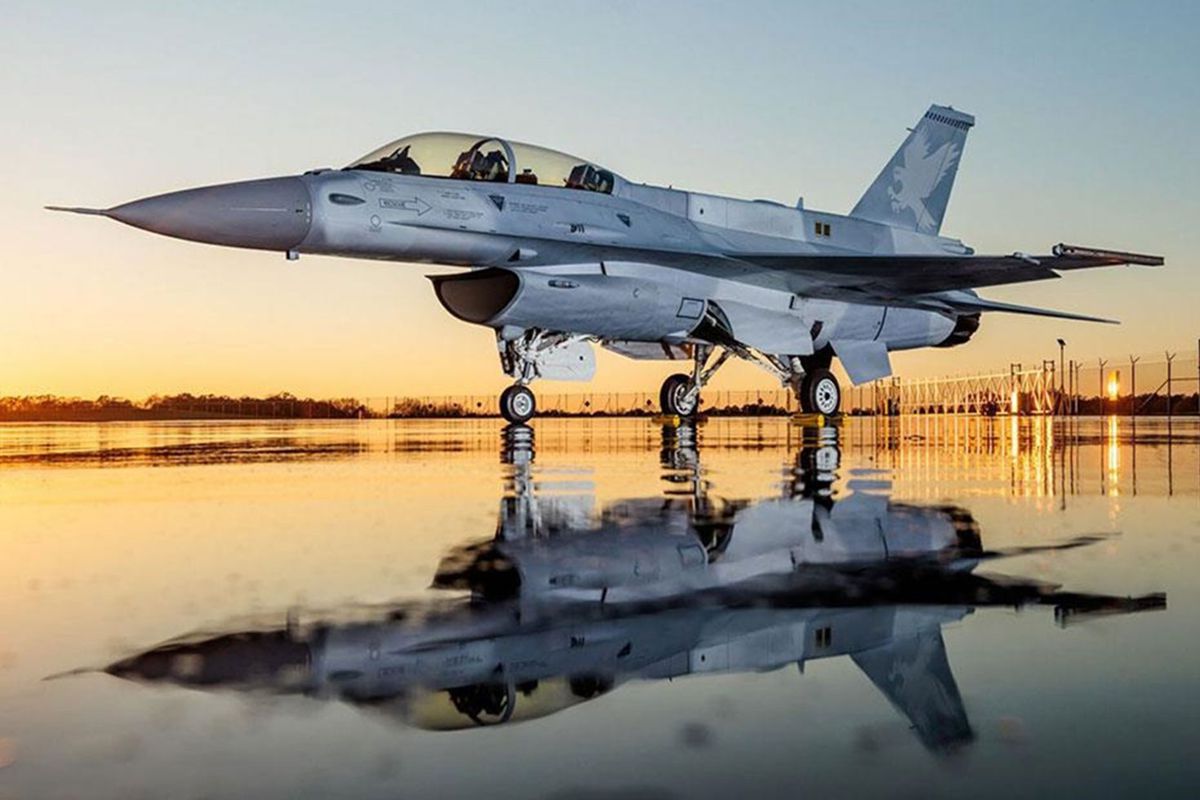
Nicosia, North Cyprus – Amidst escalating tensions in the Middle East, Türkiye is bolstering security in the Eastern Mediterranean with the deployment of six F-16 fighter jets to the Turkish Republic of Northern Cyprus (KKTC). The move, slated for tomorrow morning, comes as regional concerns mount following a recent drone incident targeting the British Akrotiri base in Cyprus and as the conflict between Israel and Iran continues to unfold. This deployment underscores Ankara’s assessment of the evolving security landscape and its commitment to safeguarding its interests and allies in the region.
The decision to deploy the F-16s was announced by Aşkın Meşeli, Acting Director of KKTC Civil Aviation and follows prior evaluation by Türkiye’s Ministry of National Defence (MSB). Officials have stated that the deployment is not expected to disrupt civilian air traffic. The move is widely interpreted as a signal of Türkiye’s resolve in the face of increasing regional instability, particularly given the ongoing conflict between Israel and Iran and the potential for wider escalation. The deployment of advanced fighter aircraft demonstrates a clear intention to project power and deter potential threats in the Eastern Mediterranean.
Türkiye Responds to Regional Instability
The deployment of Turkish F-16s to North Cyprus is directly linked to the March 2nd incident at the Akrotiri base, where an Iranian drone impacted the runway. The UK Ministry of Defence confirmed the interception of two drones, though no significant damage or casualties were reported. As reported by Deutsche Welle, this incident marks the first time a NATO member’s territory has been impacted by the widening conflict. This escalation prompted a reassessment of security measures in the region, leading to Türkiye’s decision to reinforce its presence in North Cyprus.
Beyond the immediate response to the drone incident, the deployment is similarly viewed within the context of broader geopolitical tensions. Israel has been increasingly vocal about perceived threats from Turkiye, accusing it of aligning with a regional axis similar to that of Iran. According to Al Jazeera, former Israeli Prime Minister Naftali Bennett recently warned against “turning a blind eye” to Turkiye, highlighting its growing ties with regional powers like Saudi Arabia and Egypt. This perceived shift in alliances has raised concerns in Israel, prompting a search for new regional partners and a more assertive stance towards potential adversaries.
Iranian Apology and Regional Fallout
Simultaneously, Iranian President Mesoud Pezeshkian issued an apology for missiles that landed in neighboring Türkiye and Azerbaijan. In a televised address, Pezeshkian stated, “I apologize to neighboring countries. We have no hostility with the countries in our region. We will not fire missiles at Iran if they do not attack us.” This apology followed Iran’s retaliatory attacks against Israel and other regional nations – including Qatar, the United Arab Emirates, and Bahrain – triggered by a prior strike from Israel and the United States on February 28th. The incident underscores the delicate balance of power in the region and the potential for miscalculation to escalate tensions further.
The recent exchange of attacks between Israel and Iran has had far-reaching consequences, impacting maritime traffic and civilian infrastructure. Deutsche Welle reports that approximately 20,000 seafarers are currently stranded on merchant ships in the Strait of Hormuz due to the heightened security risks. The disruption to shipping lanes has the potential to impact global trade and energy supplies, adding to the economic uncertainty already prevailing in the region.
US Involvement and Potential for Wider Conflict
The United States has also been directly involved in the recent escalation, reportedly sinking an Iranian warship in the Indian Ocean following a torpedo strike. Defense Secretary Pete Hegseth confirmed the incident, further raising the stakes in the conflict. Israel has also issued a stark warning, stating its intention to assassinate whoever is chosen to succeed Supreme Leader Ali Khamenei, who reportedly died on Saturday. These aggressive actions signal a willingness to pursue a hardline approach and potentially prolong the conflict.
US President Donald Trump has reportedly engaged in discussions with at least three Kurdish groups in Iraq, adding another layer of complexity to the situation. The involvement of Kurdish factions raises concerns about the potential for the conflict to spill over into neighboring countries and further destabilize the region. Spain’s Prime Minister Sanchez has criticized Trump’s actions, accusing him of “playing Russian roulette” with the volatile situation in Iran.
Implications for North Cyprus
The deployment of Turkish F-16s to North Cyprus is a significant development with implications for the island’s security and stability. The move is likely to be viewed with concern by the Republic of Cyprus and its allies, who may perceive it as a further escalation of tensions in the Eastern Mediterranean. However, Turkish officials maintain that the deployment is purely defensive and aimed at protecting the interests of the Turkish Cypriot community and ensuring regional stability.
The Turkish Republic of Northern Cyprus (KKTC) is a self-declared state recognized only by Türkiye. The island has been divided since 1974, when Türkiye intervened following a coup attempt by Greek Cypriot nationalists. The presence of Turkish troops and military installations in North Cyprus remains a contentious issue, and the deployment of F-16s is likely to exacerbate these tensions. The situation requires careful diplomacy and a commitment to de-escalation from all parties involved to prevent further deterioration of the security situation.
Key Takeaways
- Türkiye is deploying six F-16 fighter jets to North Cyprus in response to escalating regional tensions.
- The deployment is linked to a recent drone incident targeting the British Akrotiri base in Cyprus.
- Iran has apologized for missiles that landed in Türkiye and Azerbaijan, but tensions remain high.
- The United States has been directly involved in the conflict, reportedly sinking an Iranian warship.
- Israel has warned it will assassinate any successor to Supreme Leader Ali Khamenei.
The situation in the Middle East remains highly volatile and unpredictable. The deployment of Turkish F-16s to North Cyprus is just one piece of a complex puzzle, and the potential for further escalation remains significant. The international community must work together to de-escalate tensions, promote dialogue, and prevent a wider conflict that could have devastating consequences for the region and beyond. The next key development to watch will be the response from the Republic of Cyprus and the international community to Türkiye’s military deployment, expected within the coming days.
We encourage readers to share their thoughts and perspectives on this developing story in the comments below. Your insights are valuable as we continue to monitor and report on this critical situation.
Keep reading